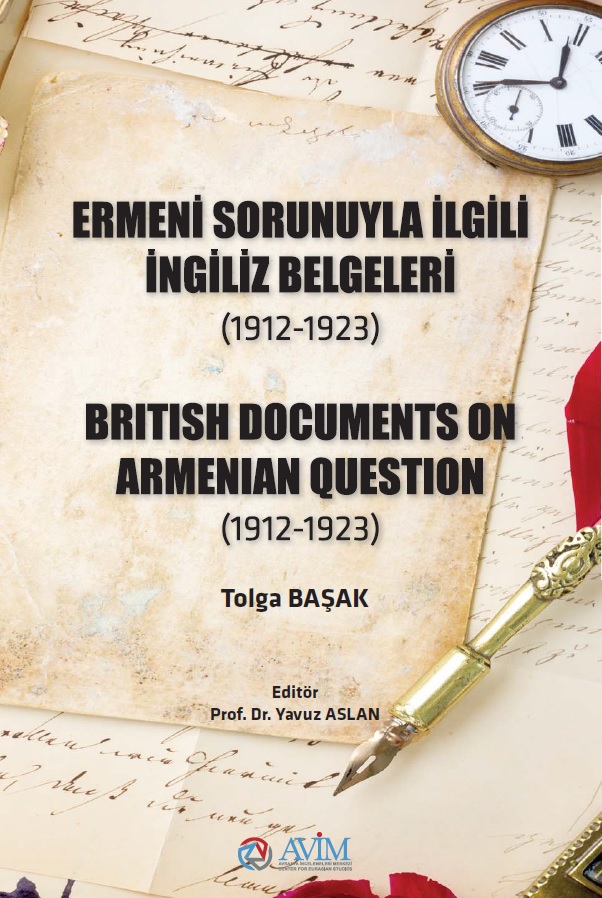
Kyle Orton, a British journalist and author, wrote an article, “The Arithmetic of the 1915 Armenian Catastrophe,” assessing the demographic dimension of the Armenian losses during the events of 1915.[1] He begins his article by explicitly identifying the underlying problem: “the numbers game over historical wars and atrocities … is a highly dubious business, where the usual pattern is figures established by political actors, based on little or no reliable underlying evidence, becoming totemic through repetition. The case of the Armenian deportations and massacres in 1915-16 holds to the pattern.” This is a very apt observation. For too long, the Armenian nationalist narrative of “one and a half million losses” is repeated in parliamentary resolutions, election campaigns and lobbying articles in the press but it was never substantiated by actual demographic studies and archival documents.
According to Orton, “there being no evidence in the Ottoman archives of a decision to annihilate the Armenians, the genocide case is built by inference.” And that inference has often been built by inflating the Armenian losses during and after 1915, often accompanied by the argument that such a huge number of losses would not be possible without “genocidal intent.” In response, serious historians pointed out to the obvious fact that the scale of a tragedy cannot necessarily predict intent, and that the losses of the Muslim population of Anatolia in the same era were about 2.5 to 3 million.
Geography constituted another leg of this inference argument. Orton notes the following on this point:
An oft-made argument is that the deportations, instead of being a response to the Armenian rebellion in alliance with invading Russians in the east, were “neither a military necessity nor a contingency of war”, and this is demonstrated by deportations far from the warzone in Anatolia. Such an indiscriminate policy, the argument goes, indicates that the deportations were cover for a premeditated attack on the Armenians “as such”, in the language of the Genocide Convention. The thesis is troubled on its face by the simultaneous landing of the British and French—who had their own connections with the Armenian committees—at Gallipoli, extending the warzone from east to west, plus the wholesale exemption from deportation of Armenians in Constantinople, Smyrna (Izmir), and Aleppo.
Orton notes the fluctuations and disagreements regarding the number of Armenians actually transferred and resettled during 1915. Some of the figures were politically-motivated either presented as wartime propaganda or as lobbying efforts: “Arnold Toynbee, a British intelligence operative responsible for wartime propaganda against the Ottomans, estimated in a 1917 product that there were 1.2 million deportees.” On the other hand, “Boghos Nubar, the Armenian representative in Europe, said the total was 600,000 to 700,000 in 1918.” Scholars sympathetic to the Armenian cause gave figures ranging from 1.2 to 1.5 million. Some of the pro-Armenian scholars gave lower figures aroung 800 to 850 thousand. According to Orton, several key factors were ignored in these estimates: “A reason to suspect that this range for the deportees is too high is that there was a mass-movement of Armenians out of the Six Provinces—especially Van, Bitlis, and Erzurum—before the deportations were ordered and several more waves of refugees up to 1918 as the Ottomans and Russians fought bitterly on a shifting front-line.” The estimates of Ottoman Armenians fleeing to the Russian Caucasus “range from 250,000 to 400,000.”
The same inconsistency is visible in the discussions and figures for the number of people who lost their lives in 1915 and afterwards. In his propaganda account Toynbee gave the figure as 600,000, whereas the Armenian leadership in 1919 claimed “One million Armenians have perished during this War.” Orton notes that great divergence between the figures, noting that “from these numbers, it would be possible to calculate an Armenian death toll anywhere from 50,000 to 1.5 million.” This is because many of these “estimates” and figures had been produced with a political agenda. Accordingly, Kyle Orton calls for caution in assessing these demographic claims:
Overall, then, in the Armenian case we see the usual pattern of incredibly spongy figures, with the underlying numbers marred by hearsay and agenda, and conclusions that depend on layers of assumption and interpretation, none of which can be taken for granted. These numbers might be all we have, but it does not make them any better. Attempting to work with these statistics provides so many researcher degrees of freedom in selecting a way through that it amounts to choosing your own adventure.
The figure of 1.5 million Armenian losses picked and propagated as a symbolic figure. Over the years, it became a cornerstone of the Armenian claims regarding the events of 1915. All too often lobbyists and politicians used them to for their personal agendas at the expense of historical truth.
Recently, the Pashinyan’s government in Armenia also indicated the problems with this approach and called for a more objective understanding of the events of 1915. Particularly, Andranik Kocharyan, an Armenian MP and a close ally of Pashinyan, stated that “that Prime Minister Nikol Pashinyan called for the compilation of the names of the victims” in order to build “real foundations” for the documentation of the these tragic events. (https://oc-media.org/armenian-mp-accused-of-promoting-genocide-denial/) The huge backlash inside Armenia and the diaspora following these statements indicate that a sober analysis of the events are still extremely difficult, if not impossible. As Orton’s article underscores, these figures need to handled cautiously and taken with a grain of salt.
© 2009-2025 Center for Eurasian Studies (AVİM) All Rights Reserved

















 ARMENIAN ECONOMY NEEDS TO BE ABLE TO FISH NOT CHARITIES FROM DIASPORA
 H. RES. 220 – A CONFLATION OF PAST AND PRESENT
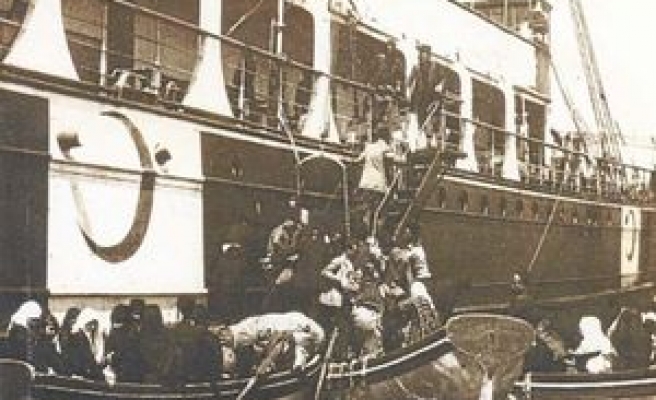 ON THE POPULATION EXCHANGE BETWEEN GREECE AND TURKEY
 FURTHER QUESTIONS ON THE INTEGRITY OF WATS ORGANIZERS
 THE GREEK INDEPENDENCE: MEMORY AND POLITICS, THE US PRESIDENT RUBS SALT TO THE WOUND
 PROTESTS AGAINST THE “SOCIAL PARASITE TAX” IN BELARUS
 CONSTRUCTIVE EURASIANISM AND PAST REFLECTIONS
 THE MESSAGE OF THE PRIME MINISTER
 BIASED INITIATIVES BY THE EUROPEAN ACTORS FOR NAGORNO KARABAKH
 THE D-8 CAIRO SUMMIT