Download PDF :


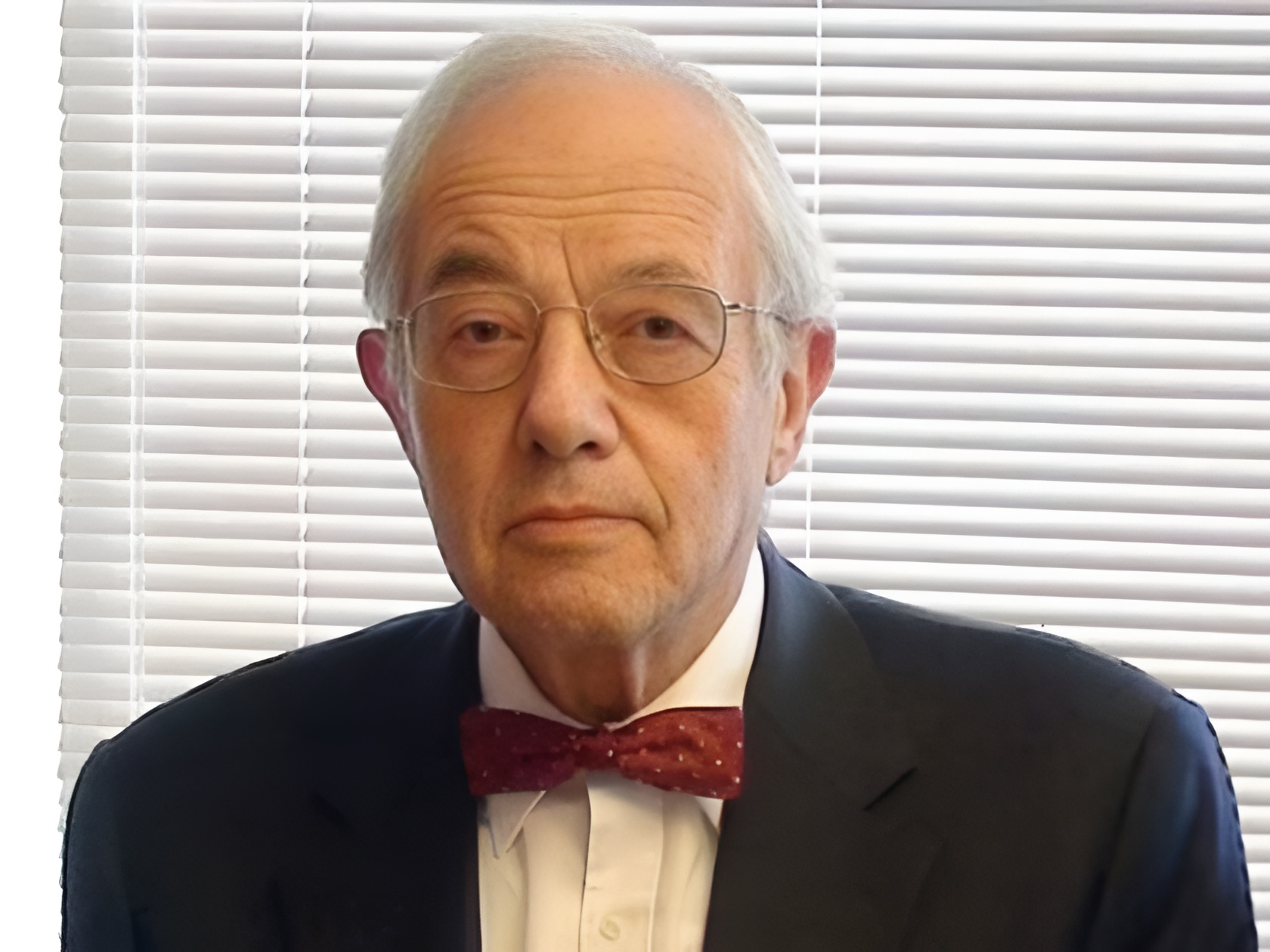
Distinguished historian and political scientist Professor Guenter Lewy passed away on 24 March 2026 at the age of 102. Professor Lewy, a Holocaust survivor, was born in Breslau, Germany (modern-day Wrocław, Poland), on 22 August 1923. His father, Henry, was a small businessman and a veteran of World War I, having served in the German army. His mother was a housewife. His father’s prior combat service allowed young Lewy to stay in a gymnasium at a time when many Jews faced discrimination and purges throughout the German society. But the increasing wave of anti-Jewish measures soon targeted Guenter Lewy and he eventually had to transfer to a Jewish school.
During the notorious Kristallnacht pogrom of November 9-10 of 1938, which had engulfed Breslau, Guenter Lewy was physically attacked and beaten by a large group of stormtroopers, while his father was arrested and sent a concentration camp in Buchenwald, where he remained interned for four months. As persecution of Jews in Germany increased, Lewy began to lobby his family to leave Germany. The family had difficulty finding a place that allowed Jewish immigration. After his father had been released, Lewy’s parents eventually left for Luxembourg whereas Guenter Lewy had left for Palestine in March 1939. When he reached fighting age, Lewy volunteered for the British Army in December 1942 and fought against fascist German and Italian forces as a member of the Jewish Brigade, which formed part of British General Montgomery’s 8th Army. After World War II, Guenter Lewy immigrated to the United States to reunite with his parents.
In the US, Lewy decided to pursue an academic career. He earned his BA at City College in New York City and then his MA and PhD at Columbia University. He was on the faculties of Columbia University, Smith College, and the University of Massachusetts, Amherst. As a professor of political science, he taught courses on civil liberties. He also served as an official of the Hampshire County branch of the American Civil Liberties Union.
As a Holocaust survivor and productive scholar, Lewy has written numerous books and articles about the history of persecuted peoples such as the Jews, Gypsies in Nazi-occupied Europe, the Native Americans. Lewy also wrote a number of books involving political, ethnical and philosophical questions such as “Religion and Revolution,” “If God is Dead, Everything is Permitted?,” “Assisted Death in Europe and America: Four Regimes and Their Lessons,” “Harmful and Undesirable: Book Censorship in Nazi Germany,” and “ Essays on Genocide and Humanitarian Intervention.”
In 2005, Lewy published his influential and groundbreaking work, The Armenian Massacres in Ottoman Turkey: A Disputed Genocide, that made him the target of Armenian extremists, anti-Turkish lobbying groups and their supporters in the US. The book was a valuable contribution to the literature on the events of 1915 and corrected many misleading assumptions and factual mistakes. Lewy also documented numerous instances in which Vahakn N. Dadrian, the most well-known representative of the Armenian nationalist claims, misused and distorted the sources he used. In his book, Lewy concluded that while Armenians suffered a terrible tragedy, the evidence for the allegation of genocide was unpersuasive. Demonstrating his objectivity, Lewy also criticized some Turkish scholars for their poor scholarship. Yet, in his book, he also recognized the traditional anti-Turkish bias and double standards in the West concerning the sufferings of the Turks:
[T]he tribulations of Turkish refugees from the Balkan wars and other armed conflicts of the pre-World War I era have not received the attention and condemnation they deserve. The West has been preoccupied with the horrors of the Armenian story, and the suffering of Turks has often been ignored. The same holds true for the wartime famines that took a heavy toll of life among both Turks and Armenians. This double standard in recognizing human misery must be repudiated for the sake of historical truth and to help descendants of these victims live with their pain.
His even-handedness and the impact of his work soon made him the target of an orchestrated smearing campaign in the US. The extremists in the Armenian Diaspora and their supporter began spreading evidently manufactured news and calumnies that “Lewy was a paid agent of the Turkish Government” and even published a false article in Intelligence Report, the journal of Southern Poverty Law Center (SPLC) alleging that “Lewy is one of the most active members of a network of American scholars… financed by hundreds of thousands of dollars each year from the government of Turkey.”
Not only were these allegations baseless, but the SPLC’s account ignored and misrepresented the critical attitude Lewy adopted towards both sides of the dispute and unabashedly portrayed him as a lackey of the Turkish Government. Therefore, in November 2008, Lewy filed a defamation suit against the SPLC in the Washington DC. The US court agreed to hear the case before a jury. However, just before the trial dates were scheduled, the SPLC decided to settle the case and its president Richard Cohen publicly admitted that “we were wrong” and decided that “settling was the morally right thing to do.” The SPLC agreed to issue a retraction and apology, and to pay an undisclosed amount for the damage they inflicted on Professor Guenter Lewy’s reputation as a scholar and intellectual. The text of the SPLC’s retraction and apology and Lewy’s response was as follows:
Retraction and Apology
In the summer 2008 issue of its Intelligence Report, the Southern Poverty Law Center reported that Guenter Lewy, a professor emeritus at the University of Massachusetts, was part of a network of persons, financed by the Government of Turkey, who dispute that the tragic events of World War I constituted an Armenian genocide. We now realize that we misunderstood Professor Lewy’s scholarship, were wrong to assert that he was part of a network financed by the Turkish Government, and were wrong to assume that any scholar who challenges the Armenian genocide narrative necessarily has been financially compromised by the Government of Turkey. We hereby retract the assertion that Professor Lewy was or is on the Government of Turkey’s payroll.
To our knowledge, Professor Lewy has never sought to deny or minimize the deaths of Armenians in Ottoman Turkey; nor has he sought to minimize the Ottoman regime’s grievous wartime miscalculations or indifference to human misery in a conflict earmarked by widespread civilian suffering on all sides. What he has argued in his book, The Armenian Massacres in Ottoman Turkey: A Disputed Genocide, and elsewhere is that the present historical record does not substantiate a premeditated plan by the Ottoman regime to destroy because of ethnicity, religion, or nationality, as opposed to deport for political-military reasons, the Armenian population. In this view, he is joined by such distinguished scholars as Professor Bernard Lewis of Princeton University. As additional troves of archival information come to light, Professor Lewy advocates greater study of this contentious subject.
We deeply regret our errors and offer our sincerest apologies to Professor Lewy.
Professor Lewy adds the following comment:
“The SPLC has made important contributions to the rule of law and the struggle against bigotry. Thus I took no pleasure in commencing legal action against it. But the stakes, both for my reputation as a scholar and for the free and unhindered discussion of controversial topics, were compelling. It must be possible to defend views that contradict conventional wisdom without being called the agent of a foreign government.”
Thus, Lewy’s court case and the SPLC’s retraction and apology were a historic victory for free speech and academic freedom as well as a heavy blow for pressure and intimidation tactics of the extremists in the diaspora.
While pursuing his scholarly endeavors, Lewy also left behind an important account of his early life. In 2013, he gave a lengthy oral history interview to the US Holocaust Memorial Museum, detailing his early life, his family and their background, and their experiences during and after the Nazi regime.After his 2005-work on the events of 1915, Lewy as a prolific writer and historian wrote six more influential books. He published his last book, Jews and Germans: Promise, Tragedy, and the Search for Normalcy, in 2020.
Professor Lewy passed away at the age of 102 on 24 March 2026. He is survived by two children and a grandson. We celebrate Professor Guenter Lewy’s scholarship, bravery, and, above all, his fair-mindedness, and deeply mourn his passing.