Download PDF :


Dear Readers,
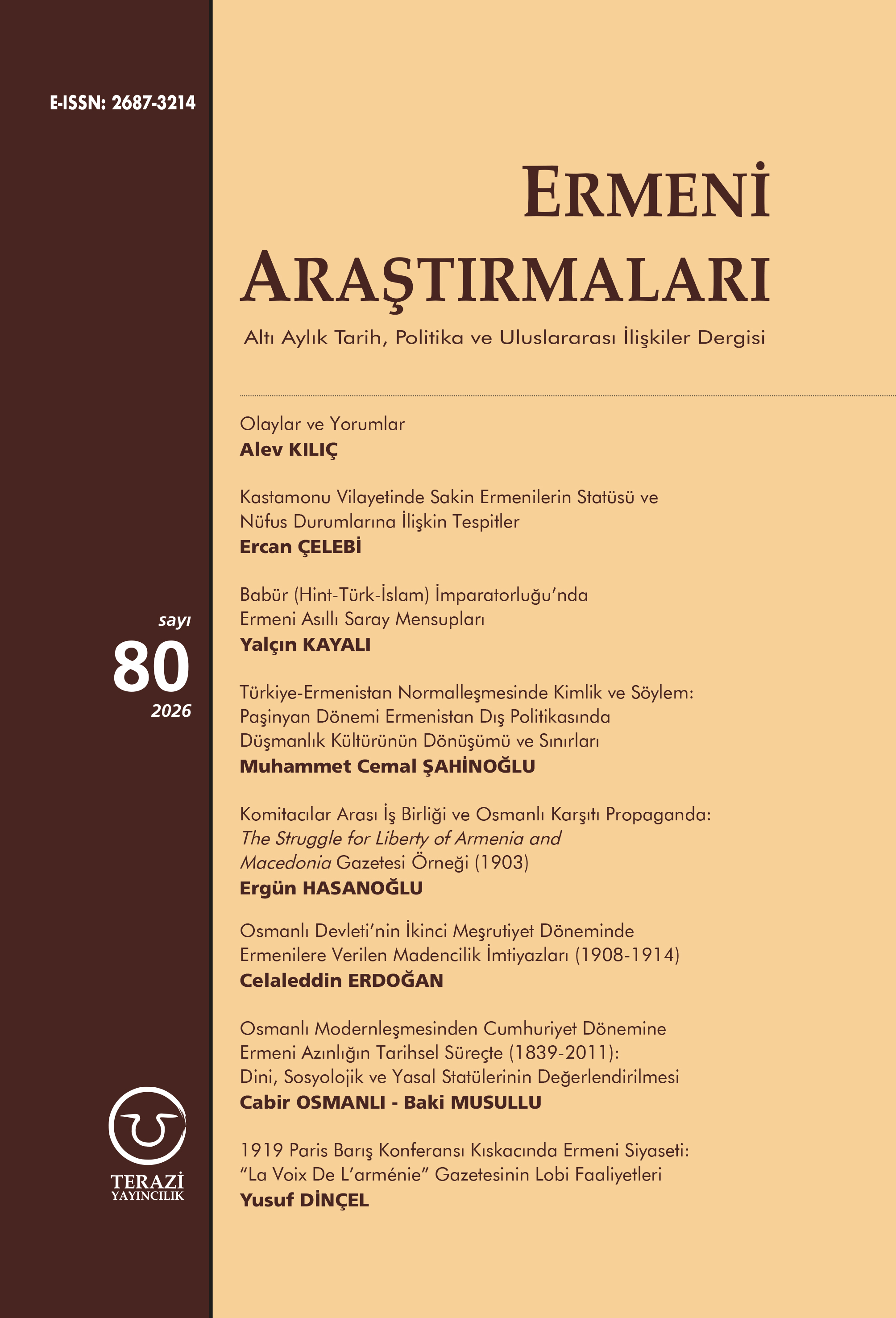
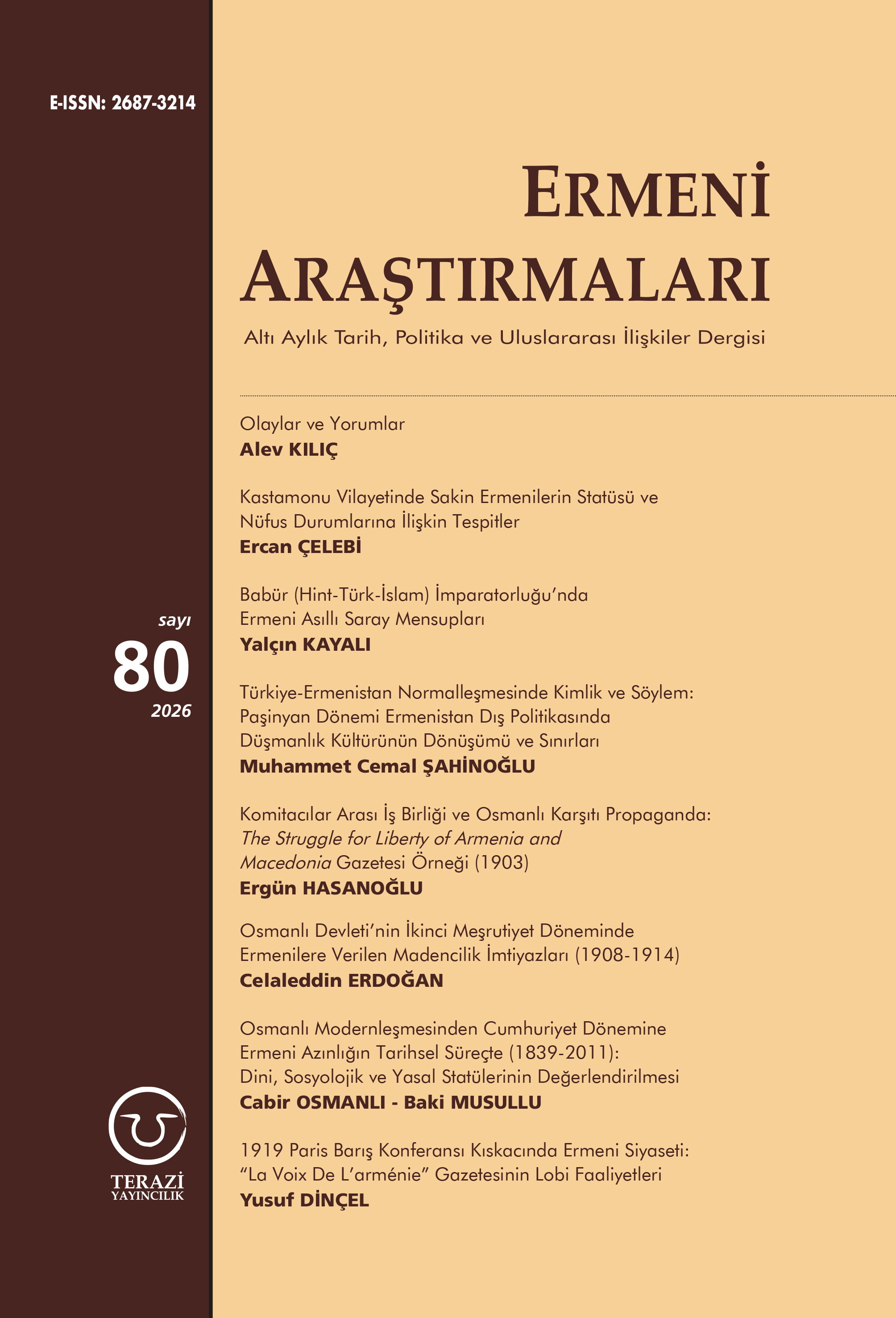
We are delighted to reach the 80th issue of our Ermeni Araştırmaları journal and to continue presenting our work to our valued readers throughout this long-standing publishing journey. Over the course of these 80 issues, our goal has been to contribute to academic scholarship in the field of Armenian studies and to present a diverse range of research topics to our readership. In this 80th issue, a new addition to this significant accumulation of work, we feature seven research articles, alongside our traditional editorial.
The articles in this issue bring together different academic discussions on field research in terms of the topics they address and the methodological approaches they adopt. Studies ranging from current political developments to historical research, from international relations to economic, legal, and social issues allow the field to be evaluated within the framework of different disciplines.
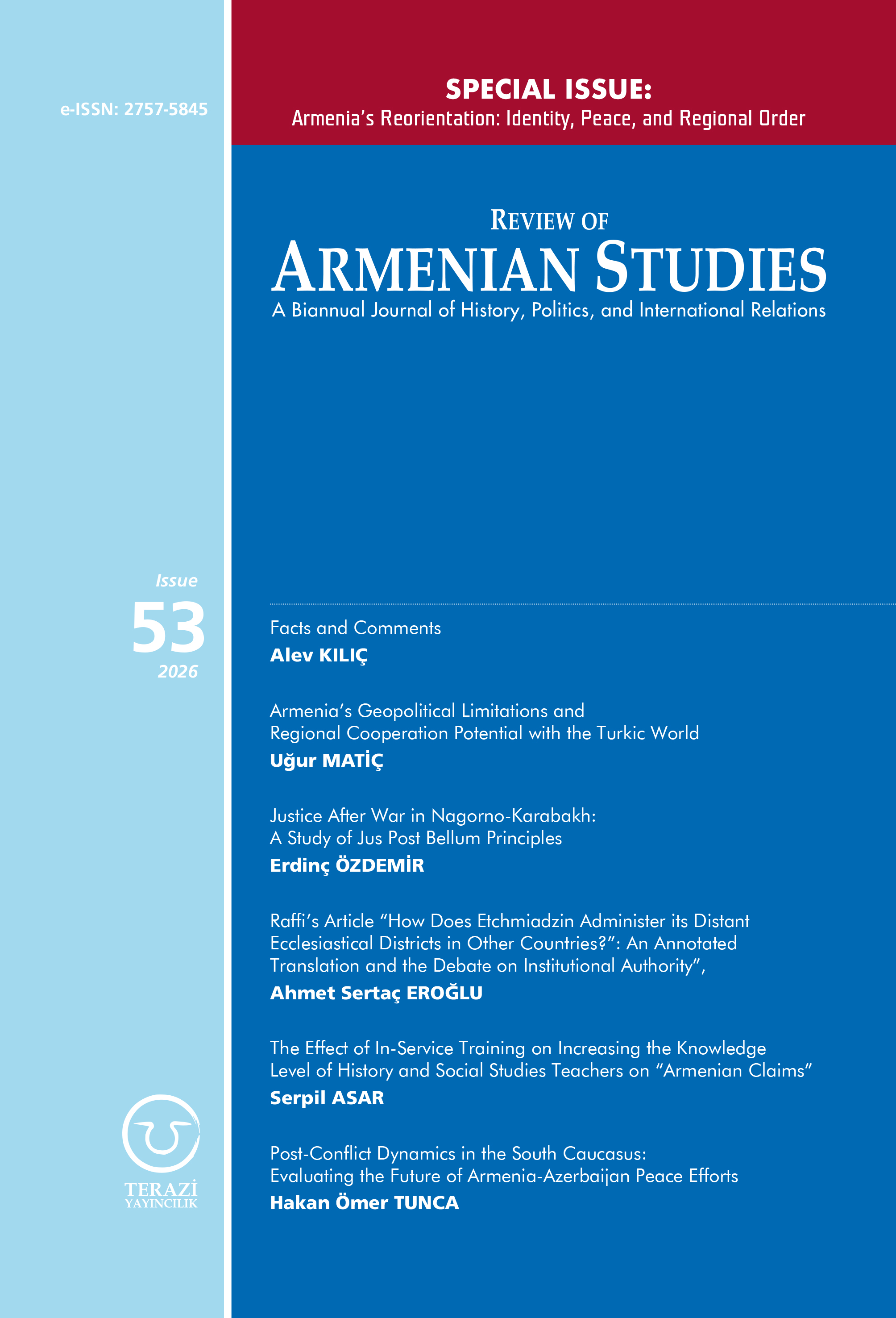
In the editorial article titled "Facts and Comments" (“Olaylar ve Yorumlar”), which is one of the traditional sections of our journal, Alev Kılıç comprehensively assesses Armenia's domestic political developments, foreign policy orientations, the peace agreement process with Azerbaijan, and the normalization attempts in Türkiye-Armenia relations between May and October 2026. Key issues during this period include the parliamentary elections (which proved decisive for Armenia’s political future), the debate over whether to align with Russia or the West, and the challenges facing the regional peace process. The study evaluates Armenia’s foreign policy choices alongside recent developments concerning the future of Türkiye-Armenia relations.
The first research article in our 80th issue is titled “Findings on the Status and Demography of the Armenians of Kastamonu” ("Kastamonu Vilayetinde Sakin Ermenilerin Statüsü Ve Nüfus Durumlarına İlişkin Tespitler") and authored by Ercan Çelebi. The article examines the administration of religious affairs for the Armenian community living in the province of Kastamonu, requests for the establishment of a delegacy, and discussions regarding the determination of the region's Armenian population figure. By exploring the connection between local administrative practices and the community’s institutional structure within a historical context, the study contributes to the understanding of the status of the Armenian population in Ottoman provinces.
The second article, "Armenian Origin Court Officials in the Mughal [Indo-Turkic-Islamic] Empire" (“Babür (Hint-Türk-İslam) İmparatorluğu’nda Ermeni Asıllı Saray Mensupları”), is written by Yalçın Kayalı. This research examines individuals of Armenian origin who served within the Mughal imperial court or held significant positions in the empire’s administration, evaluating the historical presence of Armenians in South Asia and their roles in political, diplomatic, and cultural relations. By tracing the footprints of Armenian history across different geographies, the study sheds light on the historical background of Armenian-Indian relations.
The third article titled "Identity and Discourse in Türkiye-Armenia Normalization: The Transformation of the Culture of Enmity and Its Limits in Armenia’s Foreign Policy under Pashinyan" ("Türkiye-Ermenistan Normalleşmesinde Kimlik ve Söylem: Paşinyan Dönemi Ermenistan Dış Politikasında Düşmanlık Kültürünün Dönüşümü ve Sınırları”) was prepared by Muhammet Cemal Şahinoğlu. The article evaluates the Türkiye-Armenia normalization process through a constructivist framework and studies shifts in Armenia’s state identity, threat perception, and foreign policy discourse. The analysis is centered on the distinction between “Historical Armenia” and “Real Armenia”, which emerged during the tenure of Nikol Pashinyan, and assesses the influence of historical narratives on political choices, as well as the limitations of the observed shift in Armenia’s approach toward Türkiye.
The fourth article is authored by Ergün Hasanoğlu and is titled "Inter-Komitadjis Cooperation and Anti-Ottoman Propaganda: The Case of The Newspaper titled ‘the Struggle for Liberty of Armenia and Macedonia’ (1903)” ("Komitacılar Arası İş Birliği ve Osmanlı Karşıtı Propaganda: ‘The Struggle for Liberty of Armenia and Macedonia’ Gazetesi Örneği (1903)"). Examining the propaganda dimension of the cooperation between Armenian and Macedonian komitacı (komitadjis) members during the late 19th and early 20th centuries, this study focuses on the content of the newspaper, which was published in Chicago in 1903. Through an analysis of discourses directed at the Ottoman administration, debates regarding reforms, and attempts to influence Western public opinion, the study aims to reveal the efforts of these political movements to forge a common propaganda language.
The fifth article is a study by Celaleddin Erdoğan titled "Mining Concessions Granted to Armenians During the Second Constitutional Period of the Ottoman Empire (1908-1914)" ("Osmanlı Devleti’nin İkinci Meşrutiyet Döneminde Ermenilere Verilen Madencilik İmtiyazları (1908-1914)"). This study examines, in light of archival documents, the mining concessions granted to Armenian subjects between the declaration of the Second Constitutional Period and the First World War. It evaluates the economic activities of the era through the scope of various types of minerals and the provinces in which they were extracted. By addressing the roles of capital, technical expertise, and entrepreneurial capacity in the granting of these concessions, the study sheds light on the position of Armenian entrepreneurs within the Ottoman mining sector and the state’s economic policies.
The sixth article titled "The Rights of the Armenian Minority from Ottoman Modernization to the Republican Era (1839-2011): A Comparative Analysis of Religious, Sociological, and Legal Dimensions" ("Osmanlı Modernleşmesinden Cumhuriyet Dönemine Ermeni Azınlığın Tarihsel Süreçte (1839-2011) Dini, Sosyolojik ve Yasal Statülerinin Değerlendirilmesi") was written by Cabir Osmanlı and Baki Musullu. The article examines the transformations in the religious, legal, administrative, and sociocultural status of the Armenian community from the period of Ottoman modernization through the era of the Republic of Türkiye. It evaluates historical developments ranging from the Imperial Edict of Reorganization and Reform and the Regulation of the Armenian Millet (Armenian National Constitution) to the status of the minority following the Treaty of Lausanne and the legal regulations enacted in the 2000s. The study provides a holistic perspective on the Armenian community’s experience during the transition from an empire to a nation-state, as well as the structural changes that emerged throughout this process.
The seventh and final research article prepared by Yusuf Dinçel is titled "Armenian Politics in the Grip of the 1919 Paris Peace Conference: Lobbying Activities of the ‘La Voix De L’arménie’ Newspaper" ("1919 Paris Barış Konferansı Kıskacında Ermeni Siyaseti: ‘La Voix De L’arménie’ Gazetesinin Lobi Faaliyetleri"). The article examines the efforts of Armenian political actors to influence Western governments and public opinion during the Paris Peace Conference, focusing on the role of the press in propaganda and lobbying. Based on American archival documents and newspaper content, the study evaluates how the press was utilized as a tool in the diplomatic struggles of the era and explores the connection between efforts to shape international public opinion and broader political processes.
We hope that the studies featured in this 80th issue will contribute to the current accumulation of academic work in the field of Armenian studies and pave the way for future research.
We extend our gratitude to all the authors, referees, and everyone else who contributed to the publication process of this significant issue.
We look forward to seeing you again in our next issue. Happy reading, and best regards.
Click here to access the 80th issue.