














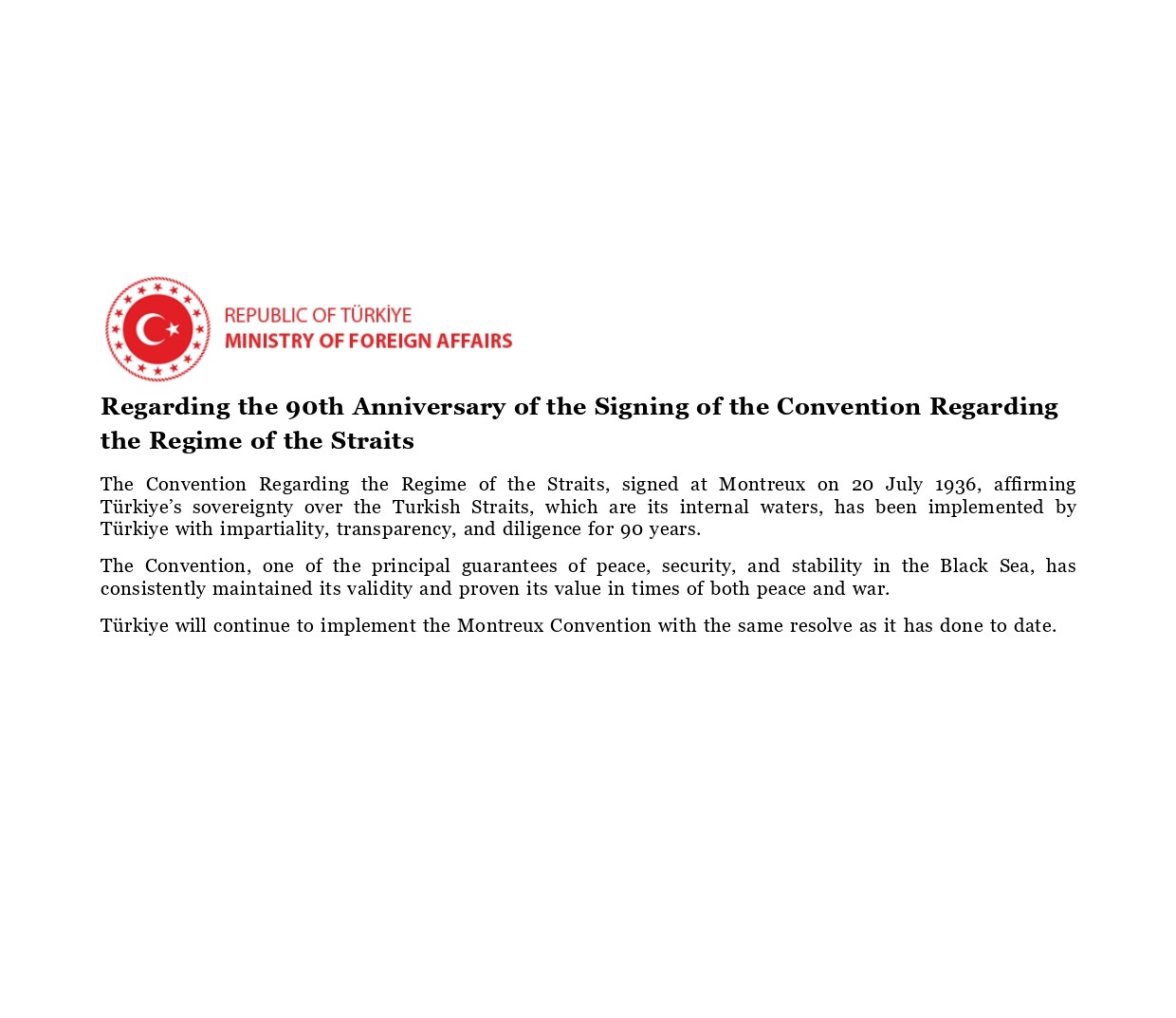
This commentary examines how the 90th anniversary of the Montreux Convention Regarding the Regime of the Straits highlights Türkiye’s legally grounded guardianship role in the Black Sea and its broader Constructive Eurasianism vision. It argues that reaffirming commitment to Montreux on 20 July 2026 is not a purely commemorative gesture, but a strategic reminder that a rules-based straits regime remains central to regional order under conditions of systemic uncertainty.[1]
The Legal Architecture of the Straits
Signed in Montreux on 20 July 1936, the Convention affirmed Türkiye’s full sovereignty over the Turkish Straits, treated as its internal waters, while establishing a differentiated passage regime for merchant and naval vessels.[2] For ninety years, Türkiye has implemented this regime with neutrality, transparency, and diligence in both war and peace, and the Convention has come to be recognized as one of the principal guarantees of peace, security, and stability in the Black Sea. In the context of the ongoing Russia–Ukraine war and the risk of spillover into the maritime domain, the continued validity and effectiveness of Montreux have once again demonstrated the lasting value of carefully calibrated international legal arrangements. In contrast to more recent maritime regimes shaped primarily by the United Nations Convention on the Law of the Sea, the Montreux framework has required no formal revision since 1936, yet has repeatedly proven adaptable in crises ranging from the Second World War to the present conflict in Ukraine.[3]
From a conceptual perspective, Montreux is a cornerstone of what AVİM has termed Constructive Eurasianism.[4] This approach rejects simplistic binaries between “the West” and “the East” and instead positions Türkiye as a stabilizing nexus that combines alliance commitments with strategic autonomy and regional responsibility.[5] The Straits regime illustrates a model in which sovereignty, legal predictability, and cooperative security interact: Türkiye exercises undisputed control over the Straits, including restrictive powers under Article 21, while preserving freedom of navigation for commercial shipping and maintaining a balanced framework for Black Sea and non–Black Sea navies.
Freedom of Navigation and Treaty Context
Recent debates risk distorting this legal and historical equilibrium in at least two ways. Some actors instrumentalize the language of “freedom of navigation” to press for looser interpretations of Montreux, overlooking the carefully negotiated tonnage, duration, and notification limits imposed on non–Black Sea fleets. Such proposals, however, tend to abstract ‘freedom of navigation’ from its treaty context and ignore that Montreux’s restrictions were precisely designed to prevent great‑power naval competition from turning the Black Sea into a permanent arena of bloc confrontation. Second, certain Eurocentric narratives continue to treat Türkiye’s implementation of the Convention as a technical detail rather than as a sovereign, normatively informed contribution to regional order. Such tendencies reflect broader patterns of conceptual inflation and selective memory that AVİM has long criticized in other fields, including debates on genocide, historical justice, and alliance politics.[6]
Türkiye’s Guardianship
A legally consistent reading of Montreux, however, underscores Türkiye’s role as a responsible guardian rather than as an obstructive gatekeeper. By rigorously applying the Convention’s provisions during successive crises, Ankara has provided all regional and extra‑regional stakeholders with a predictable framework that limits escalation and constrains unilateral power projection. This guardianship is not merely a technical function; it embodies a normatively charged understanding of the Black Sea as a basin whose stability depends on respect for littoral states’ sovereignty and the prevention of militarized experimentation by distant powers.
In this sense, the 90th anniversary statements by the Ministry of Foreign Affairs, reaffirming impartial, transparent, and diligent implementation as well as the enduring value of the Convention, should be read together with Türkiye’s broader foreign policy discourse on a changing world order.[7] Over the past decades, AVİM’s reports and commentaries on the legal regime of the Turkish Straits and on Black Sea security have consistently underscored this point, treating Montreux as a regional and global safety valve rather than a mere technical annex to Turkish foreign policy. As AVİM’s Constructive Eurasianism perspective emphasizes, the erosion of the post–Cold War liberal order has not eliminated the need for law and institutions; it has instead increased the premium on regionally anchored regimes that can withstand geopolitical turbulence. Montreux stands out as one of the rare instruments that has preserved its relevance without requiring constant revision, precisely because it embeds a balance between coastal security, great-power interests, and the commons logic of commercial navigation.[8]
Policy Implications
From a policy standpoint, three implications follow. First, Türkiye should continue to resist attempts to dilute or reinterpret Montreux through ad hoc political bargaining, insisting on a text‑based, precedent‑conscious application of the Convention. Second, regional and extra‑regional actors ought to recognize that challenging the Convention’s parameters under the guise of “modernization” could undermine one of the last effective stabilizing mechanisms in the Black Sea. Third, scholarly and policy debates should integrate the Montreux experience into wider reflections on cooperative security, maritime law, and the evolving geometry of alliances in Eurasia, instead of treating it as a narrow technical specialty.
On the 90th anniversary of its signing, Montreux thus appears not as a relic of interwar diplomacy, but as a living framework through which Türkiye exercises a principled guardianship of meaning and order in the Black Sea. Preserving this framework against conceptual distortion and geopolitical impatience will remain essential for safeguarding regional stability and for sustaining a balanced, constructive Eurasian role for Türkiye in the decades ahead.
*Picture: Republic of Türkiye Ministry of Foreign Affairs
[1] Republic of Türkiye Ministry of Foreign Affairs, “No: 140, 20 July 2026, Regarding the 90th Anniversary of the Signing of the Convention Regarding the Regime of the Straits,” July 20, 2026, https://www.mfa.gov.tr/no_-140_-montro-bogazlar-sozlesmesi-nin-imzalanmasinin-90-yil-donumu-hk.en.mfa ; Teoman Ertuğrul Tulun, “Constructive Eurasianism and Past Reflections,” Center for Eurasian Studies (AVİM), accessed July 21, 2026, https://avim.org.tr/en/Yorum/CONSTRUCTIVE-EURASIANISM-AND-PAST-REFLECTIONS
[2] Teoman Ertuğrul Tulun, The Montreux Convention: A Regional And Global Safety Valve, Report Series of Center for Eurasian Studies 17 (Ankara: Terazi Publishing and Center for Eurasian Studies, 2020)
[3] Tugba Altun, “Türkiye Marks 90th Anniversary of Montreux Convention, Reaffirms Commitment to Implementation,” Anadolu Agency, July 19, 2026, https://www.aa.com.tr/en/turkiye/turkiye-marks-90th-anniversary-of-montreux-convention-reaffirms-commitment-to-implementation/4003783. ; “Türkiye Reiterates Commitment to Montreux Convention,” Daily Sabah, July 20, 2026, https://www.dailysabah.com/politics/turkiye-reiterates-commitment-to-montreux-convention/news
[4] Teoman Ertuğrul Tulun, “Constructive Eurasianism: Revisiting Definitions,” AVİM Commentary, no. 2025/3, January 8, 2025, https://avim.org.tr/en/Yorum/CONSTRUCTIVE-EURASIANISM-REVISITING-DEFINITIONS
[5] Teoman Ertuğrul Tulun and Mehmet Oğuzhan Tulun, “A Constructive Approach: AVİM in a Polarized World,” Center for Eurasian Studies (AVİM), January 22, 2026, https://avim.org.tr/en/Yorum/A-CONSTRUCTIVE-APPROACH-AVIM-IN-A-POLARIZED-WORLD
[6] Özge Emine Özçelik, “Security In The Turkish Straits And The Black Sea,” Center for Eurasian Studies (AVİM), accessed July 21, 2026, https://avim.org.tr/en/Yorum/SECURITY-IN-THE-TURKISH-STRAITS-AND-THE-BLACK-SEA
[7] Ministry of Foreign Affairs, “No: 140, 20 July 2026.”
[8] Teoman Ertuğrul Tulun, The Montreux Convention: A Regional And Global Safety Valve.
© 2009-2025 Center for Eurasian Studies (AVİM) All Rights Reserved
No comments yet.
-
 CONSTRUCTIVE EURASIANISM: REVISITING DEFINITIONS
Teoman Ertuğrul TULUN 08.01.2025 -
 UN FACT-FINDING MISSION REPORT ON MYANMAR CONFIRM THE IMPORTANCE OF GENOCIDE CONVENTION
Teoman Ertuğrul TULUN 12.09.2018 -
 DENMARK’S MIGRATION DISCOURSE AND THE RISK OF ANTI-ISLAM POLITICAL GENERALIZATION
Teoman Ertuğrul TULUN 16.09.2026 -
 POPE FRANCIS’ INTERVIEW: RELIGIOUS DISCRIMINATION AGAINST BUDDHISTS, SHAMANS, AND MUSLIMS IN THE HOPES OF CHRISTIAN UNITY
Teoman Ertuğrul TULUN 26.12.2022 -
 NATO’S DIGITAL EXPOSURES: ARMENIA’S US-BACKED AI MEGAPROJECT IN THE SOUTH CAUCASUS
Teoman Ertuğrul TULUN 03.03.2026
-
 GERMAN FEDERAL ASSEMBLY’S UNFRIENDLY RESOLUTION TOWARDS TURKEY AND TURKISH PEOPLE
Ali Murat TAŞKENT 14.06.2016 -
 JOSEPH BORRELL’S VISIT TO ANKARA AND ITS AFTERMATH
Hazel ÇAĞAN ELBİR 29.07.2020 -
 HISTORICAL ARCHIVES OF THE ARMENIAN PATRIARCHATE OF ISTANBUL
AVİM 04.04.2019 -
 A MEETING WILL BE HELD ON "CAUCASUS AND AZERBAIJAN" IN İSTANBUL
AVİM 20.03.2014 -
 Center for Eurasian Studies and Konrad Adenauer organized
Özge Nur ÖĞÜTCÜ 08.12.2014
-
25.01.2016
THE ARMENIAN QUESTION - BASIC KNOWLEDGE AND DOCUMENTATION -
12.06.2024
THE TRUTH WILL OUT -
27.03.2023
RADİKAL ERMENİ UNSURLARCA GERÇEKLEŞTİRİLEN MEZALİMLER VE VANDALİZM -
17.03.2023
PATRIOTISM PERVERTED -
23.02.2023
MEN ARE LIKE THAT -
03.02.2023
BAKÜ-TİFLİS-CEYHAN BORU HATTININ YAŞANAN TARİHİ -
16.12.2022
INTERNATIONAL SCHOLARS ON THE EVENTS OF 1915 -
07.12.2022
FAKE PHOTOS AND THE ARMENIAN PROPAGANDA -
07.12.2022
ERMENİ PROPAGANDASI VE SAHTE RESİMLER -
01.01.2022
A Letter From Japan - Strategically Mum: The Silence of the Armenians -
01.01.2022
Japonya'dan Bir Mektup - Stratejik Suskunluk: Ermenilerin Sessizliği -
03.06.2020
Anastas Mikoyan: Confessions of an Armenian Bolshevik -
08.04.2020
Sovyet Sonrası Ukrayna’da Devlet, Toplum ve Siyaset - Değişen Dinamikler, Dönüşen Kimlikler -
12.06.2018
Ermeni Sorunuyla İlgili İngiliz Belgeleri (1912-1923) - British Documents on Armenian Question (1912-1923) -
02.12.2016
Turkish-Russian Academics: A Historical Study on the Caucasus -
01.07.2016
Gürcistan'daki Müslüman Topluluklar: Azınlık Hakları, Kimlik, Siyaset -
10.03.2016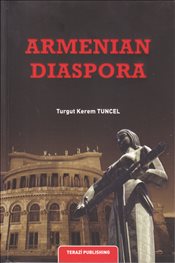
Armenian Diaspora: Diaspora, State and the Imagination of the Republic of Armenia -
24.01.2016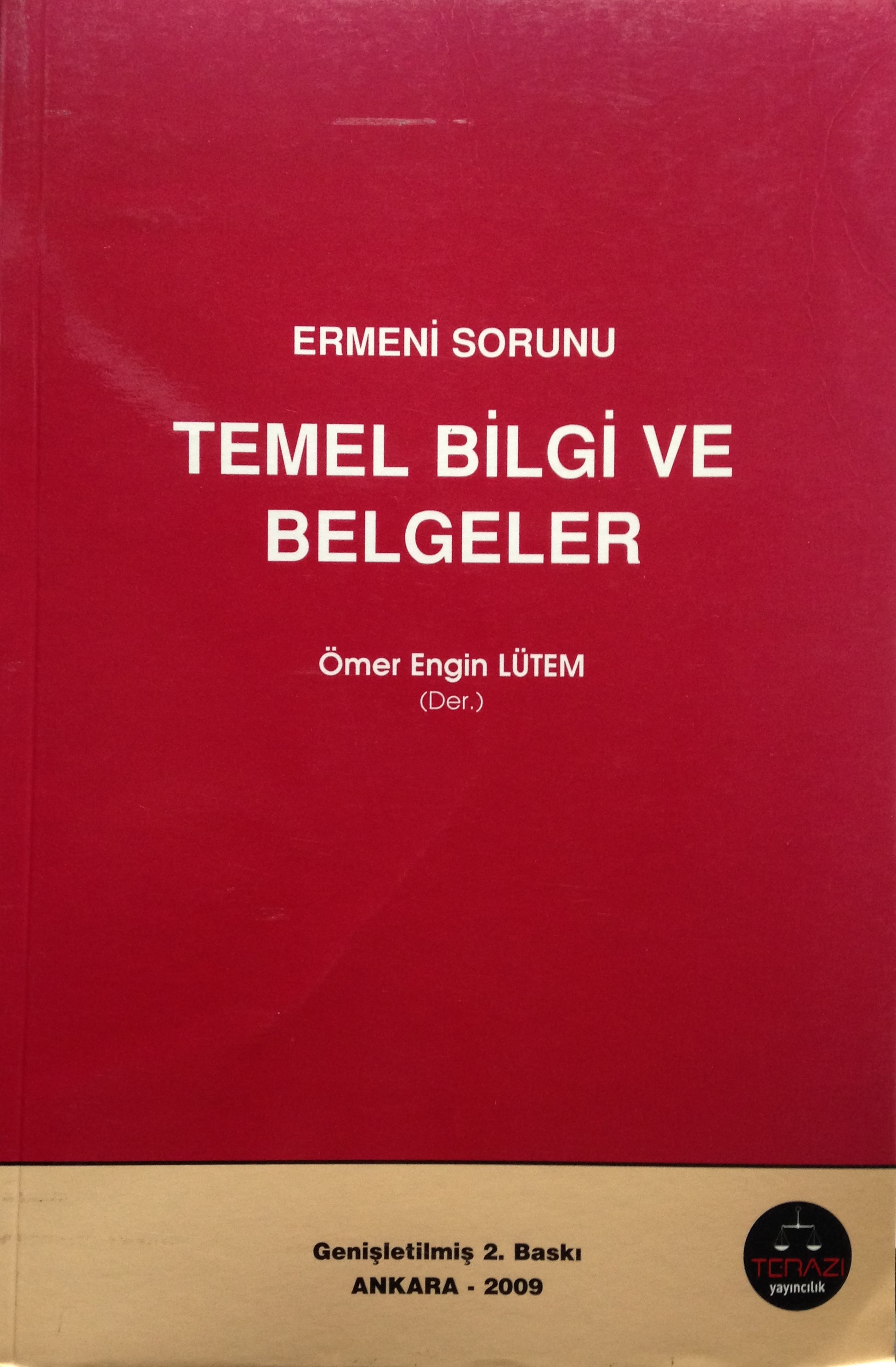
ERMENİ SORUNU - TEMEL BİLGİ VE BELGELER (2. BASKI)
-
AVİM Conference Hall 24.01.2023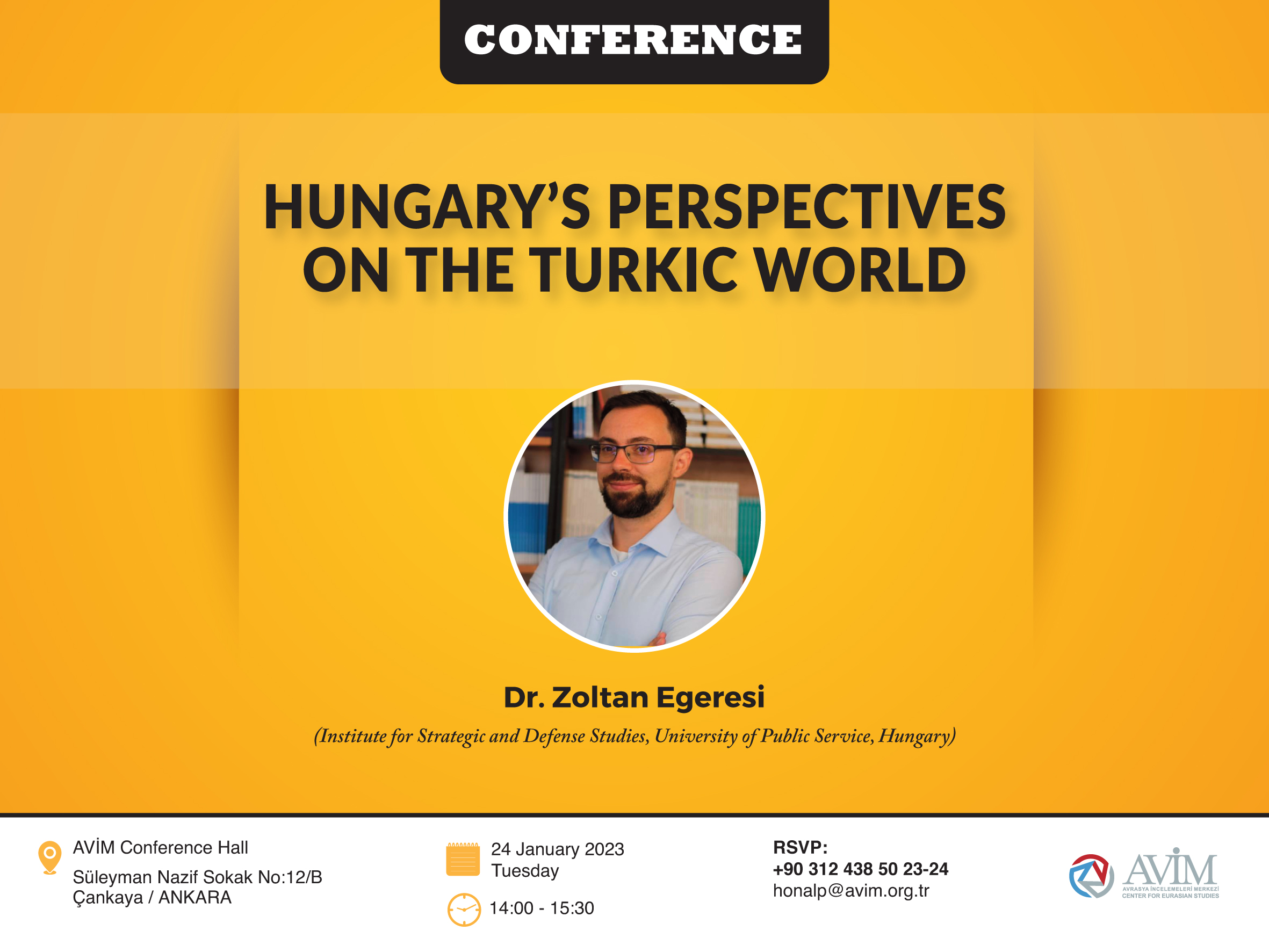
CONFERENCE TITLED “HUNGARY’S PERSPECTIVES ON THE TURKIC WORLD"