













This is the English translation of a Turkish language article that was originally published by AVİM on 14 August 2026.
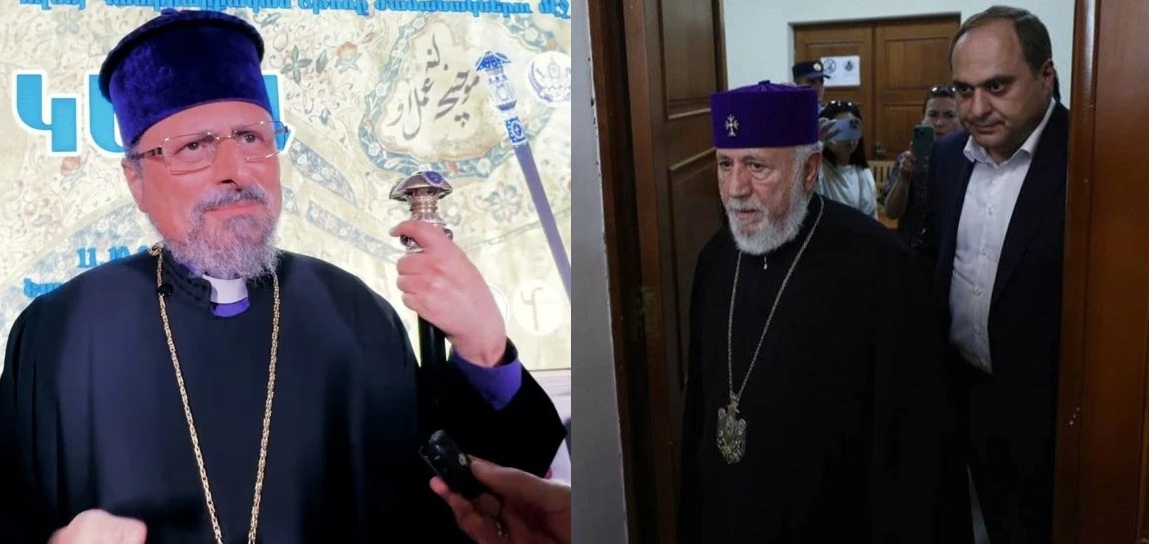
As we previously discussed on several occasions, the Armenian Patriarch of Istanbul (officially the Patriarch of Turkish Armenians) Sahak II Mashalian has in recent times been acting differently in comparison to the times when he first came into office. When he first came into office, Sahak II had dedicated himself to finding solutions to problems faced by the Turkish Armenian community in unison with Turkish authorities. Nowadays, however, he has begun to act in a blatantly political manner and has been making statements that disregard Türkiye’s South Caucasus policy and its normalization process with Armenia. The following examples can be given in this regard:
- He has referred to Turkish Armenians as “diaspora” in contradiction to historical and societal facts,[1]
- He has requested legal personality for the Armenian Patriarchate of Istanbul in contradiction to the Treaty of Lausanne, the founding document of the Republic of Türkiye, and the secular constitutional order of the Republic,
- Citing church solidarity, he has sided with Catholicos Karekin II in the dispute between the Nikol Pashinyan government and the Catholicosate of Etchmiadzin, which is an internal matter of the Republic of Armenia.
In light of this stance, Sahak II appears to have adopted a political position contrary to his role as the religious leader of the Turkish Armenians. Recent developments between the Catholicosate of Etchmiadzin and the Pashinyan government[2] have once again turned Sahak II into an intervening party in Armenia’s ongoing religious and political divide.
In Armenia, a bishop who had criticized Catholicos of Etchmiadzin Karekin II was dismissed by the church administration. The said bishop appealed the Church’s decision to the courts, and following the appeal, an investigation was launched that resulted in the trial of Karekin II and five members of the Catholicosate's Supreme Spiritual Council. On 10 August, the Armenian Patriarchate of Istanbul, under the leadership of Sahak II, issued the following statement criticizing this situation;[3]
"It is a known fact that the negative attitude adopted toward the Armenian Apostolic Church in recent times has been a source of deep sorrow for our people living in Armenia and in the diaspora. The Mother See of Holy Etchmiadzin has for centuries been a force of attraction for our people in terms of faith and a cornerstone of our national and religious unity. […]
In this context, the judicial proceedings conducted against the Catholicos of All Armenians and the church’s high-ranking bishops, and the fact that they are being called to account before secular authorities in connection with the accusations against them, hurt the dignity of the Armenian Church. […]
The Armenian Church also plays an important role in the religious, national, and social life of our people in the diaspora. Therefore, any step that would weaken the sovereignty of the Mother See or undermine its inviolability will also weaken the bonds that have become deeply intertwined between the church and society over the centuries. […] Therefore, regarding matters concerning the Church, we find it meaningless and hurtful to seek criminal elements in the statements of the Catholicos of All Armenians and the institutions subordinate to him. […]
As the Armenian Patriarchate of Turkey, we declare our solidarity with the Catholicos of All Armenians and his high-ranking bishops. We warn all those responsible not to bring the decisions of the Armenian Church and its clergy before civil judicial authorities. […]”
There are several important points that require attention here:
The Catholicosate of Etchmiadzin and the Patriarchate of Istanbul are two of the four main administrative centers of the Armenian Apostolic Church. Although the Catholicosate of Etchmiadzin is considered the first in terms of seniority, the administrative centers operate independently and are not accountable to the other centers. Furthermore, the Patriarchate of Istanbul, due to the Ottoman State’s dominant political, military, economic, and cultural power over a vast geographical area that lasted for centuries, had surpassed the Catholicosate of Etchmiadzin in terms of prestige and become a force of attraction in the Armenian world. The 10 August statement by the Patriarchate of Istanbul excessively highlighted the Catholicosate of Etchmiadzin and damaged the Patriarchate's historical prestige.
The Patriarchate of Istanbul is a public institution operating in Türkiye, and its authority is limited to meeting the religious and spiritual needs of Turkish citizens of Orthodox Armenian origin. However, the 10 August statement consistently emphasized the Armenian people at a global scale and drew attention to the Armenian Diaspora. Türkiye’s citizens of Armenian origin (in other words, Turkish Armenians) carry out the overwhelming majority of their social lives with the rest of Türkiye’s citizens; in other words, their fate is effectively intertwined with Turks, not with Armenians living in Armenia or the Diaspora. The Patriarchate of Istanbul, disregarding its status as a Turkish public institution, has emphasized pan-Armenian nationalism. It should not be forgotten that pan-Armenian nationalism has been instrumentalized throughout history to foster hostility against both the Ottoman State and the Republic of Türkiye on various occasions.
A normalization process based on delicate balances is currently underway between Türkiye and its neighbor Armenia. Establishing a healthy and sustainable relationship with Armenia is among Türkiye’s foreign policy priorities in the South Caucasus and beyond. The trial of the Catholicosate of Etchmiadzin administration is an internal matter of Armenia involving complex political and social elements. The involvement of the Patriarchate of Istanbul, a Turkish public institution, in Armenia's internal affairs (even in the name of church solidarity) conflicts with Türkiye’s foreign policy interests and undoubtedly causes unease within Armenia’s government. Furthermore, Karekin II has been known for his anti-Türkiye and Turkish sentiments for years, and he acts as a political opposition leader among circles who oppose the Türkiye-Armenia normalization process. The Patriarchate of Istanbul’s support for such a controversial figure is unbecoming of its historically prestigious position and incompatible with its public identity.
*Picture: Sahak II Mashalian (left), Karekin II (right) - Source: News.am/Agos
[1] Selenay Erva Yalçın, “Türkiye Ermenileri Patriği Sahak II’nin Son Açıklamaları Ve Görevinin Sınırları”, Avrasya İncelemeleri Merkezi (AVİM), Yorum No: 2026/23, 3 Mart 2026, https://avim.org.tr/tr/Yorum/TURKIYE-ERMENILERI-PATRIGI-SAHAK-II-NIN-SON-ACIKLAMALARI-VE-GOREVININ-SINIRLARI
[2] Selenay Erva Yalçın, “Ermenistan’da Kilise Yönetimi Ve Hükümet Arasındaki Laiklik Gerilimi”, Avrasya İncelemeleri Merkezi (AVİM), Yorum No: 2026/79, 5 Ağustos 2026, https://avim.org.tr/tr/Yorum/ERMENISTAN-DA-KILISE-YONETIMI-VE-HUKUMET-ARASINDAKI-LAIKLIK-GERILIMI
[3] “Armenian Patriarchate of Turkey criticized the legal proceedings”, Agos, August 12, 2026, https://www.agos.com.tr/tr/haber/armenian-patriarchate-of-turkey-criticized-the-legal-proceedings-41488
© 2009-2025 Center for Eurasian Studies (AVİM) All Rights Reserved
No comments yet.
-
 THE DISPUTE OVER THE ELECTION OF THE ARMENIAN PATRIARCH OF ISTANBUL HAS YET AGAIN INTENSIFIED
Mehmet Oğuzhan TULUN 15.11.2016 -
 HISTORIC MEETING BETWEEN PRESIDENT XI OF PRC AND PRESIDENT MA OF ROC TAKES PLACE IN SINGAPORE
Mehmet Oğuzhan TULUN 09.11.2015 -
 ANTI-TURKEY AND ANTI-TURKISH VIEWS EXPRESSED AT A CONFERENCE ORGANIZED BY THE LSE TURKISH CHAIR
Mehmet Oğuzhan TULUN 28.05.2015 -
 THE ARMENIAN CATHOLICOSATE OF CILICIA’S APPLICATION TO THE CONSTITUTIONAL COURT OF TURKEY
Mehmet Oğuzhan TULUN 21.12.2016 -
 AZERBAIJAN-ARMENIA PEACE TREATY PROCESS AND ATTEMPTS TO UNDERMINE TÜRKİYE-AZERBAIJAN RELATIONS - II
Mehmet Oğuzhan TULUN 21.11.2025
-
 FRANCE, TÜRKİYE, AND THE BLACK SEA ORDER: LEGAL REALITIES VERSUS STRATEGIC SHORTCUTTING
Teoman Ertuğrul TULUN 04.02.2026 -
THE MOSCOW SUMMIT OF THE COLLECTIVE SECURITY TREATY ORGANIZATION
Alev KILIÇ 24.12.2012 -
 AN EVALUATION OF THE STRATEGIC AGREEMENT BETWEEN CHINA AND UZBEKISTAN
Selenay Erva YALÇIN 15.03.2024 -
 SARDARAPAT: THE VICTORY THAT NEVER HAPPENED
Ömer Engin LÜTEM 28.05.2015 -
 AMENDMENT - VICTIMIZED TURKS IN SWITZERLAND
Ali Murat TAŞKENT 29.11.2015
-
25.01.2016
THE ARMENIAN QUESTION - BASIC KNOWLEDGE AND DOCUMENTATION -
12.06.2024
THE TRUTH WILL OUT -
27.03.2023
RADİKAL ERMENİ UNSURLARCA GERÇEKLEŞTİRİLEN MEZALİMLER VE VANDALİZM -
17.03.2023
PATRIOTISM PERVERTED -
23.02.2023
MEN ARE LIKE THAT -
03.02.2023
BAKÜ-TİFLİS-CEYHAN BORU HATTININ YAŞANAN TARİHİ -
16.12.2022
INTERNATIONAL SCHOLARS ON THE EVENTS OF 1915 -
07.12.2022
FAKE PHOTOS AND THE ARMENIAN PROPAGANDA -
07.12.2022
ERMENİ PROPAGANDASI VE SAHTE RESİMLER -
01.01.2022
A Letter From Japan - Strategically Mum: The Silence of the Armenians -
01.01.2022
Japonya'dan Bir Mektup - Stratejik Suskunluk: Ermenilerin Sessizliği -
03.06.2020
Anastas Mikoyan: Confessions of an Armenian Bolshevik -
08.04.2020
Sovyet Sonrası Ukrayna’da Devlet, Toplum ve Siyaset - Değişen Dinamikler, Dönüşen Kimlikler -
12.06.2018
Ermeni Sorunuyla İlgili İngiliz Belgeleri (1912-1923) - British Documents on Armenian Question (1912-1923) -
02.12.2016
Turkish-Russian Academics: A Historical Study on the Caucasus -
01.07.2016
Gürcistan'daki Müslüman Topluluklar: Azınlık Hakları, Kimlik, Siyaset -
10.03.2016
Armenian Diaspora: Diaspora, State and the Imagination of the Republic of Armenia -
24.01.2016
ERMENİ SORUNU - TEMEL BİLGİ VE BELGELER (2. BASKI)
-
AVİM Conference Hall 24.01.2023
CONFERENCE TITLED “HUNGARY’S PERSPECTIVES ON THE TURKIC WORLD"