














This is the English translation of a Turkish language article that was originally published by AVİM on 18 May 2026.
At a time when rhetoric supporting peace between Armenia and Azerbaijan continues, diplomatic contacts and normalization initiatives are also moving forward. The positive statements made by officials from both countries at the 8th Summit of the European Political Community, held in Yerevan in May, may be regarded as one of the key indicators of this process. During the summit, attended by the heads of state and government of approximately 50 countries, as well as the highest-level representatives of the European Union (EU), Armenian Prime Minister Nikol Pashinyan and Azerbaijani President Ilham Aliyev emphasized that steps had been taken to strengthen the peace process and that both societies were striving to learn how to coexist peacefully.[1]
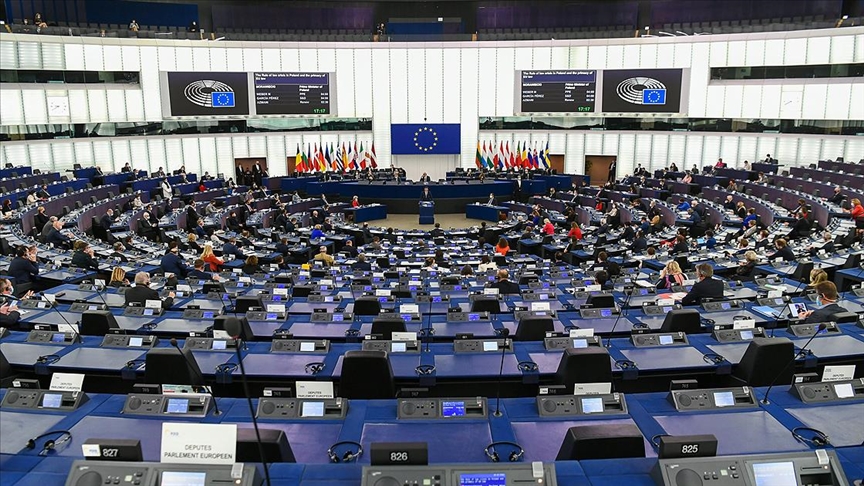
Nevertheless, the resolution adopted by the European (Union) Parliament (EP) just a few days before the summit on the issue of supporting Armenia’s democratic resilience, which unjustly criticized Azerbaijan, demonstrated that tensions between official Baku and certain EU institutions continue. The growing number of EP resolutions containing criticism of Azerbaijan following the Second Karabakh War may be regarded as an indication of the EP’s biased approach. In response to these resolutions, which have reached a total of 14 over the past five years, official Baku issued a diplomatic note to the EU, and the Azerbaijani Parliament decided to terminate its relations with EP.[2]
EP’s resolution reflects a favorable approach toward the ongoing peace and normalization process between Armenia and Azerbaijan and supports the process from the perspective that it could ultimately lead to a legally binding peace agreement. The resolution also indicates that the transit links connecting Azerbaijan with Nakhchivan are regarded not only as a means of regional economic integration but also as a strategic element that could reduce Armenia’s economic dependence on Russia.[3]
Nevertheless, the resolution’s strong emphasis on Armenia’s sovereignty, territorial integrity, and the inviolability of its borders produces a discourse that may indirectly frame Azerbaijan as a potential threat or aggressor actor. Azerbaijan, however, has repeatedly stated in its official declarations that it has no territorial claims against Armenia; moreover, recent economic and diplomatic engagements between the two countries have likewise supported this position.
At the same time, the EU’s decision to extend the mandate of the EU Mission in Armenia (EUMA), deployed along Armenia’s border, as of January 2025,[4] and to present it as a factor contributing to stability has given rise to various debates. In this context, statements by the President of Armenia indicating that no border clashes or casualties have occurred in the region over the past two years call into question the significance of this decision.
One of the most notable aspects of EP’s latest resolution criticizing Azerbaijan is its reference to Pashinyan’s speech delivered at EP in Strasbourg on 11 March 2026 as one of the bases for the resolution.[5] In his address, Pashinyan expressed his gratitude to Azerbaijan for lifting the economic restrictions and emphasized that 2025 had been the first year since 1991 in which no loss of life had occurred. Furthermore, although Pashinyan stated that the sentiments of Armenians displaced from Karabakh should not be exploited,[6] EP’s resolution expresses support for the right of Armenians to return safely, unhindered, and with dignity under international guarantees. As noted in our previous assessments,[7] it is well established that the Armenians of Karabakh returned to Armenia of their own free will and without any coercion, despite all the guarantees that had been provided to them.
Today, despite the parties’ efforts to establish peace and the supportive statements made by state officials as the peace process continues to advance, EP appears to have adopted a discourse that further deepens the dispute and portrays one of the parties as an occupying actor, rather than promoting a balanced approach.
In this context, EP President Roberta Metsola’s emphasis on Christian identity in her inaugural address,[8] followed by statements such as “Europe and Christian values bind us together” and “our shared beliefs and interests,”[9] have also given rise to debates over the influence of religious and cultural references on the decision-making processes of EU institutions.
On the other hand, it should also be taken into consideration that EP’s resolutions concerning Azerbaijan do not have a directly binding effect on the political realities on the ground. In this respect, the question of the consistency between EU’s discourse on democracy and human rights and its regional political stance continues to be the subject of debate.
*Image: Anadolu Agency
[1] Ermenistan Başbakanı Paşinyan: Azerbaycan ile barışı güçlendirmek için yakın iş birliği içinde çalışıyoruz, 15 Mayıs, 2026, https://www.aa.com.tr/tr/dunya/ermenistan-basbakani-pasinyan-azerbaycan-ile-barisi-guclendirmek-icin-yakin-isbirligi-icinde-calisiyoruz/3926253
[2] İlham Əliyev “Avropa Siyasi Birliyi”nin 8-ci Zirvə toplantısında video bağlantı formatında çıxış, 15 Mayıs, 2026, https://president.az/az/articles/view/72272
[3] JOINT MOTION FOR A RESOLUTION on supporting democratic resilience in Armenia, May 15, 2026, https://www.europarl.europa.eu/doceo/document/RC-10-2026-0195_EN.html
[4] JOINT MOTION FOR A RESOLUTION on supporting democratic resilience in Armenia, May 15, 2026, https://www.europarl.europa.eu/doceo/document/RC-10-2026-0195_EN.html
[5] JOINT MOTION FOR A RESOLUTION on supporting democratic resilience in Armenia, May 27 2026, https://www.europarl.europa.eu/doceo/document/RC-10-2026-0195_EN.html
[6] "Barışın tek garantisi yine barıştır", 15 Mayıs 2026, https://www.agos.com.tr/tr/haber/barisin-tek-garantisi-yine-baristir-39778
[7] The Migration of Armenians from Karabakh and the Claims of a New “Genocide”, July 13, 2026, https://avim.org.tr/tr/Analiz/ERMENILERIN-KARABAG-DAN-GOCU-VE-YENI-SOYKIRIM-IDDIALARI
[8] Being pro-life must also mean protecting children- Roberta Metsola, May 15, 2026, https://www.independent.com.mt/articles/2018-05-05/local-news/Being-pro-life-must-also-mean-protecting-children-Roberta-Metsola-6736189310
[9] In Veritate Award given to EP President Metsola for her achievements in combining Christian and European values, May 15, 2026, https://www.comece.eu/in-veritate-award-given-to-ep-president-metsola-for-her-achievements-in-combining-christian-and-european-values/
© 2009-2025 Center for Eurasian Studies (AVİM) All Rights Reserved
No comments yet.
-
 THE SOLIDARITY AMONG TURKIC STATES TARGETED THROUGH TÜRKİYE-AZERBAIJAN RELATIONS
İlaha KHANTAMİROVA 26.06.2026 -
 A SILENT POWER STRUGGLE CENTERED AROUND THE “ARAS 2025” MILITARY EXERCISE
İlaha KHANTAMİROVA 30.05.2025 -
 AZERBAIJAN-ARMENIA NORMALIZATION AND ITS REFLECTIONS IN THE CULTURAL SPHERE: THE CASE OF THE MONTREUX-VEVEY SEPTEMBRE MUSICAL
İlaha KHANTAMİROVA 28.09.2026 -
 A NEW TENSION EMERGING IN THE SOUTH CAUCASUS CONCERNING THE ISSUE OF RELIGIOUS REPRESENTATION
İlaha KHANTAMİROVA 31.07.2025 -
 THE POST-WAR LANDMINE ISSUE IN KARABAKH
İlaha KHANTAMİROVA 12.06.2025
-
 THE EUROPEAN UNION HAS COMPROMISED ITS FOUNDING PRINCIPLES DURING ITS 60TH ANNIVERSARY CELEBRATIONS
Mehmet Oğuzhan TULUN 06.04.2017 -
 THE MESSAGE OF THE PRIME MINISTER
Ömer Engin LÜTEM 24.04.2014 -
THE BALKANS AND THE EUROPEAN UNION
Alev KILIÇ 14.01.2013 -
 CENTRAL ASIAN COUNTRIES SHOULD OPEN UP TO THE WORLD
Ceyda ACİCBE 09.10.2019 -
 A CALL FROM NAMIBIA ON HIS HOLINESS, POPE FRANCIS
Alev KILIÇ 12.05.2015
-
25.01.2016
THE ARMENIAN QUESTION - BASIC KNOWLEDGE AND DOCUMENTATION -
12.06.2024
THE TRUTH WILL OUT -
27.03.2023
RADİKAL ERMENİ UNSURLARCA GERÇEKLEŞTİRİLEN MEZALİMLER VE VANDALİZM -
17.03.2023
PATRIOTISM PERVERTED -
23.02.2023
MEN ARE LIKE THAT -
03.02.2023
BAKÜ-TİFLİS-CEYHAN BORU HATTININ YAŞANAN TARİHİ -
16.12.2022
INTERNATIONAL SCHOLARS ON THE EVENTS OF 1915 -
07.12.2022
FAKE PHOTOS AND THE ARMENIAN PROPAGANDA -
07.12.2022
ERMENİ PROPAGANDASI VE SAHTE RESİMLER -
01.01.2022
A Letter From Japan - Strategically Mum: The Silence of the Armenians -
01.01.2022
Japonya'dan Bir Mektup - Stratejik Suskunluk: Ermenilerin Sessizliği -
03.06.2020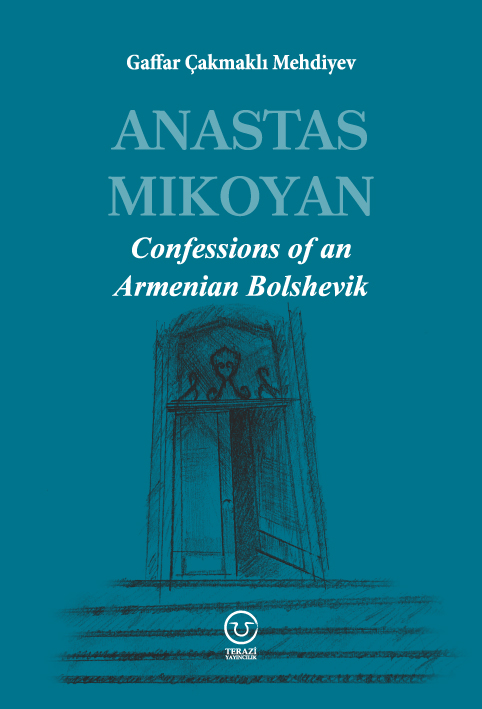
Anastas Mikoyan: Confessions of an Armenian Bolshevik -
08.04.2020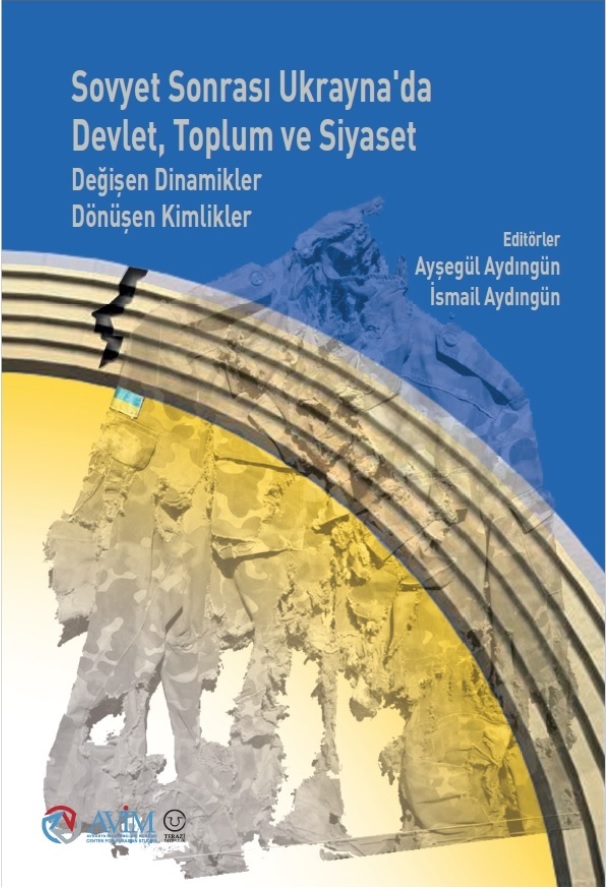
Sovyet Sonrası Ukrayna’da Devlet, Toplum ve Siyaset - Değişen Dinamikler, Dönüşen Kimlikler -
12.06.2018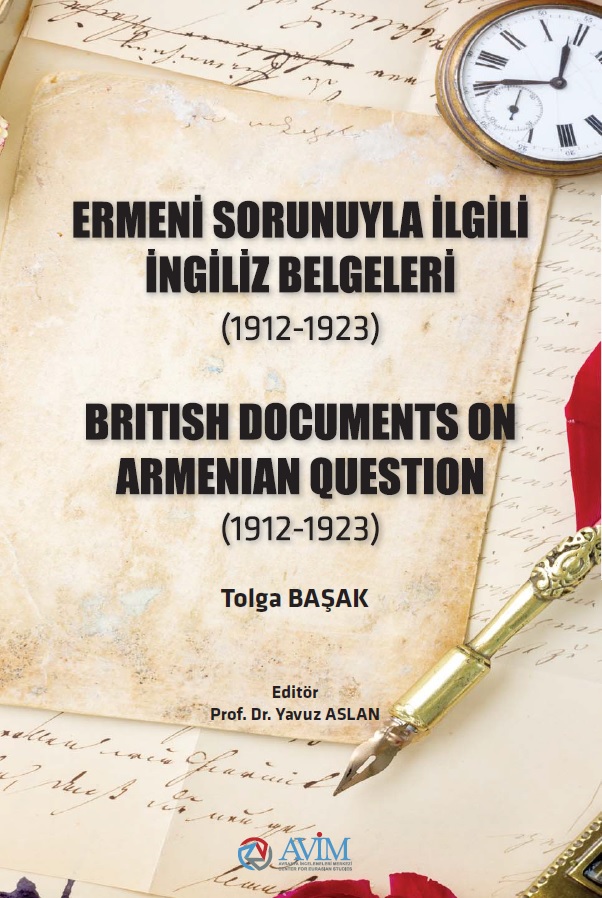
Ermeni Sorunuyla İlgili İngiliz Belgeleri (1912-1923) - British Documents on Armenian Question (1912-1923) -
02.12.2016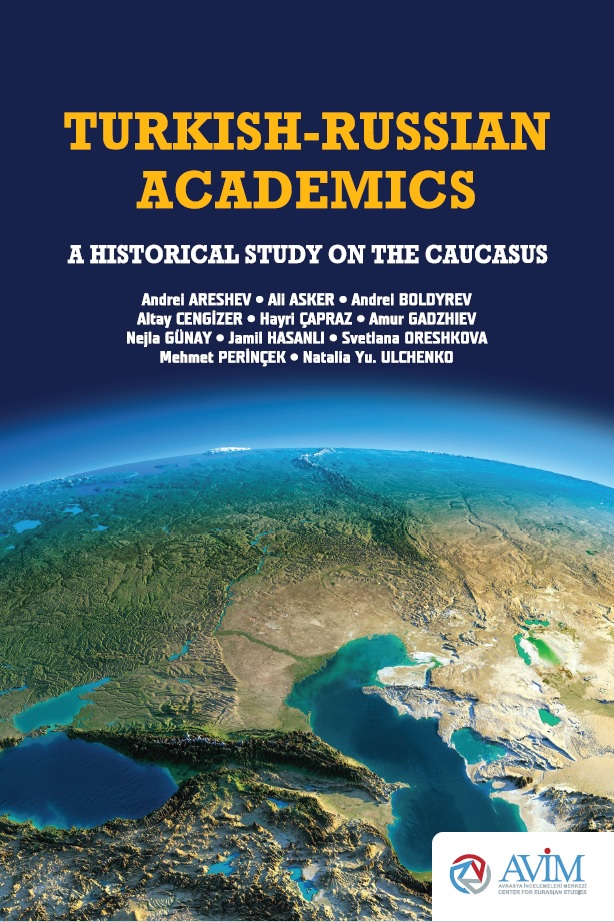
Turkish-Russian Academics: A Historical Study on the Caucasus -
01.07.2016
Gürcistan'daki Müslüman Topluluklar: Azınlık Hakları, Kimlik, Siyaset -
10.03.2016
Armenian Diaspora: Diaspora, State and the Imagination of the Republic of Armenia -
24.01.2016
ERMENİ SORUNU - TEMEL BİLGİ VE BELGELER (2. BASKI)
-
AVİM Conference Hall 24.01.2023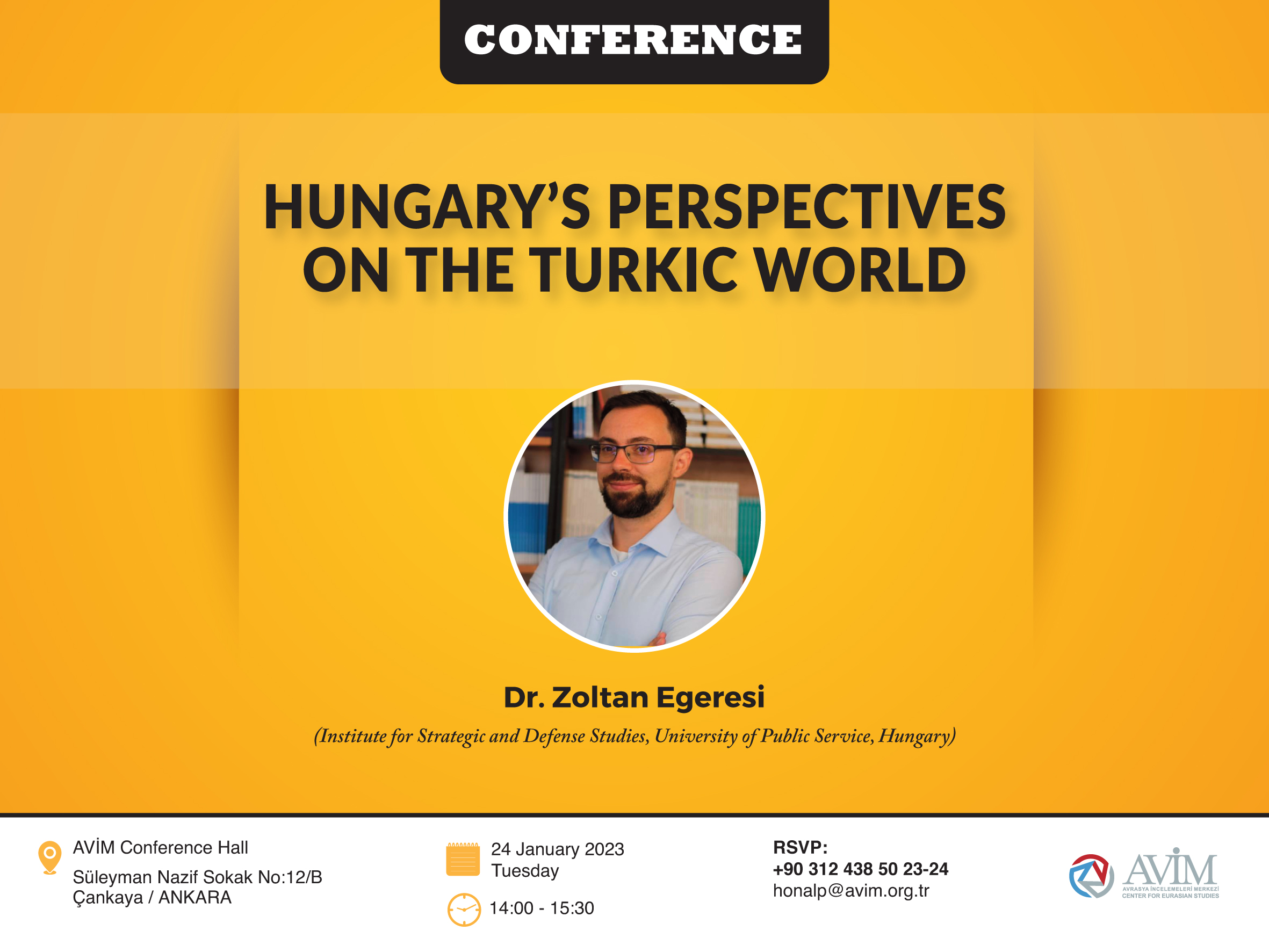
CONFERENCE TITLED “HUNGARY’S PERSPECTIVES ON THE TURKIC WORLD"