















Recently, the online Armenian news platform Groong published a commentary by Eduard Sharmazanov, the former vice-president of the National Assembly of the Republic of Armenia and a member of Serzh Sarkisian’s Republican Party. Titled “The main lessons of the fall of Kars and the devastating Armenian-Turkish war of 1920”, the commentary marked the anniversary of the end of Armenian occupation of Kars in October 1921.
Sharmazanov’s commentary bears all the characteristics of the Armenian nationalist historical writing, particularly due to its lack of critical self-reflection and habit of blaming others for failures suffered by Armenians. Evaluated from a broad historical perspective, this mentality has harmed Armenian society and prevented Armenia from establishing peaceful relations with its neighbors almost for a century.
Apart from these, Sharmazanov’s commentary has serious factual errors and suffers from wild exaggerations that are also typical of the Armenian nationalist discourse. The first set of these exaggerations concerns his figures relating to General Kazım Karabekir’s forces. According to Sharmazanov, in preparation for the offensive, “the Turks concentrated an army of 50,000 men and 306 guns near the borders of Armenia”, whereas Armenians “had 30-35,000 soldiers”. This is a gross exaggeration and certainly indicative of the author’s credibility as a historian of the events he is commenting on.
In fact, General Karabekir’s forces had “1,265 officers, 16,604 infantrymen, 528 cavalrymen”, thus reaching a total strength of approximately 18,300 men and certainly not “50,000 men” as claimed by Sharmazanov. Likewise, Karabekir’s army had a total of “54 artillery pieces”, again almost one-sixth of the wildly exaggerated figure of “306” proposed by Sharmazanov.
These figures should give the readers an indication as to the reliability of Sharmazanov’s figures when he presents them. According to Sharmazanov, during the Turkish offensive to take Kars, allegedly “the Turks massacred 198,000 people”.
Fortunately for historians, Kazım Karabekir, the general who led the offensive and captured Kars, left a detailed account of his offensive and one that can be compared with foreign sources on this subject. Karabekir presented the following information with regards to the offensive and its outcomes:
“In my order to attack Kars, I had stated the following: ‘The goal of this offensive is to destroy the principal Armenian military forces within Kars or to drive them out of Kars.’ As a matter of fact, my soldiers proved that they were a disciplined, powerful, modern army, and that they possessed remarkable humane feelings. Despite the fact that they had successfully attacked a modern fortress such as Kars, they did not commit the slightest harm against the city's civilian Armenian population.”
The validity of Karabekir’s statements may be verified by the accounts provided by foreign residents who were then present in Kars. These were mostly American missionaries and relief workers associated with the Near Eastern Relief (NER), a strongly pro-Armenian organization. On 31 October 1920, Edward Fox, a district commander of NER, telegraphed the following information:
“All the Americans in Kars are well, and the Turkish Army is full of concern for us and accords us all considerations. We have been given permission to continue our activities as before. The Turkish soldiers are well disciplined and there have been no massacres.”
The US High-Commissioner in Istanbul, Admiral Mark L. Bristol also reported on the offensive and the fall of Kars:
“The Turkish forces were far inferior to the Armenians, but the latter put up no fight and ran away in the most cowardly manner. The soldiers threw away their guns, stripped off their equipment, and hid in the hospitals and orphanages belonging to the Near East Relief Committee when the Turks entered Kars. There was hardly a shot fired from the Kars fortifications and there were no troops to withstand the advance of the Turks, who marched in as if on parade. The Armenian soldiers in many cases hid in the beds with sick children. The Turks in their advance into Armenia did not do any massacring, but did, after the occupation of Kars, execute a few Armenians.”
Finally, an exchange of letters between Bristol and James Barton, the Secretary of the American Board of Commissioners for Foreign Missions, illustrates how the wild exaggerations were put into circulation and how baseless these were. In early 1921, Bristol wrote the following to Barton regarding the Kars offensive and its aftermath:
“I see that reports are being freely circulated in the United States that the Turks massacred thousands of Armenians in the Caucasus. Such reports are repeated so many times it makes my blood boil. The Near East Relief have the reports from Yarrow and our own American people which show absolutely that such Armenian reports are absolutely false. The circulation of such false reports in the United States, without refutation is an outrage and is certainly doing the Armenians more harm than good. I feel that we should discourage the Armenians in this kind of work, not only because it is wrong, but because they are injuring themselves. In addition to the reports from our own American Relief workers that were in Kars and Alexandrople, and reports from men such as Yarrow, I have reports from my own Intelligence Officer and know that the Armenian reports are not true. Is there not something that you and the Near East Relief Committee can do to stop the circulation of such false reports? I was surprised to see that Dr. McCallum sent through a report along this line from Constantinople [İstanbul]. When I called attention to the report, it was stated that it came from the Armenians but the telegram did not state this, nor did it state that the Armenian reports were not confirmed by our own reports. [bold added for emphasis]”
Barton's response to Bristol clearly demonstrates the unfounded nature of these allegations as well as their source from which they originated:
“With reference to the false reports that come through reporting massacres of the Armenians by the Turks. There is no one who can deprecate this more than I do. But there is a situation over here [in the US] which is hard to describe. There is a brilliant young Armenian, a graduate of Yale University, by the name of Cardashian. He is a lawyer, with offices down in Wall Street, I believe. He has organized a committee so-called which has never met and is never consulted, with Mr. Gerard as Chairman. Cardashian is the whole thing. He has set up what he calls an Armenian publicity bureau or something of that kind, and has a letterhead printed. Gerard signs everything that Cardashian writes. He told me this himself one time... We have had many a conference with Armenian leaders as to what can be done to stop this vicious propaganda carried on by Cardashian. He is constantly reporting atrocities which never occurred and giving endless misinformation with regard to the situation in Armenia and in Turkey. We do not like to come out and attack him in public. This would injure the whole cause we are all trying to serve.”
In other words, Sharmazanov’s allegations of massacres and “198,000” victims are not only false and originate from Armenian propaganda sources, but their inaccuracy and lack of factual basis were established by sympathetic American protestant missionaries and relief worker as early as 31 October 1921, immediately after the Kars’ fall. It is therefore most important that sensible Armenians should not head and allow themselves to influenced by extremist figures who are disturbed by the normalization of Turkish-Armenian relations.
© 2009-2025 Center for Eurasian Studies (AVİM) All Rights Reserved
No comments yet.
-
 MONOPOLY OVER ACADEMIC PUBLISHING AND THE COST OF INTELLECTUAL CONFORMITY
AVİM 16.07.2026 -
ABUSES OF JUSTICE IN PARIS AND LOS ANGELES
AVİM 29.03.2021 -
 ACADEMIC ETHICS AND ARCHIVES: THE KRIKOR GUERGUERIAN ARCHIVE ADDS LITTLE NEW TO THE DEBATE
AVİM 07.02.2019 -
 EMMANUEL MACRON RECEIVED A SURPRISE NEW YEAR “GIFT” IN EXCHANGE FOR HIS SUPPORT TO ARMENIAN CLAIMS
AVİM 21.01.2019 -
 THE BILL OFFERED BY ARMENIAN LOBBIES TO IMPOSE SANCTIONS AGAINST TURKEY IN CALIFORNIA WAS DENIED BY THE GOVERNOR
AVİM 15.10.2018
-
 VICTIMIZED TURKS IN SWITZERLAND
Ali Murat TAŞKENT 16.11.2015 -
 A COMMENTARY FROM NAMIBIA ABOUT THE GENOCIDE DEBATE
Ali Murat TAŞKENT 28.06.2016 -
 CATHOLIC CHURCH IN RWANDA APOLOGIZES FOR ROLE IN GENOCIDE
Ali Murat TAŞKENT 05.12.2016 -
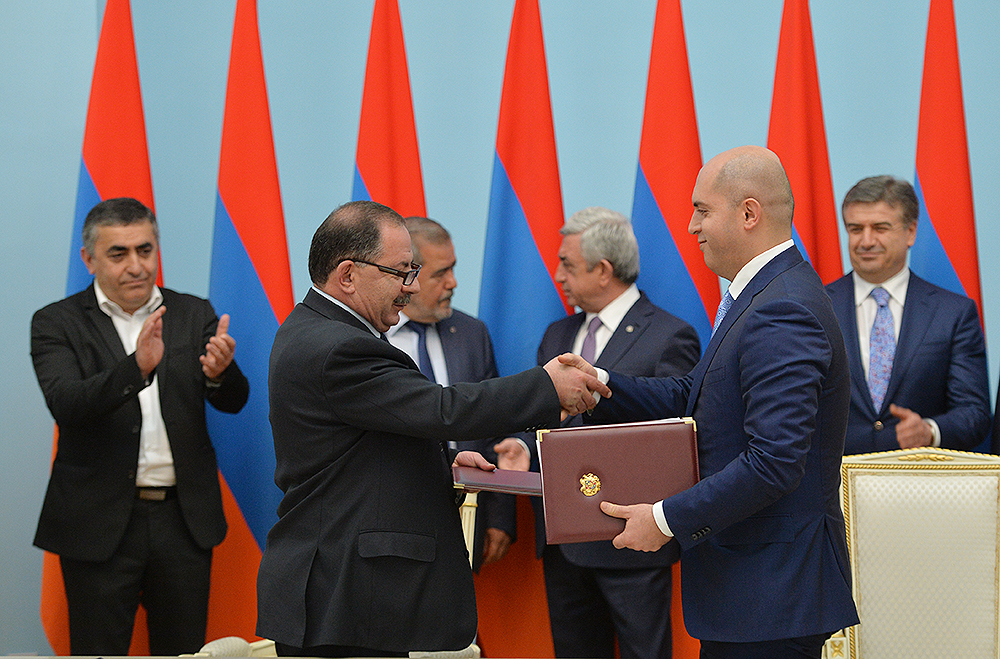 COALITION MEMORANDUM BETWEEN THE RULING RPA AND THE ARF IN ARMENIA: NOTHING NEW AFTER THE 2 APRIL 2017 ELECTIONS
Turgut Kerem TUNCEL 16.05.2017 -
 LETTER BY ATTORNEY BRUCE FEIN IN THE INTEREST OF HISTORICAL AND LEGAL TRUTH
AVİM 24.05.2023
-
25.01.2016
THE ARMENIAN QUESTION - BASIC KNOWLEDGE AND DOCUMENTATION -
12.06.2024
THE TRUTH WILL OUT -
27.03.2023
RADİKAL ERMENİ UNSURLARCA GERÇEKLEŞTİRİLEN MEZALİMLER VE VANDALİZM -
17.03.2023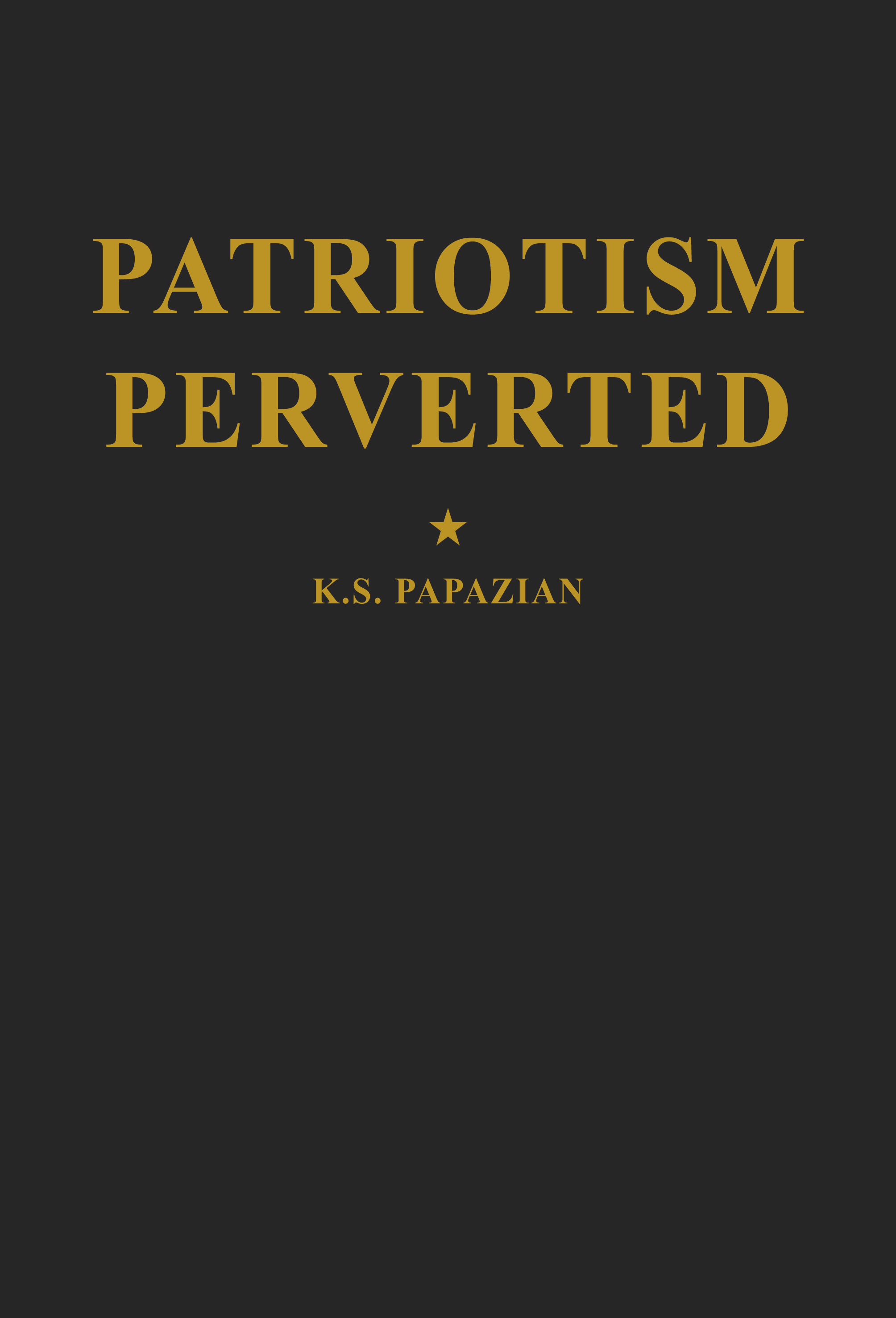
PATRIOTISM PERVERTED -
23.02.2023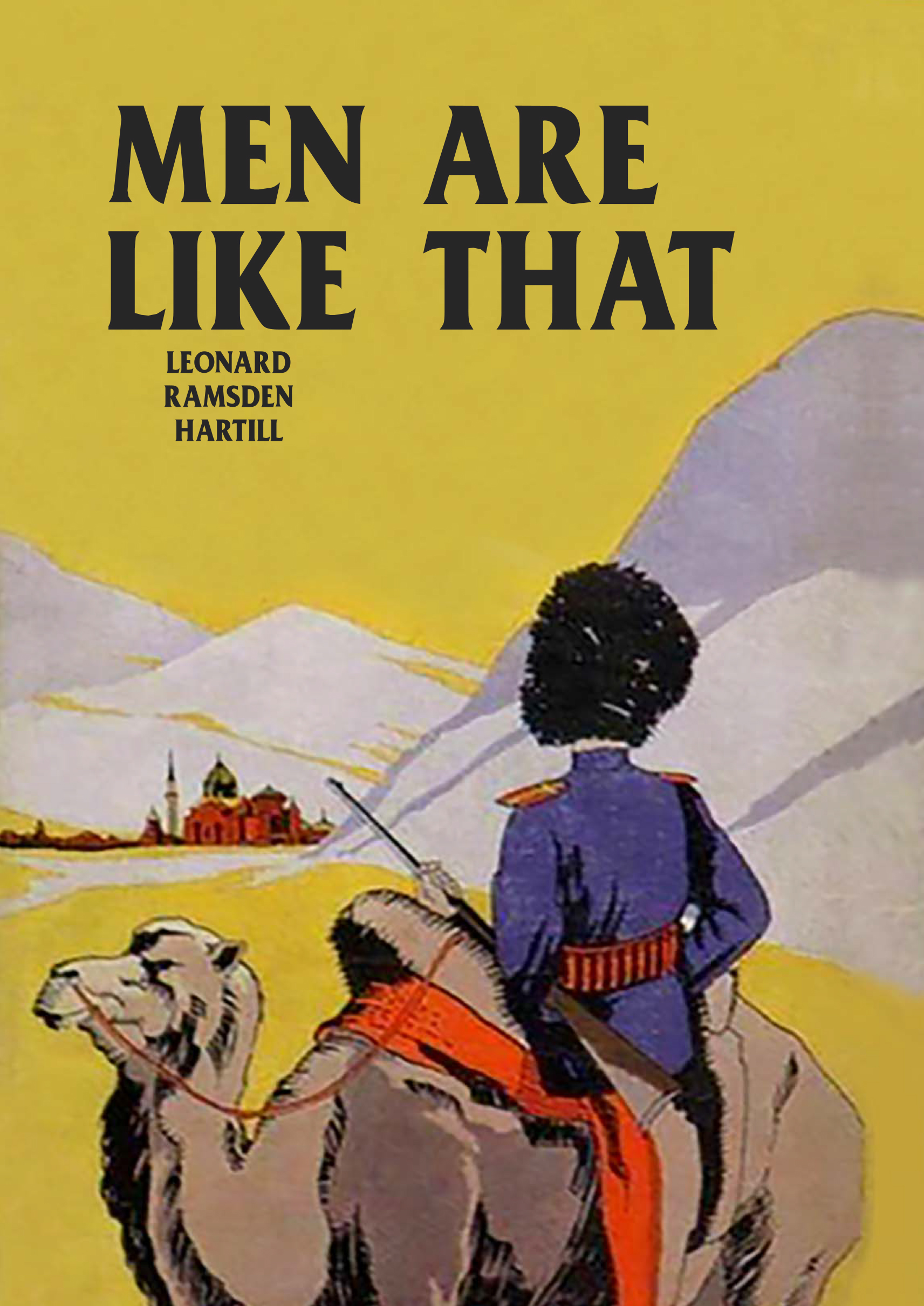
MEN ARE LIKE THAT -
03.02.2023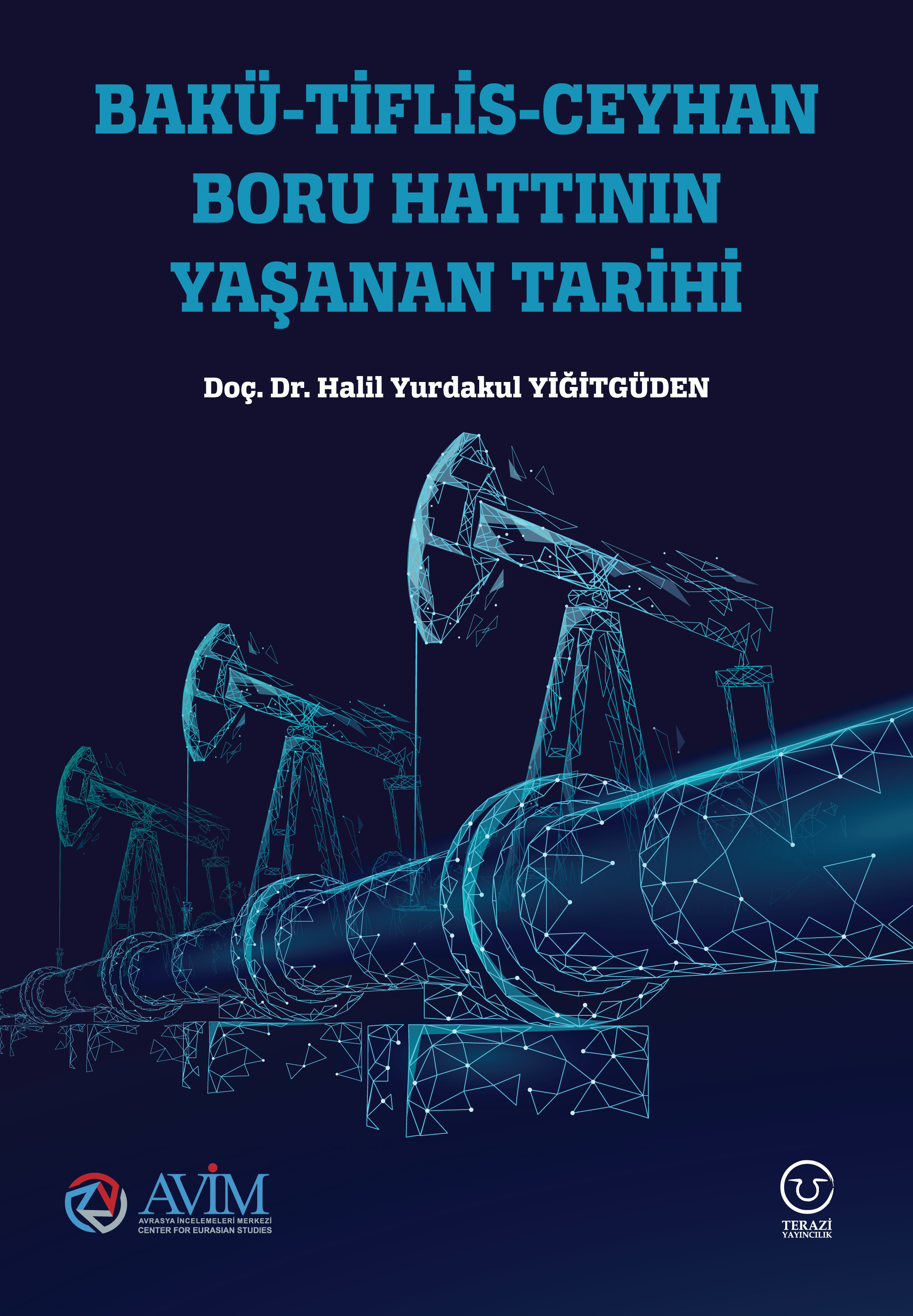
BAKÜ-TİFLİS-CEYHAN BORU HATTININ YAŞANAN TARİHİ -
16.12.2022
INTERNATIONAL SCHOLARS ON THE EVENTS OF 1915 -
07.12.2022
FAKE PHOTOS AND THE ARMENIAN PROPAGANDA -
07.12.2022
ERMENİ PROPAGANDASI VE SAHTE RESİMLER -
01.01.2022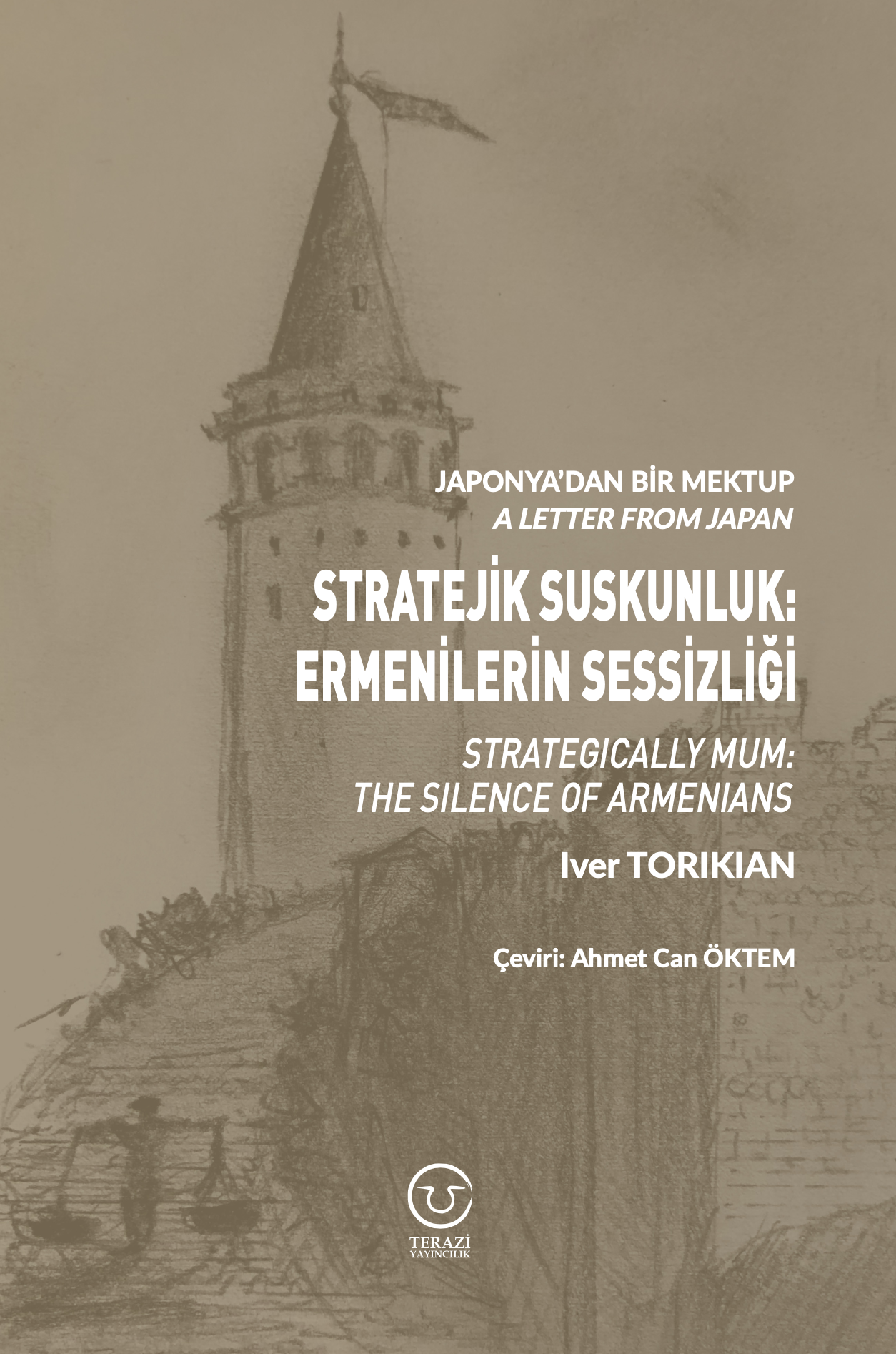
A Letter From Japan - Strategically Mum: The Silence of the Armenians -
01.01.2022
Japonya'dan Bir Mektup - Stratejik Suskunluk: Ermenilerin Sessizliği -
03.06.2020
Anastas Mikoyan: Confessions of an Armenian Bolshevik -
08.04.2020
Sovyet Sonrası Ukrayna’da Devlet, Toplum ve Siyaset - Değişen Dinamikler, Dönüşen Kimlikler -
12.06.2018
Ermeni Sorunuyla İlgili İngiliz Belgeleri (1912-1923) - British Documents on Armenian Question (1912-1923) -
02.12.2016
Turkish-Russian Academics: A Historical Study on the Caucasus -
01.07.2016
Gürcistan'daki Müslüman Topluluklar: Azınlık Hakları, Kimlik, Siyaset -
10.03.2016
Armenian Diaspora: Diaspora, State and the Imagination of the Republic of Armenia -
24.01.2016
ERMENİ SORUNU - TEMEL BİLGİ VE BELGELER (2. BASKI)
-
AVİM Conference Hall 24.01.2023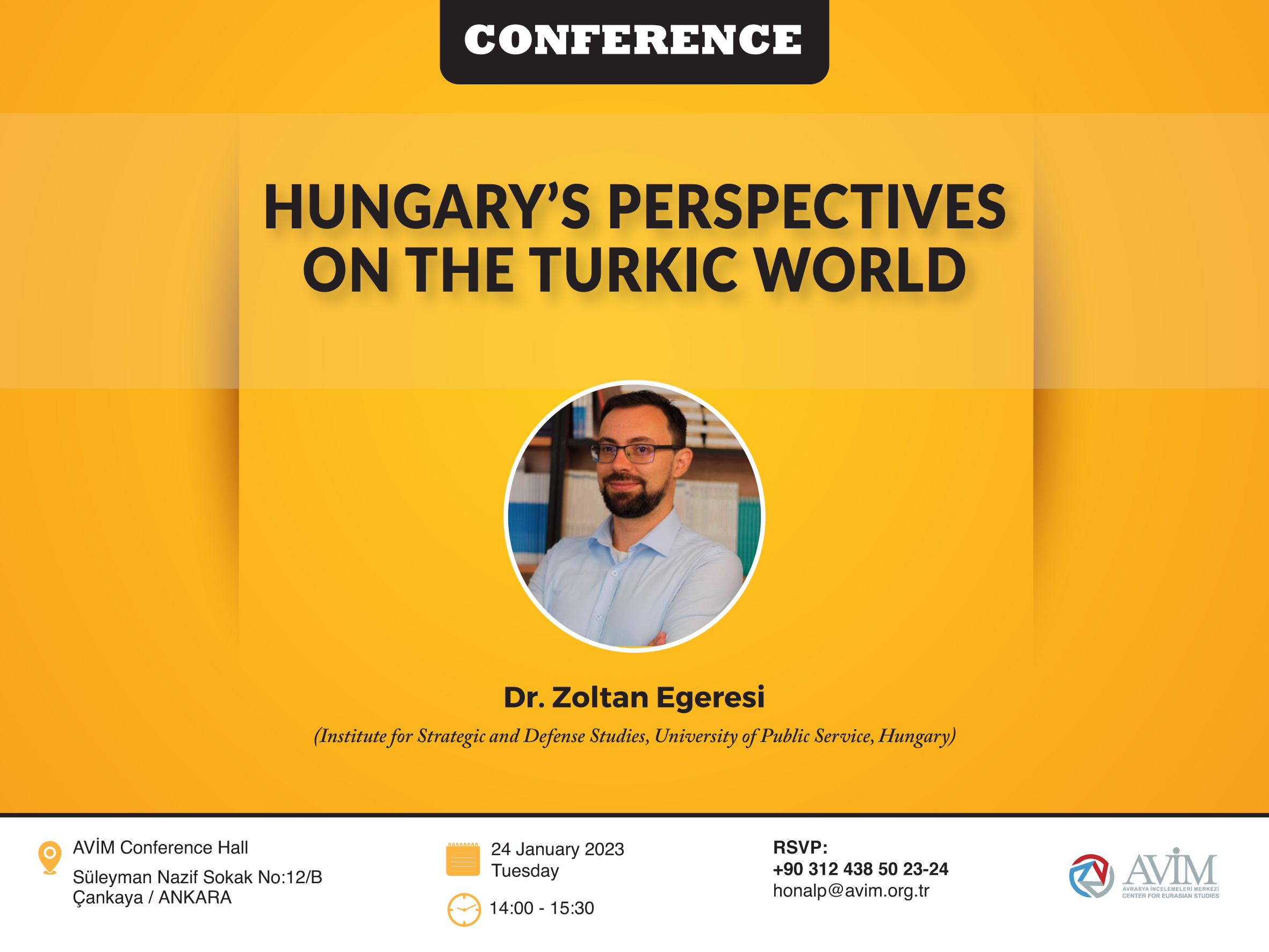
CONFERENCE TITLED “HUNGARY’S PERSPECTIVES ON THE TURKIC WORLD"