














SEECP Summit in Sofia as a Lens on Balkan Regional Ownership
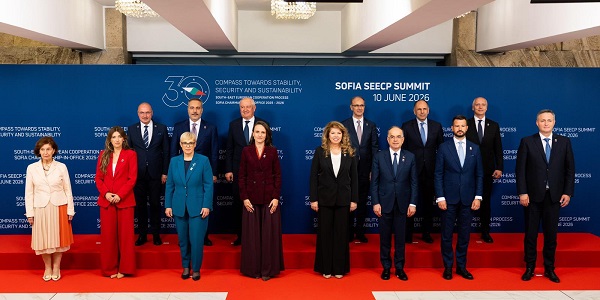
This analysis takes as its point of departure the South-East European Cooperation Process (SEECP) Heads of State and Government Summit held in Sofia on 10 June 2026, at which Türkiye participated at high level in deliberations on regional cooperation and security in South-East Europe. Rather than approaching this summit as a news item, the text situates SEECP within the broader architecture of Balkan regional initiatives. It underscores that it is a platform created by the region’s own political will, not an instrument imposed from outside. Against this backdrop, the analysis argues that SEECP exemplifies regional ownership in the Balkans and provides concrete institutional confirmation of Türkiye’s status as an integral Balkan country, thereby offering a vantage point from which to examine both the historical evolution of regional cooperation and contemporary debates on fragmentation, politicization, and the marginalization of Türkiye’s Balkan identity.[1]
From Post‑Conflict Initiative to Regionally Owned Framework
The South-East European Cooperation Process (SEECP) was launched in 1996, when Bulgaria hosted a meeting in Sofia at which South-East European states agreed to establish a regionally driven forum to promote peace, good‑neighborly relations, and stability in the Balkans. Conceived in the aftermath of the Yugoslav wars and in parallel with other regional initiatives, SEECP aimed to strengthen democratic institutions and cooperative security through dialogue and confidence‑building among all participating countries, rather than relying solely on external actors or organizations. In this sense, SEECP’s founding documents, notably the 1996 Sofia Declaration on Good‑Neighbourly Relations, Stability, Security and Cooperation in the Balkans and the 2000 Charter on Good‑Neighbourly Relations, Stability, Security and Cooperation in South‑Eastern Europe, explicitly echo principles found in OSCE commitments and United Nations resolutions on cooperative security and regional confidence‑building, even as they are articulated through a framework designed and owned by the Balkan states themselves.[2]
Over time, SEECP adopted political declarations and guidelines that consolidated its role as the only framework bringing together all states of the region, while also interacting with the European Union, NATO, and other institutions without subordinating itself to them. [3] This evolution reflects a legal and conceptual commitment to regional cooperation and cooperative security that resists the externally imposed fragmentation of the Balkans into artificial sub-regions such as the so‑called “Western Balkans,” a categorization that AVİM analyses have criticized for obscuring the broader regional context and for implicitly casting out Türkiye.[4]
Türkiye as a Co‑Owner of the Balkan Order
The historical evolution of SEECP underlines that Türkiye is not an external observer but a founding and continuous participant in a regional architecture designed by the Balkan states themselves. Geographically, part of Türkiye’s territory lie within the Balkan Peninsula. At the same time, historically, linkages between the Ottoman and Republican eras have produced dense sociocultural ties through shared urban spaces, family networks, religious communities, and migration patterns spanning the region. AVİM’s analyses emphasize that these ties, combined with Türkiye’s longstanding diplomatic engagement in Balkan security and reconstruction processes, justify describing Türkiye as a Balkan country not only in geographical terms but also in historical and sociological senses.[5]
Türkiye’s active role in SEECP—from its early support for the initiative to later chairmanships and participation at summit level—provides concrete institutional evidence of this embeddedness. The fact that SEECP brings together all regional states on an equal footing and that Türkiye has repeatedly assumed responsibility in shaping its agenda demonstrates that Ankara is a co-owner of the Balkans’ cooperative security architecture rather than a “partner” invited from outside. This view is consistent with AVİM’s broader approach, which rejects portrayals of Türkiye as an external power in the Balkans and instead frames it as a regional stakeholder whose national identity, historical memory, and security interests are inseparable from developments in South-East Europe.[6]
‘Western Balkans’ and the Intended Fragmentation of Türkiye’s Balkan Identity
The view that Türkiye is a constitutive Balkan actor sits uneasily with European discursive practices that promote categories such as “Western Balkans,” which are not neutral geographical labels but political constructs that implicitly detach Türkiye from the broader Balkan context and reframe the region as a semi-periphery of the European Union. Building on AVİM’s critique of “Batı Balkanlar” as a misleading designation, this analysis argues that such terminology exemplifies conceptual abuse and Eurocentric dependency: it normalizes a fragmented vision of South-East Europe in which selected states are grouped into an accession queue, while others, notably Türkiye, are symbolically shifted outside the region’s core historical and legal frame.[7] In contrast, SEECP’s inclusive design—bringing together all Balkan states on an equal footing and emphasizing jointly owned agendas—embodies an alternative logic that resists portrayals of the Balkans as either the EU’s “backyard” or a playground for external powers, and instead foregrounds the region’s capacity to act collectively with Türkiye as a full stakeholder.
Safeguarding Regional Ownership and Türkiye’s Balkan Role
The preceding analysis shows that regionally owned frameworks such as SEECP, and Türkiye’s constitutive role within them, are exposed to the gradual entrenchment of divisive regional labels and conceptually skewed categorizations. If left unaddressed, such practices risk undermining mechanisms that embody Balkan regional ownership and eroding recognition of Türkiye as an integral Balkan country, whose identity and security are tied to developments in South-East Europe. At the same time, the inclusive design of SEECP offers concrete opportunities to reinforce cooperative security, promote rule‑of‑law‑based cooperation, and support balanced historical narratives that acknowledge all regional stakeholders, including Türkiye, as co‑owners of the Balkan order. In this context, SEECP summit declarations and chairmanship programmes increasingly reflect Ankara’s consistent emphasis on the Process’s inclusive, all‑Balkan scope and on Türkiye’s embeddedness in regional cooperative security; it is therefore essential that regional governments and international partners read and engage with these signals as invitations to align their own discourse and practice with a non‑fragmented, law‑ and norm‑based understanding of the Balkans, rather than with frameworks that implicitly sideline Türkiye’s Balkan identity.
SEECP’s Future and Türkiye’s Long‑Term Interests in the Balkans
This analysis has argued that the South-East European Cooperation Process is not a routine summit framework, but a tangible expression of Balkan regional agency that emerged in the mid-1990s as a regionally owned response to instability and external dependency. By tracing Türkiye’s founding and ongoing role in SEECP and highlighting its historical, sociocultural, and institutional ties to the region, the analysis has underscored that Türkiye’s identity and security are inseparable from the Balkans and that Ankara is a co-owner of the region’s cooperative security architecture. Against this backdrop, the critique of fragmenting labels such as “Western Balkans” has shown how certain European discourses risk normalizing exclusionary hierarchies that endeavor to marginalize Türkiye and downgrade regionally owned mechanisms. It is therefore essential that future developments in SEECP and related regional forums be closely monitored to determine whether they reinforce or erode inclusive and cooperative understandings of the Balkans. In a forward-looking perspective, the consolidation of SEECP as an inclusive, norm-based framework will remain closely linked to Türkiye’s medium- and long-term interests in a stable, legally coherent, and non-fragmented Balkan order.
*Picture: Republic of Türkiye Ministry of Foreign Affairs
[1] Sofia Declaration on Good-Neighbourly Relations, Stability, Security and Cooperation in the Balkans,” adopted at the Meeting of the Ministers of Foreign Affairs of the South-East European Countries, Sofia, 6–7 July 1996, accessed 18 June 2026, https://www.seecp.info/declarations.
[2] Hatice Özdemir Tosun , “Dışişleri Bakanı Çavuşoğlu: Antalya Diplomasi Forumu ile diplomaside nüfuzumuzun güçlendirilmesini hedefliyoruz ”, Anatolian Agency, 16 June 2021, erişim tarihi: 18 June 2026, https://www.aa.com.tr/tr/politika/disisleri-bakani-cavusoglu-antalya-diplomasi-forumu-ile-diplomaside-nufuzumuzun-guclendirilmesini-hedefliyoruz/2275565
[3] Republic of Türkiye Ministry of Foreign Affairs. No: 112, 9 June 2026, Regarding the Participation of H.E. Hakan Fidan, Minister of Foreign Affairs of the Republic of Türkiye, in the South-East European Cooperation Process Summit of Heads of State and Government. 9 June 2026. https://www.mfa.gov.tr/no_-112_-sayin-bakanimizin-guneydogu-avrupa-isbirligi-sureci-devlet-ve-hukumet-baskanlari-zirvesi-ne-katilimi-hk.en.mfa
[4] Teoman Ertuğrul Tulun, YANLIŞ BİR İSİMLENDİRME: BATI BALKANLAR , AVİM Analiz, no. 2017/21 accessed 18 June 2026, pdf available at https://avim.org.tr/public/tr/Pdf/Analiz/349
[5] Teoman Ertuğrul Tulun, “Balkanlar 2016: Belirsizlik İçinde Bütünleşme Arayışları,” AVİM Analiz, no.2017/2, 2017, accessed 18 June 2026, pdf available at https://avim.org.tr/tr/Analiz/BALKANLAR-2016-BELIRSIZLIK-ICINDE-BUTUNLESME-ARAYISLARI
[6] Teoman Ertuğrul Tulun, “Türkiye Güney Doğu Avrupa İşbirliği Süreci (GDAÜ) Dönem Başkanlığını Üstlendi,” AVİM Analiz, no. 2020/28, 2020, https://avim.org.tr/tr/Analiz/TURKIYE-GUNEY-DOGU-AVRUPA-ISBIRLIGI-SURECI-GDAU-DONEM-BASKANLIGINI-USTLENDI ; https://avim.org.tr/tr/Analiz/YANLIS-BIR-ISIMLENDIRME-BATI-BALKANLAR ; https://avim.org.tr/Blog/BALKANLAR-NE-AB-NIN-ARKA-BAHCESI-NE-DE-HERHANGI-BIR-ULKENIN-OYUN-SAHASI-DAILY-SABAH-24-10-2018
[7] Şeval Beste Gözçelik, “Küresel Rekabet Alanı: Balkanlar,” AVİM Yorum, no. 2021 / 37, 11 June 2021, accessed 18 June 2026, https://avim.org.tr/tr/Yorum/KURESEL-REKABET-ALANI-BALKANLAR
© 2009-2025 Center for Eurasian Studies (AVİM) All Rights Reserved
No comments yet.
-
 REMEMBERING AND REMINDING THE SIGNIFICANCE, MEANING, AND PROVISIONS OF THE LAUSANNE PEACE TREATY IN ITS CENTENARY
Teoman Ertuğrul TULUN 11.05.2023 -
 SOVEREIGNTY AND SYNERGY: INTEGRATING MONTREUX CONVENTION COMPLIANCE INTO EU BLACK SEA SECURITY ARCHITECTURE
Teoman Ertuğrul TULUN 01.07.2025 -
 GERMAN COLONIAL LEGACY: TANZANIA AND THE HUMBOLDT FORUM
Teoman Ertuğrul TULUN 01.02.2021 -
 SOUL-SEARCHING IN SOUTHEAST ASIA: EMERGING RIFTS BETWEEN OLD FRIENDS AND NEW FOREIGN POLICY DIRECTIONS
Teoman Ertuğrul TULUN 17.01.2017 -
 THE ORTHODOX CHURCH : ECCLESIASTICAL BATTLE OF MONTENEGRINS WITH THE SERBIAN ORTHODOX CHURCH
Teoman Ertuğrul TULUN 01.09.2022
-
 NEW STUDY SHOWS RISE OF XENOPHOBIA IN GERMANY
Teoman Ertuğrul TULUN 04.12.2018 -
 REVIVAL OF THE QATAR-TÜRKİYE NATURAL GAS PIPELINE PROJECT
Bekir Caner ŞAFAK 16.04.2025 -
 EU-ARMENIA COOPERATION AND CHANGING REGIONAL BALANCES IN THE SOUTH CAUCASUS
İlaha KHANTAMİROVA 24.07.2026 -
 TURKISH-AMERICAN RELATIONS LOST A HISTORICAL OPPORTUNITY
Hazel ÇAĞAN ELBİR 17.11.2022 -
 PEACE TREATY OF LAUSANNE AND THE END TO ARMENIAN ASPIRATIONS
Teoman Ertuğrul TULUN 22.07.2016
-
25.01.2016
THE ARMENIAN QUESTION - BASIC KNOWLEDGE AND DOCUMENTATION -
12.06.2024
THE TRUTH WILL OUT -
27.03.2023
RADİKAL ERMENİ UNSURLARCA GERÇEKLEŞTİRİLEN MEZALİMLER VE VANDALİZM -
17.03.2023
PATRIOTISM PERVERTED -
23.02.2023
MEN ARE LIKE THAT -
03.02.2023
BAKÜ-TİFLİS-CEYHAN BORU HATTININ YAŞANAN TARİHİ -
16.12.2022
INTERNATIONAL SCHOLARS ON THE EVENTS OF 1915 -
07.12.2022
FAKE PHOTOS AND THE ARMENIAN PROPAGANDA -
07.12.2022
ERMENİ PROPAGANDASI VE SAHTE RESİMLER -
01.01.2022
A Letter From Japan - Strategically Mum: The Silence of the Armenians -
01.01.2022
Japonya'dan Bir Mektup - Stratejik Suskunluk: Ermenilerin Sessizliği -
03.06.2020
Anastas Mikoyan: Confessions of an Armenian Bolshevik -
08.04.2020
Sovyet Sonrası Ukrayna’da Devlet, Toplum ve Siyaset - Değişen Dinamikler, Dönüşen Kimlikler -
12.06.2018
Ermeni Sorunuyla İlgili İngiliz Belgeleri (1912-1923) - British Documents on Armenian Question (1912-1923) -
02.12.2016
Turkish-Russian Academics: A Historical Study on the Caucasus -
01.07.2016
Gürcistan'daki Müslüman Topluluklar: Azınlık Hakları, Kimlik, Siyaset -
10.03.2016
Armenian Diaspora: Diaspora, State and the Imagination of the Republic of Armenia -
24.01.2016
ERMENİ SORUNU - TEMEL BİLGİ VE BELGELER (2. BASKI)
-
AVİM Conference Hall 24.01.2023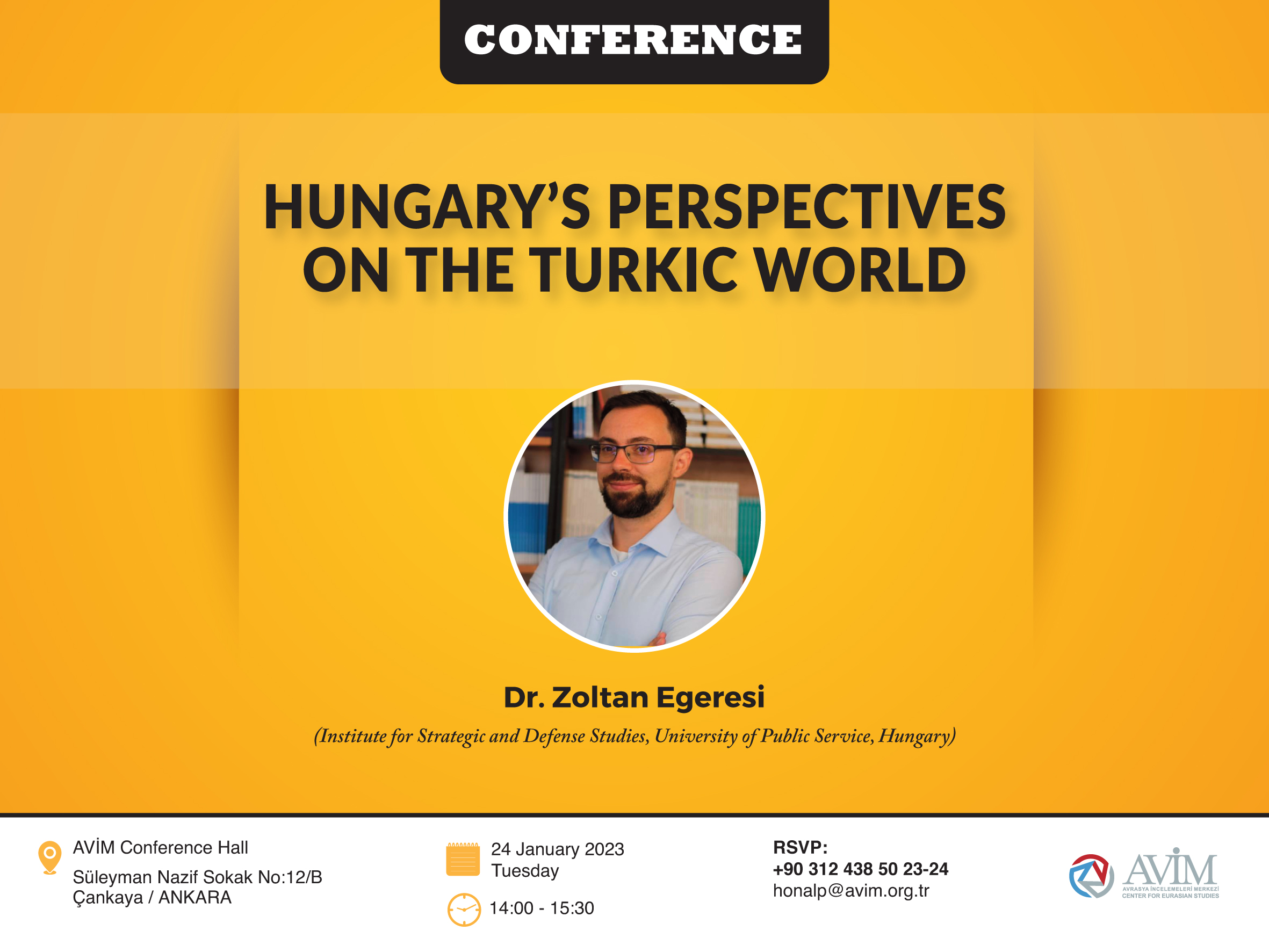
CONFERENCE TITLED “HUNGARY’S PERSPECTIVES ON THE TURKIC WORLD"