














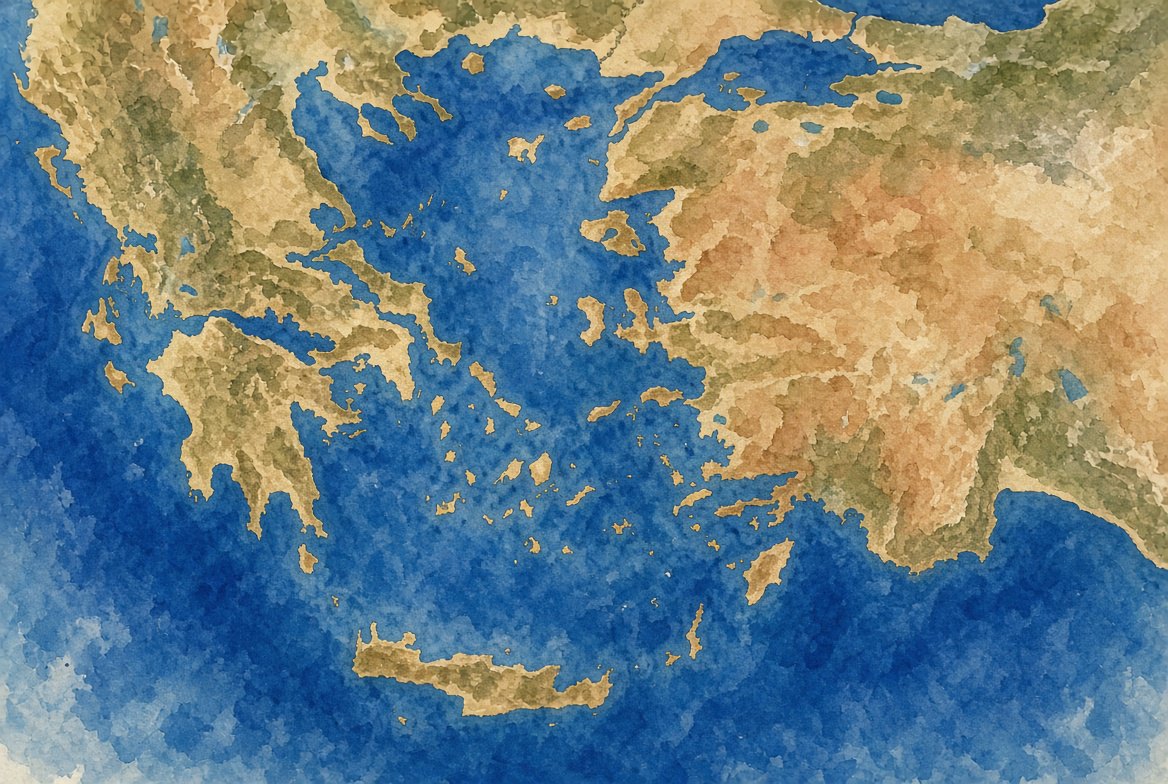
In her article referenced above, the writer advances a series of propositions concerning the Aegean Sea in defense of Greek positions. This is not unusual, and it occurs notwithstanding the signing of the “2023 Athens Declaration on Friendly Relations and Good-Neighborliness[1]” between the two countries. Before describing the problems that exist between Türkiye and Greece in the Aegean Sea, it is useful to recall that general elections in Greece are approaching and that the party in power, New Democracy (Gr. Nea Dimokratia), needs to whip up the emotions of its supporters. The issues mentioned in Dimou’s article arise from the disrespect of the successive Greek governments for the rules and regulations of the international law.
Any impartial observer taking a closer look at what is happening on the political scene of Greece would witness the following: When the general elections approach in Greece usually a barrage of accusations commences directed at Türkiye concerning several issues of conflict especially in the Aegean Sea. The Prime Minister of Greece, Mr. Mitsotakis, once again leads the way, followed closely and whole-heartedly by Minister of Defence Yorgos Gerapetridis. This time, the election campaign strategy seems to be two-fold. On the one hand, the classical menu of the Aegean problems is being brought as useful elements of exploitation while at the same time, steps already taken to strengthen the Greek Armed Forces extensively propagated.
Every country has the right to furnish its armed forces with the necessary doctrine, strategy and the armaments. Greece has too. Therefore, we would like to turn our focus on the questions fabricated and exploited incessantly by Greece in the Aegean, especially at times when they are needed to harness the votes of the people.
The questions in the Aegean may be listed as follows:
- The breadth of territorial waters
- The six-to-ten-mile airspace question in the Aegean
- Questions arising from Greece’s manipulation of Flight Information Region (FIR) responsibilities
- The demilitarized status of the islands
- The disagreement between Türkiye and Greece concerning the status of certain geographical features (islands, islets and rocks) in the Aegean
- The dispute relating to the continental shelf
1. The breadth of territorial waters
As regards the breadth of territorial waters, Greece claims that the United Nations Convention on the Law of the Sea (UNCLOS)[2] confers upon her the right to extend its territorial sea to twelve nautical miles. The Aegean, however, is a semi-enclosed sea of distinctive geographical configuration; a uniform twelve-mile limit on both coasts is therefore neither practicable nor consistent with equity. Türkiye remains determined that the existing six-mile limit should be preserved. It is Türkiye’s established policy that repeated Greek assertions of an intention to extend territorial waters to twelve nautical miles would constitute a casus belli[3].
2. The six-to-ten-mile airspace question in the Aegean
Although Greek territorial waters remain at six nautical miles in breadth, Greece continues to claim a ten-mile national airspace above it. This claim is without parallel or precedent anywhere in the world. Consequently, Türkiye recognizes Greek national airspace in the Aegean only to a distance of six nautical miles, corresponding to their breadth of the territorial sea.
3. Questions arising from Greece’s manipulation of Flight Information Region (FIR) responsibilities
Flight Information Region (FIR) responsibility is a technical function exercised by coastal States. The International Civil Aviation Organization (ICAO)[4] has delimited and defined FIR boundaries worldwide. In the Aegean, Greece administers the technical aspects of air-traffic responsibility within the Athens FIR. Although that responsibility is exclusively technical in character, Greece treats it as a political prerogative and requires prior authorization for all Turkish aircraft entering the Athens FIR. State and military aircraft are not subject to such a requirement according to the international practice. Turkish Air Force is therefore under no legal obligation to submit flight plans or notifications. Greece nevertheless systematically portrays every passage of Turkish military aircraft through the Athens FIR as a violation of international law. It is evident that no genuine legal dispute at the international level exists on this issue.
4. The demilitarized status of the islands
The demilitarized status of the islands is governed by distinct conventional regimes. That status did not arise as a discretionary concession; it was an essential condition attached to the transfer of sovereignty, designed to preserve the political and security balance established in the Eastern Aegean.
The legal chain begins with the Decision of the Six Powers of 13–14 February 1914, adopted pursuant to Article 5 of the Treaty of London of 1913. The islands then under Greek occupation, including Lemnos, Samothrace, Lesbos, Chios, Samos and Ikaria, were attributed to Greece on the express condition that they would not be fortified, would not be used as naval or military bases, and would remain demilitarized. The Lausanne Peace Treaty of 24 July 1923 confirmed that arrangement. Under Article 12, the 1914 decision was upheld, subject to the provisions of the Treaty. Under Article 13, four islands placed under Greek sovereignty, Mytilene (Lesbos), Chios, Samos and Nikaria (N. Ikaria), are subject to specific restrictions: no naval base and no fortification may be established; Greek military aircraft are forbidden to fly over the Anatolian coast, with reciprocal obligations on Türkiye; and Greek military forces on those islands are limited to the normal contingent called up for military service, together with a force of gendarmerie and police proportionate to that existing in the remainder of Greek territory.
The Convention relating to the Regime of the Straits, annexed to the Lausanne Treaty, placed Lemnos and Samothrace under a still stricter demilitarized regime by reason of their proximity to the Turkish Straits and their direct relevance to Türkiye’s security. The Montreux Convention of 1936 replaced the Lausanne Straits Convention solely with respect to the regime of the Straits and, by its annexed Protocol, authorized Türkiye to remilitarize the zone of the Straits as defined in that Convention. It contains no provision authorizing the remilitarization of Lemnos or Samothrace. Those islands therefore remain subject to the demilitarized status established in 1923. The contention that Montreux implicitly abolished that status, or that remilitarization of the Straits created a reciprocal right for Greece, finds no support in the text of the Convention, in its Protocol, or in the object and purpose of the instrument, which was confined to the security of the Straits.
The Treaty of Peace with Italy, signed at Paris on 10 February 1947, transferred to Greece the Dodecanese islands which Italy had taken from the Ottoman Empire under the Treaty of Ouchy of 18 October 1912. Article 14 provides that Italy cedes to Greece full sovereignty over the Dodecanese islands enumerated therein, Stampalia (Astypalaia), Rhodes, Calki (Chalki), Scarpanto (Karpathos), Casos, Piscopis (Tilos), Misiros (Nisyros), Calimnos (Kalymnos), Leros, Patmos, Lipsos, Simi (Symi), Cos (Kos) and Castellorizo, as well as the adjacent islets, and states expressly on the condition that “these islands shall be and shall remain demilitarized.” Although Türkiye is not a party to the 1947 Treaty, the demilitarization clause formed an essential condition of the transfer and constitutes part of the territorial settlement affecting the Eastern Aegean balance first established at Lausanne.
In Türkiye’s view, these instruments must be read together. Demilitarization was not a temporary wartime expedient; it was the counterpart of sovereignty. Greece has, however, treated the obligation as optional. From the 1960s onwards, and with particular intensity after 1974, Greece has stationed armed forces, constructed fortifications and deployed heavy weapons on islands that international agreements require to remain demilitarized. These measures have continued despite repeated Turkish protests. More recent procurement and deployment plans, including the acquisition of long-range precision-strike systems intended for use from Aegean islands, would, if carried into effect on islands subject to conventional restrictions, constitute a further and more serious breach of the same obligations.
Greece has sought to justify these acts by invoking change in the circumstances, an alleged right of self-defense under Article 51 of the Charter of the United Nations, and a purported restoration of “balance” after Montreux. None of these arguments displaces the simple meaning of the treaty texts. A fundamental change of circumstances cannot be invoked unilaterally to extinguish an essential condition of a territorial settlement. The inherent right of self-defense does not authorize a State to set aside specific conventional limitations that it freely accepted previously. Still less can a convention confined to the regime of the Straits be construed as a license to arm islands that the Lausanne settlement placed under restriction precisely because of their bearing on Turkish security.
The legal consequences of a material breach of an essential provision are well established. Under Article 60 of the Vienna Convention on the Law of Treaties, such a breach entitles the injured party to invoke it as a ground for suspending the operation of the treaty in whole or in part. More fundamentally, where sovereignty was transferred on the condition of demilitarization, persistent and systematic violation of that condition disturbs the equilibrium that the Lausanne settlement was intended to secure. Türkiye therefore maintains that the demilitarized status of the relevant islands must remain fully in force; that Greece is bound to restore compliance; and that continued militarization cannot be treated as a fait accompli immune from legal consequence. The islands in question could accordingly retain their demilitarized status so long as the required conditions are met[5].
5. The disagreement between Türkiye and Greece concerning the status of certain geographical features (islands, islets and rocks) in the Aegean
On the question of sovereignty over certain islands, islets and rocks, Greece, itself a party to the Treaty of Peace signed at Lausanne on 24 July 1923, disregards both the rules accepted in that Treaty concerning the attribution of the Aegean islands and the Treaty’s express recognition that there exist islands, islets and rocks whose sovereignty was not determined and was to be decided by the Parties subsequently. Greece has nevertheless proceeded to occupy and to exercise various forms of authority over such features. In this vein, first paragraph of Article 16 of the Treaty states:
Turkey hereby renounces all rights and title whatsoever over or respecting the territories situated outside the frontiers laid down in the present Treaty and the islands other than those over which her sovereignty is recognized by the said Treaty, the future of these territories and islands being settled or to be settled by the parties concerned.
Greece despite the text of the relative paragraph of the above Treaty continues to claim unwarranted rights on these formations.
Notwithstanding this text, Greece persists in illegal attempts to appropriate features whose status remains unresolved.
6. The dispute relating to the continental shelf
Since Greece continues to insist that the continental-shelf question is the only issue needs to be discussed between Türkiye and Greece, Türkiye, having regard to the other problems listed above, all of which require examination, is not prepared to open negotiations confined to that particular dispute.
In the light of the foregoing, the objective reader will undoubtedly possess sufficient information concerning the sources of the problems existing between Türkiye and Greece. The points recorded above are those prescribed by existing international law; Greece nevertheless continues to contest them. Since the matter is no more complex than that, Greece’s commencement of full compliance with international law is a pressing requirement for the peace and security of the Eastern Mediterranean. It follows that the article published by Antonia Dimou in Modern Diplomacy Briefing[6] is devoid of any sound legal foundation.
[1] “Athens Declaration on Friendly Relations and Good-Neighbourliness,” 7 December 2023, https://www.primeminister.gr/en/2023/12/07/33195.
[3] TBMM’de temsil edilen siyasî partilerin, Yunanistan’ın Ege Denizindeki karasularının 12 mile çıkarılmasına yönelik tutumunun doğuracağı sonuçların Yunan ve dünya kamuoyuna dostane duygularla duyurulmasına ilişkin önergesi,” TBMM Tutanakları Dergisi, 8 June 1995, 121. Birleşim, https://www5.tbmm.gov.tr/tutanaklar/TUTANAK/TBMM/d19/c088/tbmm19088121.pdf.
[5] Hazel Çağan Elbir, “Yunanistan Adaları Silahlandırmaya Hazırlanıyor, Tarihsel Bağlam, Güncel İhl^ller ve Yol açabileceği Sorunlar,” AVİM, avim.org.tr, 18 December 2025, https://www.avim.org.tr/tr/Analiz/YUNANISTAN-ADALARI-SILAHLANDIRMAYA-HAZIRLANIYOR-TARIHSEL-BAGLAM-GUNCEL-IHLALLER-VE-YOL-ACABILECEGI-SONUCLAR.
[6] Antonia Dimou, “Deconstructing Turkey’s Revisionism in the Aegean and Broad Regions,” Modern Diplomacy, moderndiplomacy.eu, 18 September 2026, https://moderndiplomacy.eu/2026/09/15/deconstructing-turkeys-revisionism-in-the-aegean-and-broad-regions/.
© 2009-2025 Center for Eurasian Studies (AVİM) All Rights Reserved
No comments yet.
-
 NEO – NAZISM IS GAINING STRENGTH IN THE NORDIC COUNTRIES
Hazel ÇAĞAN ELBİR 20.09.2018 -
 ARMENIAN TERRORISM BEGINS TO SHOW ITS FACE AGAIN
Hazel ÇAĞAN ELBİR 04.02.2021 -
 WHAT IS OPERATION NEMESIS?
Hazel ÇAĞAN ELBİR 25.05.2023 -
 AN ARCHBISHOP OF THE ARMENIAN APOSTOLIC CHURCH HAND IN HAND WITH A MURDERER - BEHIND THE SCENES OF THE PROTESTS IN YEREVAN
Hazel ÇAĞAN ELBİR 23.05.2024 -
 LOS ANGELES MUNICIPAL ELECTIONS: IS HOSTILITY TOWARDS TURKS THE CRITERION?
Hazel ÇAĞAN ELBİR 02.11.2022
-
 THE BALTIC COUNTRIES: 25 YEARS OF ACCOMPLISHMENT AND FEAR
Teoman Ertuğrul TULUN 07.12.2016 -
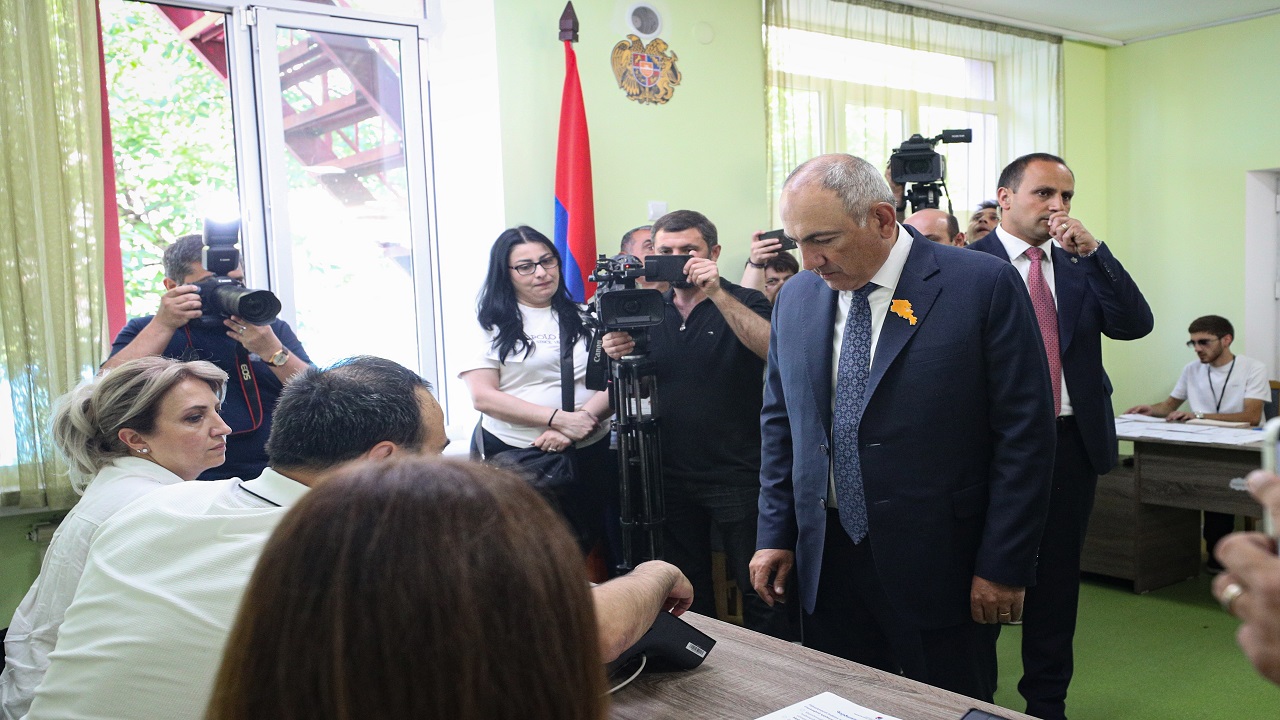 THE JUNE 7 ELECTIONS IN ARMENIA: POLITICAL CONTINUITY AND REGIONAL TRANSFORMATION
Tuğçe TECİMER 25.06.2026 -
 AN INQUIRY INTO NANCY PELOSI’S VISIT TO ARMENIA
Turgut Kerem TUNCEL 23.09.2022 -
 EUROPE’S CHALLENGE WITH THE FAR-RIGHT: AUSTRIA
Hazel ÇAĞAN ELBİR 25.12.2017 -
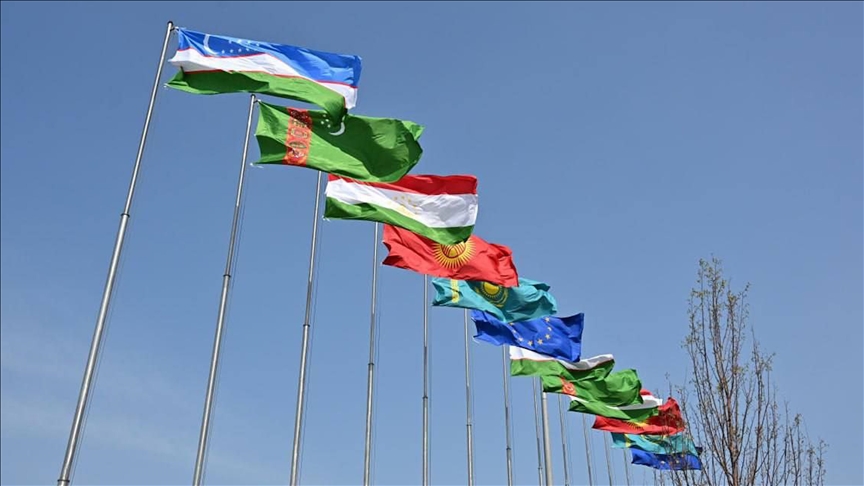 REFLECTIONS ON THE EU – CENTRAL ASIA SUMMIT
Hazel ÇAĞAN ELBİR 14.04.2025
-
25.01.2016
THE ARMENIAN QUESTION - BASIC KNOWLEDGE AND DOCUMENTATION -
12.06.2024
THE TRUTH WILL OUT -
27.03.2023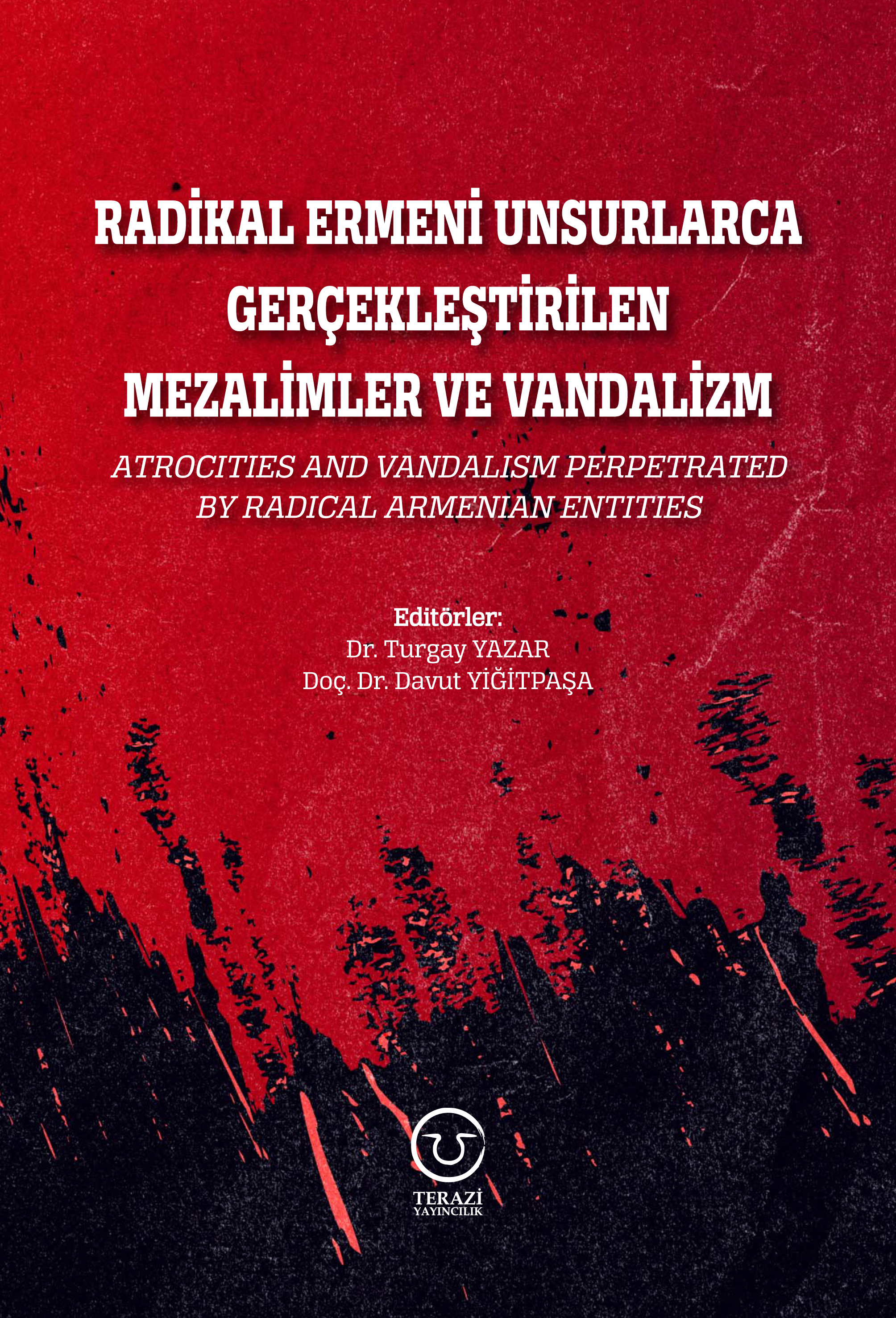
RADİKAL ERMENİ UNSURLARCA GERÇEKLEŞTİRİLEN MEZALİMLER VE VANDALİZM -
17.03.2023
PATRIOTISM PERVERTED -
23.02.2023
MEN ARE LIKE THAT -
03.02.2023
BAKÜ-TİFLİS-CEYHAN BORU HATTININ YAŞANAN TARİHİ -
16.12.2022
INTERNATIONAL SCHOLARS ON THE EVENTS OF 1915 -
07.12.2022
FAKE PHOTOS AND THE ARMENIAN PROPAGANDA -
07.12.2022
ERMENİ PROPAGANDASI VE SAHTE RESİMLER -
01.01.2022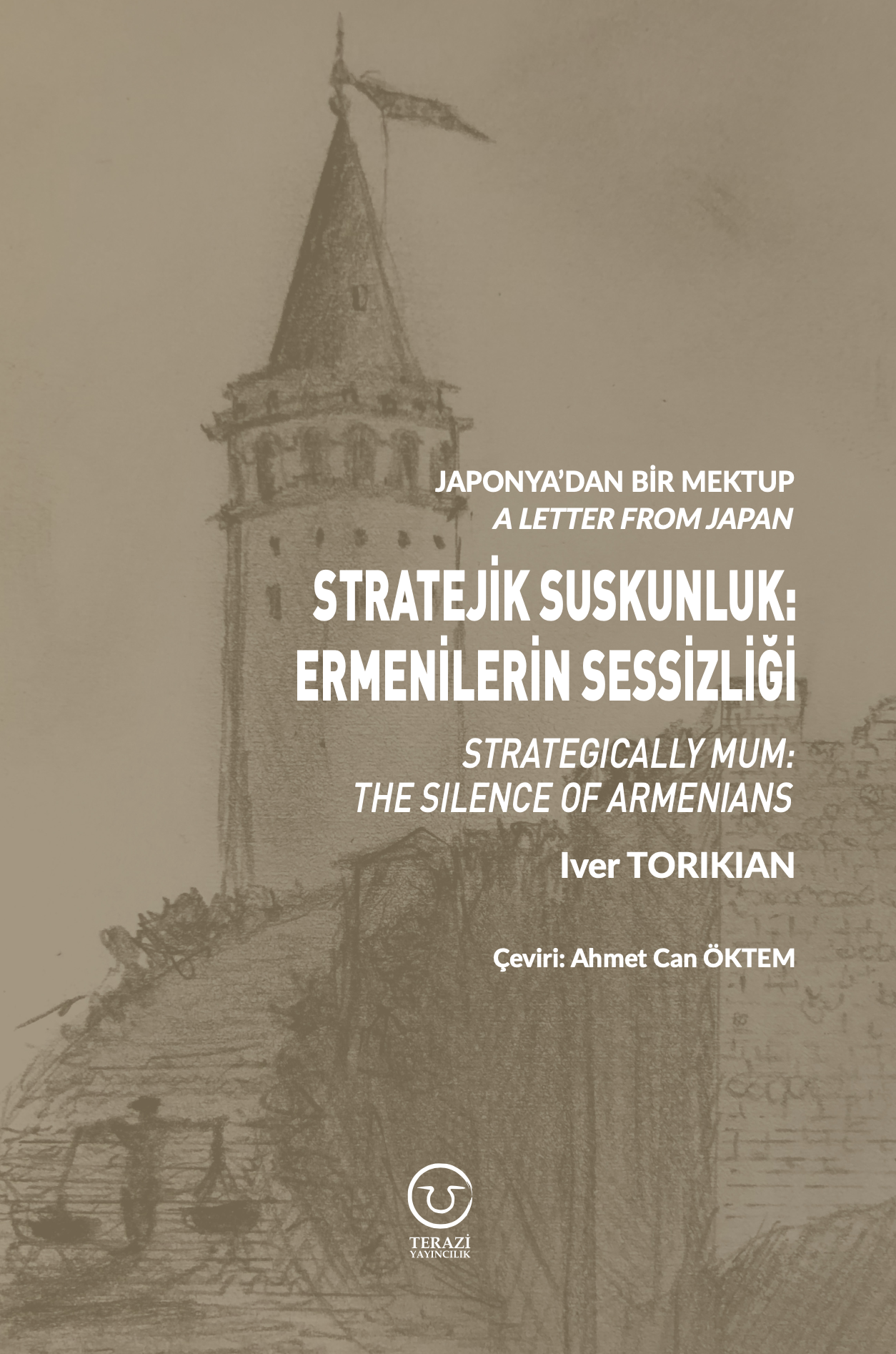
A Letter From Japan - Strategically Mum: The Silence of the Armenians -
01.01.2022
Japonya'dan Bir Mektup - Stratejik Suskunluk: Ermenilerin Sessizliği -
03.06.2020
Anastas Mikoyan: Confessions of an Armenian Bolshevik -
08.04.2020
Sovyet Sonrası Ukrayna’da Devlet, Toplum ve Siyaset - Değişen Dinamikler, Dönüşen Kimlikler -
12.06.2018
Ermeni Sorunuyla İlgili İngiliz Belgeleri (1912-1923) - British Documents on Armenian Question (1912-1923) -
02.12.2016
Turkish-Russian Academics: A Historical Study on the Caucasus -
01.07.2016
Gürcistan'daki Müslüman Topluluklar: Azınlık Hakları, Kimlik, Siyaset -
10.03.2016
Armenian Diaspora: Diaspora, State and the Imagination of the Republic of Armenia -
24.01.2016
ERMENİ SORUNU - TEMEL BİLGİ VE BELGELER (2. BASKI)
-
AVİM Conference Hall 24.01.2023
CONFERENCE TITLED “HUNGARY’S PERSPECTIVES ON THE TURKIC WORLD"