














This is the English translation of a Turkish language article that was originally published by AVİM on 8 June 2026
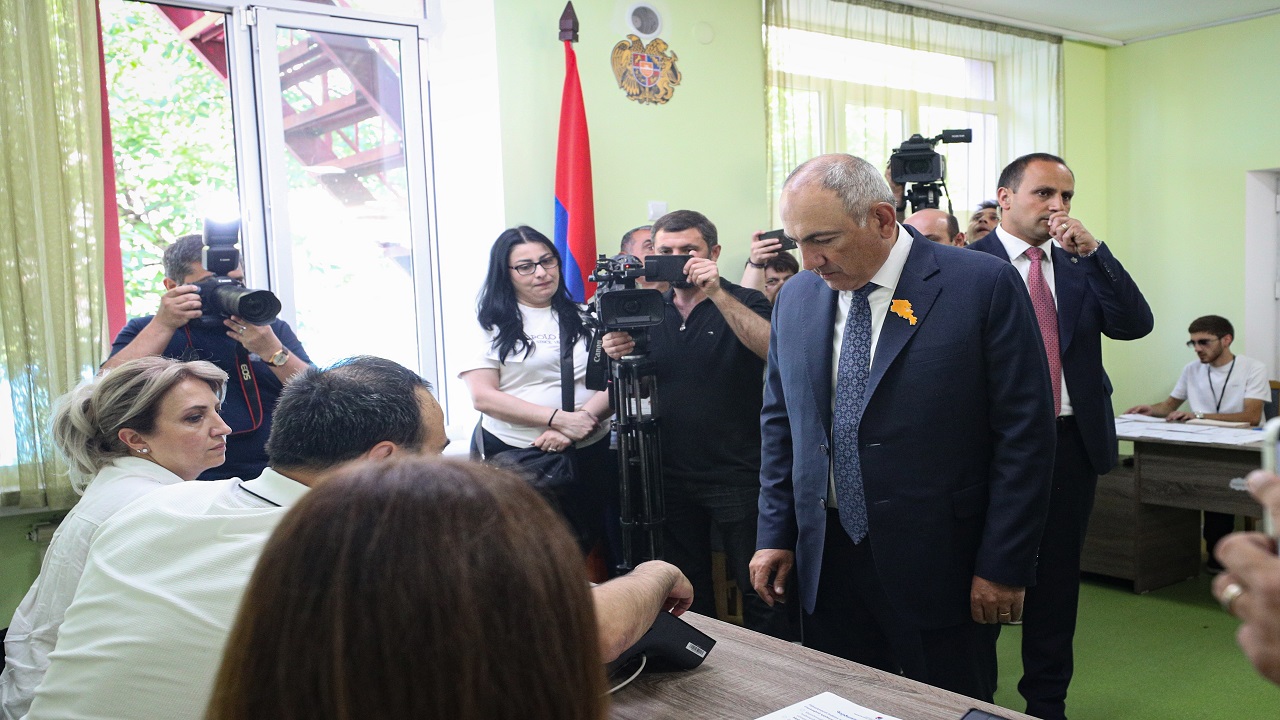
The parliamentary elections held on 7 June 2026 in Armenia resulted in Prime Minister Nikol Pashinyan and his Civil Contract Party retaining power and gaining renewed public confidence. According to the preliminary results, voter turnout reached 58.97%, while the Civil Contract Party secured 49.81% of the vote, obtaining a parliamentary majority sufficient to form a government on its own. On the opposition side, the Strong Armenia Alliance, led by Samvel Karapetyan, placed second with 23.29% of the vote. The Armenia Alliance, headed by former President Robert Kocharyan, won 9.99% of the vote and secured right for representation in the parliament.[1]
Unlike previous elections, these elections were not merely a political contest aimed at determining the future of the government. They also marked the beginning of a process that is likely to have a direct impact on the balance of power in the South Caucasus, the Azerbaijan-Armenia peace process, the normalization of relations between Türkiye and Armenia, and the policies of regional actors. Therefore, the June 7 elections also serve as a critical message regarding the foreign policy orientation that Armenia will pursue in the coming years.
Although the victory of the Civil Contract Party may, on the surface, be regarded as a political success, it in fact reflects a deeper shift in societal preferences. Despite the political and social shock experienced by Armenian public opinion following Azerbaijan’s establishment of control over Karabakh, a significant portion of the voters appear to have concluded that the country’s future lies not in collective traumas or new conflicts, but in economic development and regional integration.
It is striking that, despite basing much of its campaign on the loss of Karabakh, relations with Türkiye, and the government’s security policies, the opposition received only limited support from the electorate. This suggests that a more realistic approach may be beginning to take precedence over nationalist reflexes within Armenian society. The “Karabakh issue”, which for many years served as one of the principal determinants of Armenian politics, is increasingly being supplanted by concerns such as economic reform, migration, investment, and security policy. This development also points to a significant transformation in Armenia’s national identity. For the first time in the post-independence period, the country is moving toward a political vision that does not define its foreign policy solely through historically rooted ideological aspirations.
The Peace Process with Azerbaijan
One of the most significant outcomes of the elections will be their impact on the ongoing peace negotiations with Azerbaijan. The Civil Contract Party’s emergence as the leading party and its parliamentary majority have provided Prime Minister Pashinyan with substantial political legitimacy to continue the negotiation process. However, the majority obtained does not appear to be sufficient on its own to implement the constitutional amendments that Azerbaijan has put forward as a prerequisite for signing a peace agreement. Therefore, while the election results provide support to the Pashinyan government in continuing the peace process, they do not fully eliminate the principal legal and political obstacles standing in the way of a final agreement.
In this respect, it is likely that a broader political consensus will be necessary for Armenia to undertake the required constitutional amendments. In addition, diaspora groups, as well as nationalist and radical opposition circles, are expected to continue their criticism of the government, particularly with regard to the Karabakh issue and the normalization process with Azerbaijan. Consequently, although the election results provide a favorable basis for the continuation of the peace process, the domestic political obstacles to reaching a final agreement remain in place.
One of the Pashinyan government’s main priorities during the new term will be the improvement of economic prosperity. A significant portion of the electorate expects higher living standards, expanded employment opportunities, and greater economic stability. Accordingly, encouraging foreign investment, accelerating infrastructure projects, developing the technology sector, and attracting diaspora capital are expected to rank among the government’s policy priorities. Meanwhile, if progress is achieved in the normalization processes with Azerbaijan and Türkiye, Armenia’s integration into regional transport and trade networks is expected to accelerate, which could, in turn, contribute positively to the country’s economic growth.
Türkiye-Armenia Relations
The election results may also have significant outcomes for Türkiye-Armenia relations. Although the normalization talks conducted between the two sides have made a certain degree of progress in recent years, the process has yet to reach a permanent political framework. The Civil Contract Party’s parliamentary majority is going to provide the Yerevan administration with significant political support to continue its normalization policy. At the same time, the fact that a considerable portion of opposition parties represented in parliament remain skeptical of the normalization process with Türkiye and Azerbaijan suggests that the government’s initiatives in this area will continue to be debated in domestic politics. Therefore, while the election results provide a favorable basis for the continuation of the normalization process, the progress of the process will continue to be influenced by political competition between the government and the opposition, as well as by differing views within public opinion. From Armenia’s perspective, the normalization of relations with Türkiye has strategic significance for reducing regional isolation and expanding economic opportunities.
A New Phase in Armenia-Russia Relations
One of the most notable international outcomes of the elections concerns Armenia-Russia relations. Traditionally regarded as being within Russia’s sphere of influence, Armenia has taken steps in recent years to strengthen its relations with the West, and as a result of these steps, Russia has imposed strong sanctions and issued warnings against Armenia. The re-election of the Civil Contract Party indicates that this process is likely to continue and suggests that Armenia will continue to pursue a gradual diversification of its foreign policy priorities. Nevertheless, this does not mean a complete rupture with Russia, as Armenia will remain dependent on Russia in the areas of energy, trade, and security for the foreseeable future. For this reason, Armenia is expected to continue pursuing a balanced and multi-vector foreign policy in the upcoming period.
Strengthening Integration with the West
The Pashinyan administration has taken significant steps in recent years to strengthen relations with Western institutions. The election victory demonstrates that these policies have gained a certain degree of legitimacy among Armenian society. Indeed, throughout the election campaign, the close engagement of Western actors with the Pashinyan administration, particularly the European Union and the United States, as well as their support for its reform agenda, was noteworthy. This suggests that Armenia’s political and economic cooperation with the West may deepen further in the upcoming period. Accordingly, it is considered that the election results may provide a favorable basis for expanding the EU’s economic assistance programs, investment projects, and institutional cooperation mechanisms with Armenia.
In conclusion, the 7 June 2026 elections not only determined Armenia’s new government but also affirmed the country’s strategic direction for the coming period. The election results demonstrate that a significant portion of the electorate supports stability, reform, and a realistic approach to foreign policy. Nevertheless, the parliamentary majority secured by the Civil Contract Party is not, by itself, sufficient to resolve the principal political and institutional challenges faced by Pashinyan administration. In particular, the issue of constitutional amendment, which Baku has put forward as a prerequisite for the signing of a peace agreement, maintains its significance in the peace process with Azerbaijan. The current political distribution in parliament indicates that the necessary political support for comprehensive constitutional reforms has not been fully formed yet. Therefore, although the elections have strengthened the political legitimacy of continuing the peace process, they have not eliminated all the obstacles to reaching a final agreement.
In the coming period, the peace negotiations with Azerbaijan, the normalization process with Türkiye, the redefinition of relations with Russia, and economic reforms are expected to remain among the Yerevan administration’s principal policy priorities. Progress in these areas will directly influence Armenia’s regional position and economic future. Therefore, while the June 7 elections have reflected an important choice regarding Armenia’s political direction, they represent only the initial stage of the process aimed at addressing the country’s strategic challenges. The implications of this process are likely to extend beyond Armenia’s domestic political dynamics and have the potential to shape the prosperity and stability of the South Caucasus.
[1] “Ermenistan’da Tüm Sandıklar Açıldı: Parlamentoya Dört Siyasi Güç Giriyor”, ArmenPress, 8 Haziran 2026, https://armenpress.am/tr/article/1252316.
© 2009-2025 Center for Eurasian Studies (AVİM) All Rights Reserved
No comments yet.
-
 BOOK REVIEW: THE THIRTY-YEAR GENOCIDE
AVİM 21.08.2019 -
 INDIA’S STRATEGIC BALANCING CHALLENGES THE QUAD
Özge Emine ÖZÇELİK 21.01.2026 -
 MOVIE WARS: THE TALE OF TWO NARRATIVES
Sean Patrick SMYTH 23.06.2017 -
 CHINA’S TAIWAN POLICY AND APPROACH TO THE CYPRUS QUESTION
Seyda Nur OSMANLI 11.04.2025 -
 SLOVENIAN DOCUMENT ON DISMEMBERMENT OF BOSNIA-HERZEGOVINA CONFIRMS THE NECESSITY OF CONTINUING THE PIC-OHR-BONN POWERS
Teoman Ertuğrul TULUN 30.04.2021
-
25.01.2016
THE ARMENIAN QUESTION - BASIC KNOWLEDGE AND DOCUMENTATION -
12.06.2024
THE TRUTH WILL OUT -
27.03.2023
RADİKAL ERMENİ UNSURLARCA GERÇEKLEŞTİRİLEN MEZALİMLER VE VANDALİZM -
17.03.2023
PATRIOTISM PERVERTED -
23.02.2023
MEN ARE LIKE THAT -
03.02.2023
BAKÜ-TİFLİS-CEYHAN BORU HATTININ YAŞANAN TARİHİ -
16.12.2022
INTERNATIONAL SCHOLARS ON THE EVENTS OF 1915 -
07.12.2022
FAKE PHOTOS AND THE ARMENIAN PROPAGANDA -
07.12.2022
ERMENİ PROPAGANDASI VE SAHTE RESİMLER -
01.01.2022
A Letter From Japan - Strategically Mum: The Silence of the Armenians -
01.01.2022
Japonya'dan Bir Mektup - Stratejik Suskunluk: Ermenilerin Sessizliği -
03.06.2020
Anastas Mikoyan: Confessions of an Armenian Bolshevik -
08.04.2020
Sovyet Sonrası Ukrayna’da Devlet, Toplum ve Siyaset - Değişen Dinamikler, Dönüşen Kimlikler -
12.06.2018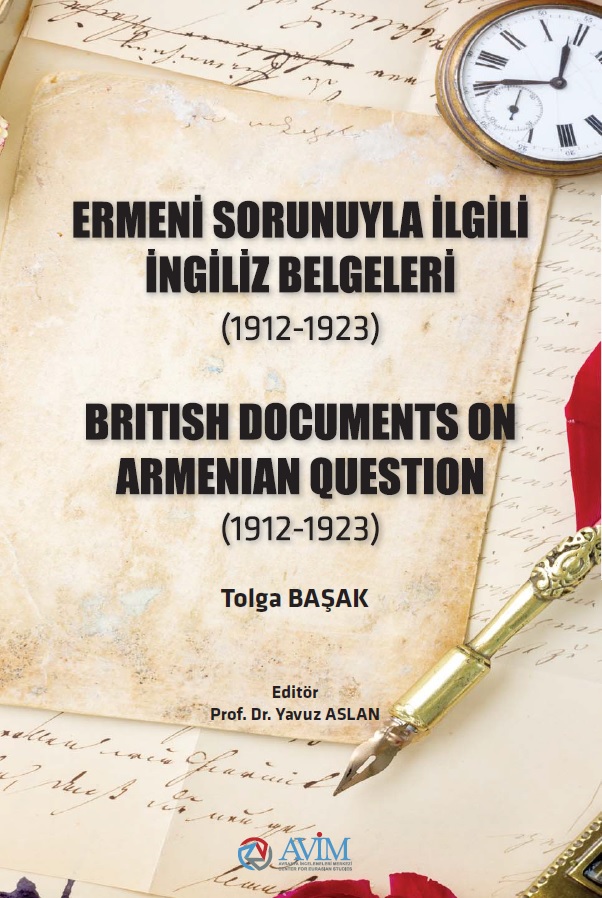
Ermeni Sorunuyla İlgili İngiliz Belgeleri (1912-1923) - British Documents on Armenian Question (1912-1923) -
02.12.2016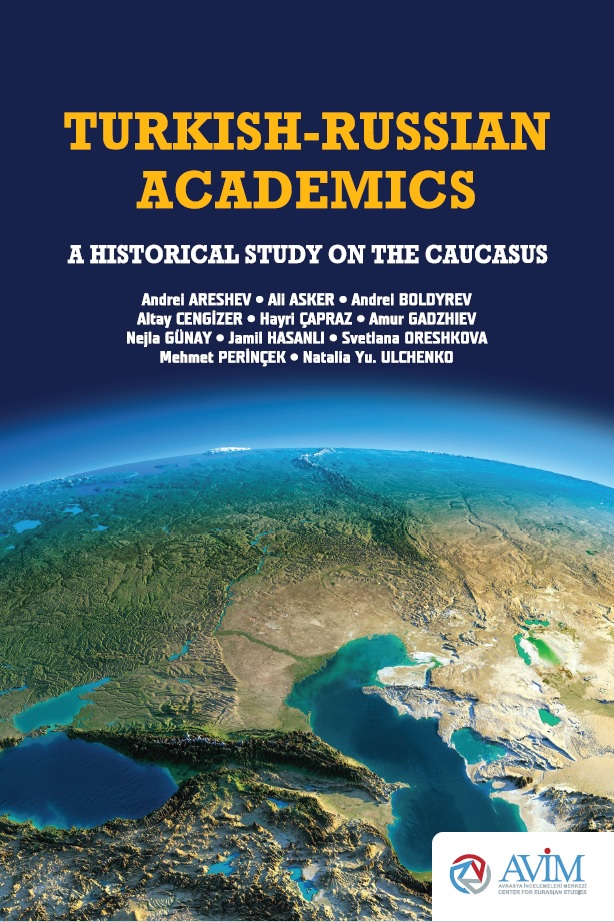
Turkish-Russian Academics: A Historical Study on the Caucasus -
01.07.2016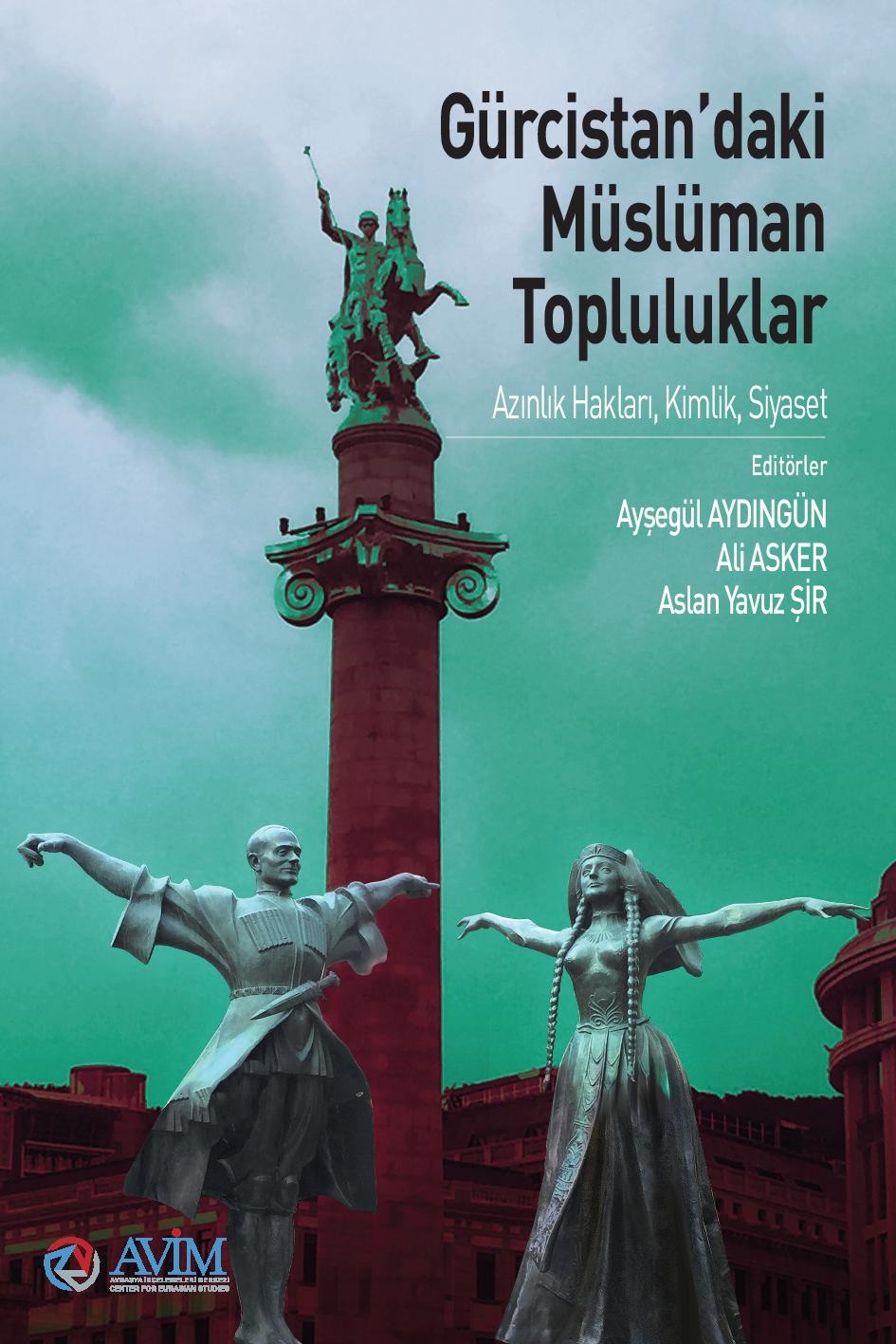
Gürcistan'daki Müslüman Topluluklar: Azınlık Hakları, Kimlik, Siyaset -
10.03.2016
Armenian Diaspora: Diaspora, State and the Imagination of the Republic of Armenia -
24.01.2016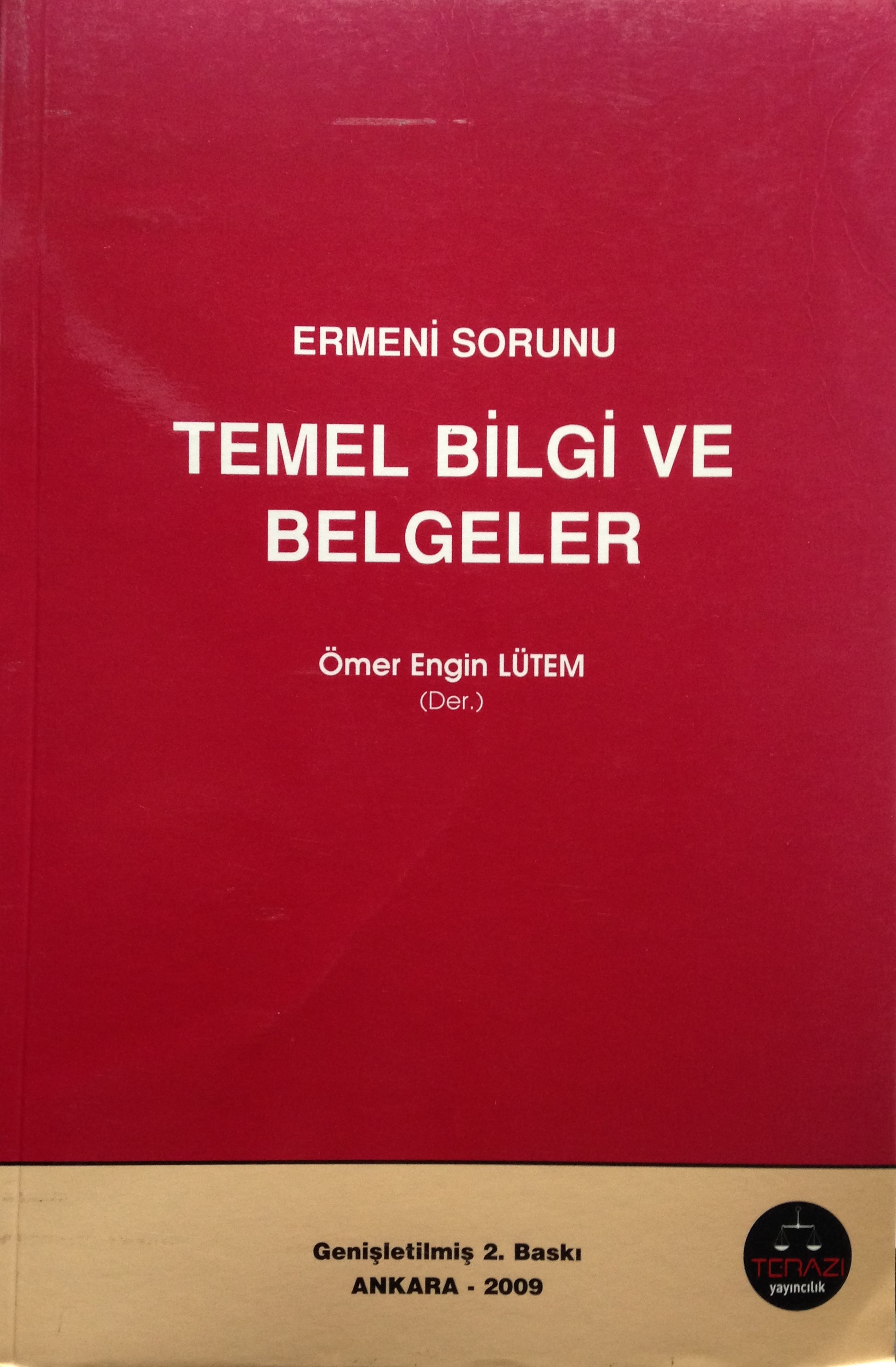
ERMENİ SORUNU - TEMEL BİLGİ VE BELGELER (2. BASKI)

-
AVİM Conference Hall 24.01.2023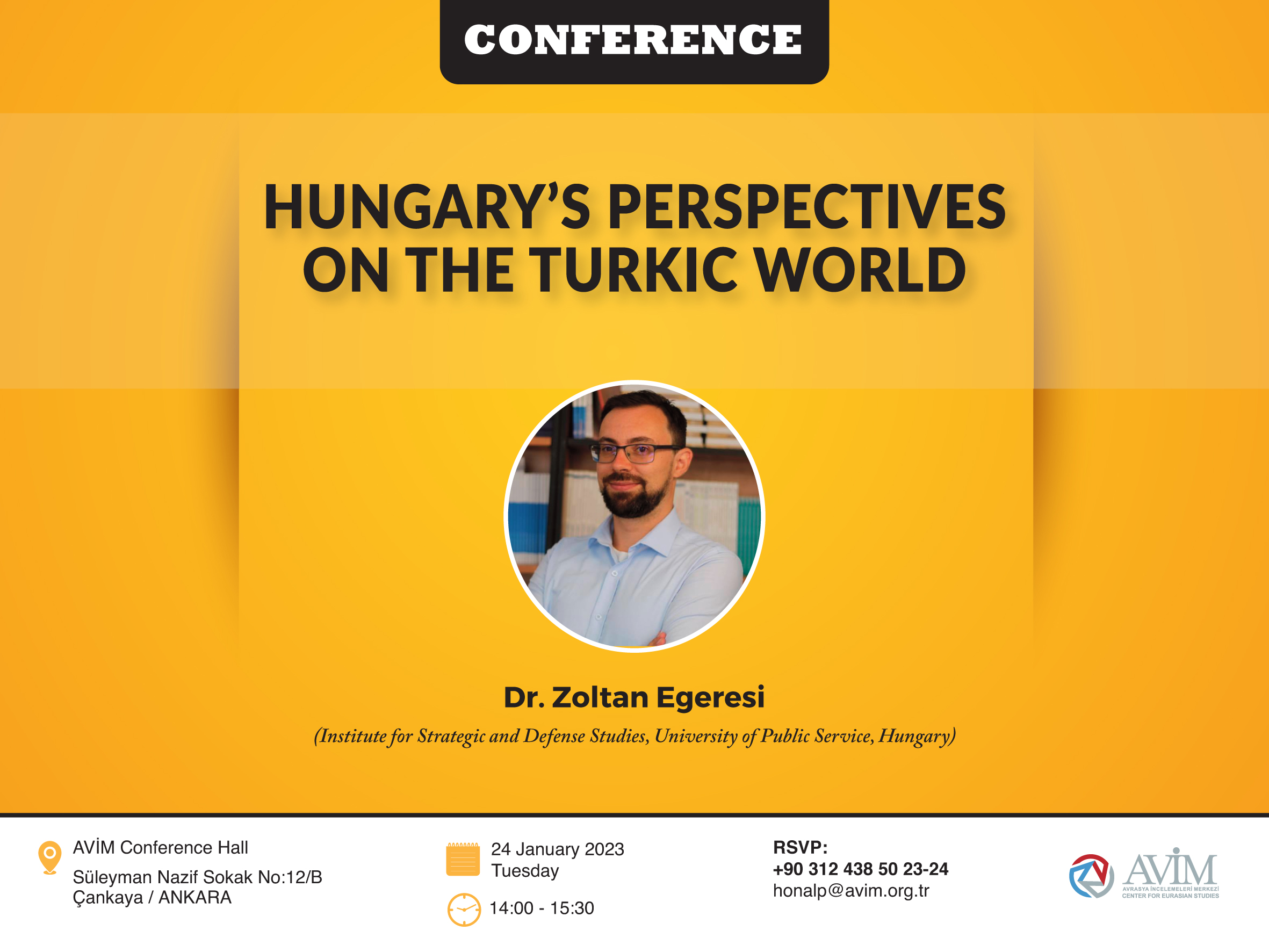
CONFERENCE TITLED “HUNGARY’S PERSPECTIVES ON THE TURKIC WORLD"