














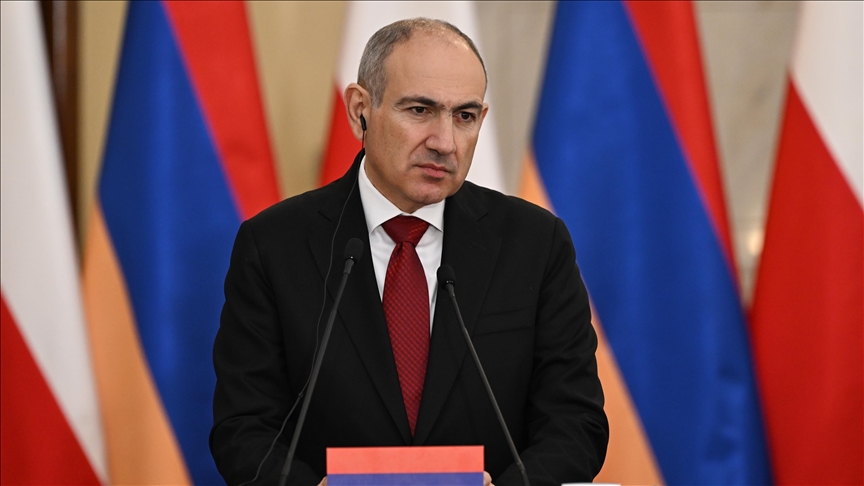
The elections in Armenia, long anticipated by various segments of society for different reasons, are scheduled to take place on June 7. In the period leading up to the elections, the balance of power within Armenia has shifted, while Prime Minister Nikol Pashinyan has identified his objectives regarding political power by embracing the normalization and peace process and the Real Armenia concept. While these measures have manifested themselves in the fields of law, religion, politics, and economics, it has been noted that the opposition in Armenia has failed to produce a concrete antithesis to these reforms.
As has been repeatedly stated, the ongoing tension between the Church leadership and the Armenian government has also had repercussions in the Armenian Diaspora. The excessively political stance of the Church leadership, which is detached from its spiritual foundations, has led to a visible division within the Diaspora. Even among those who strongly criticize the Pashinyan government, it has been acknowledged that the Church’s stance will harm Armenia in both the short and long terms. Considering the negative repercussions of radical approaches, it can be said that this rift will not remain limited to the Diaspora alone and may also be observed among Armenian citizens during the elections.
According to polling results, it is claimed that the vote share of the party of Samvel Karapetyan (who is currently under arrest) is estimated to be around 6%,[1] a significant portion of which is known to come from pro-Russian supporters. Karapetyan’s dual citizenship has become a subject of controversy in relation to the elections. Karapetyan, who is at the center of concerns regarding the risk of foreign interference in the elections, also came into the spotlight recently when President of Russia Vladimir Putin warned Pashinyan not to obstruct potential votes.[2] The risk of interference, which has been repeatedly emphasized in relation to the June 7 elections, together with high-level statements from Russia and various diplomatic moves (such as the recall of the Ambassador to Yerevan[3], the import embargo[4], and the latest Eurasian Economic Union (EAEU) summit declaration[5], etc.), has resulted in Russia being placed at the center of Western media attention.
The fact that Pashinyan, who has long pursued a balancing policy between EAEU and the European Union (EU), was almost threatened at the latest EAEU summit is also significant in terms of the elections. Alongside the peace and normalization processes, Armenia’s developing relations with the EU have the potential to contribute to economic prosperity. As an indication of this, reports appeared in the media stating that the agricultural products that Russia refused to import under its embargo would be purchased by the EU.[6] It should be noted that Russia ranks first among the countries from which Armenia imports goods and second among the countries to which it exports. As such, the purchase of these products as a response to the embargo, as well as statements promising support for Armenia during this process, should not be interpreted as meaning that the EU can become an alternative source to Russia in terms of Armenia’s economy.
Pashinyan’s balancing policy is closely connected to Russia’s economic influence, which remains irreplaceable, at least in the short term. Responding to discussions about Armenia’s possible expulsion from the EAEU, Pashinyan has emphasized that no such procedure could be implemented under the current regulations and that Armenia’s own will would be decisive in this matter.[7] Maintaining a similarly firm stance regarding the EU accession process, Pashinyan has sought to preserve high-level relations with Russia while simultaneously moving closer to the West. Arguing that any referendum would be unreasonable before the final outcome of the EU membership process becomes clear, Pashinyan also blamed the Armenian opposition for the ongoing negative attitude within the EAEU. By accusing the opposition of putting Armenia in a difficult position, Pashinyan further demonstrated through this statement that he has no plan other than maintaining Armenia’s current membership status within the EAEU.
Following the visit of the US Secretary of State to Yerevan, US President Donald Trump’s public declaration of support for Pashinyan[8], together with the EU’s political and financial support for the elections, has provided Russia and pro-Russian groups within Armenia with grounds to emphasize claims of Western interference. The elections, which have attracted both overt and covert interest from numerous international actors, are also significant for the future of the region. Armenia’s steadily improving relations with its neighbors have demonstrated that both Western and Russian intervention in the region are unnecessary and dangerous. The electorate’s stance on this issue will become clearer after the elections.
In conclusion, it remains a matter of interest how calls for intervention that exceed the limits of democratic principles, made by the opposition in Armenia and radical segments of the Armenian Diaspora despite recent developments, will affect Armenia’s electorate. The elections, which are expected to have significant implications for the region, will also reveal how the Armenian people envision their country’s future position.
*Image: Anadolu Agency
[1] “Paşinyan'a Destek Arttı, Ancak Kararsızların Oranı Yüksek,” AGOS, 25 Mayıs 2026, https://www.agos.com.tr/tr/haber/pasinyan-a-destek-artti-ancak-kararsizlarin-orani-yuksek-40599.
[2] “Putin Presses Pashinyan to Allow Jailed Russian-Armenian Billionaire Ally to Join Armenia Elections”, The Armenian Report, April 1, 2026, https://www.thearmenianreport.com/post/putin-presses-pashinyan-to-allow-jailed-russian-armenian-billionaire-ally-to-join-armenia-elections.
[3] Peter Barabas, Aleksandar Brezar, “Rusya, AB Yakınlaşması Nedeniyle Ermenistan Büyükelçisini Geri Çağırdı”, EuroNews, 29 Mayıs 2026, https://tr.euronews.com/2026/05/29/rusya-ab-yakinlasmasi-nedeniyle-ermenistan-buyukelcisini-geri-cagirdi.
[4] “Russia Ups the Pressure on Armenia Ahead of Sunday's Election”, Reuters, June 1, 2026, https://www.reuters.com/business/russia-ups-pressure-armenia-ahead-sundays-election-2026-06-01/.
[5] “The Leaders of the States of the Eurasian Economic Union Issued a Tough Statement Warning Fellow-Member State Armenia of the Consequences of Its Desire to Join the European Union”, Commonspace.eu, May 30, 2026, https://www.commonspace.eu/news/leaders-states-eurasian-economic-union-issued-tough-statement-warning-fellow-member-state.
[6] “EU Preparing Economic Support Package for Armenia After Russian Pressure on It”, Reuters, June 4, 2026, https://www.reuters.com/world/eu-preparing-economic-support-package-armenia-after-russian-pressure-it-2026-06-04/.
[7] Burç Eruygur, “Armenian Premier Says Referendum on Yerevan’s EU, EAEU Membership ‘Unreasonable’”, Anadolu Agency, June 1, 2026, https://www.aa.com.tr/en/asia-pacific/armenian-premier-says-referendum-on-yerevan-s-eu-eaeu-membership-unreasonable-/3953123.
[8] Mücahit Oktay, “Trump, Ermenistan Başbakanı Paşinyan'a Hazirandaki Seçimlerde Desteğini Açıkladı”, Anadolu Ajansı, 28 Mayıs 2026, https://www.aa.com.tr/tr/dunya/trump-ermenistan-basbakani-pasinyana-hazirandaki-secimlerde-destegini-acikladi/3950072.
© 2009-2025 Center for Eurasian Studies (AVİM) All Rights Reserved
No comments yet.
-
 THE CHURCH'S POLITICAL OPPOSITION IN ARMENIA AND THE DIFFERENCES OF OPINION IT CREATES IN THE DIASPORA
Selenay Erva YALÇIN 22.04.2026 -
 THE FINAL THRESHOLD OF THE PEACE AGREEMENT: THE ISSUE OF CONSTITUTIONAL AMENDMENT
Selenay Erva YALÇIN 02.10.2026 -
 THE ORGANIZATION OF TURKIC STATES AND THE CLAIMS OF TURANISM AND PANTURKISM
Selenay Erva YALÇIN 19.12.2024 -
 SHIFTING REGIONAL DYNAMICS AND THE 3+3 PLATFORM
Selenay Erva YALÇIN 07.10.2026 -
 AN EVALUATION OF THE STRATEGIC AGREEMENT BETWEEN CHINA AND UZBEKISTAN
Selenay Erva YALÇIN 15.03.2024
-
 OIC COUNCIL OF FOREIGN MINISTERS 43RD SESSION HELD IN UZBEKISTAN
Özge Nur ÖĞÜTCÜ 02.11.2016 -
EXTREME NATIONALIST ARMENIANS IN THE USA OPPOSING CHUCK HAGEL’S CANDIDACY AS SECRETARY OF DEFENSE
Alev KILIÇ 22.01.2013 -
 THE SECOND INTERNATIONAL SYMPOSIUM ON TURKISH-ARMENIAN RELATIONS AND GREAT POWERS ORGANIZED BY ATATÜRK UNIVERSITY KICKED OFF IN ERZURUM
AVİM 05.05.2015 -
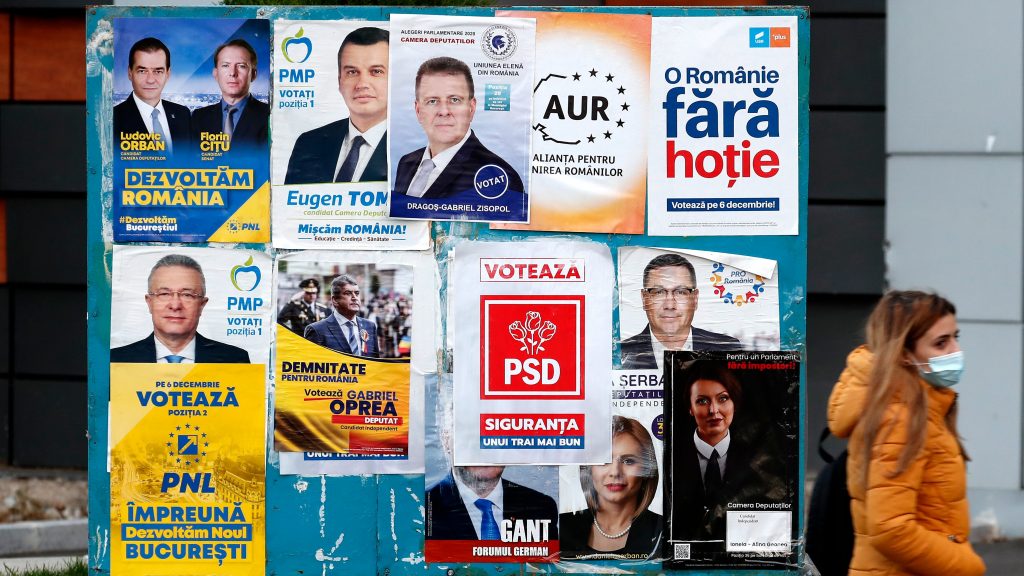 THE DECEMBER 2020 LEGISLATIVE ELECTIONS AND THE NEW COALITION GOVERNMENT IN ROMANIA
Turgut Kerem TUNCEL 05.01.2021 -
 FREEDOM OF SPEECH IS NOT TO BE SELECTIVE
mot1985 07.01.2015
-
25.01.2016
THE ARMENIAN QUESTION - BASIC KNOWLEDGE AND DOCUMENTATION -
12.06.2024
THE TRUTH WILL OUT -
27.03.2023
RADİKAL ERMENİ UNSURLARCA GERÇEKLEŞTİRİLEN MEZALİMLER VE VANDALİZM -
17.03.2023
PATRIOTISM PERVERTED -
23.02.2023
MEN ARE LIKE THAT -
03.02.2023
BAKÜ-TİFLİS-CEYHAN BORU HATTININ YAŞANAN TARİHİ -
16.12.2022
INTERNATIONAL SCHOLARS ON THE EVENTS OF 1915 -
07.12.2022
FAKE PHOTOS AND THE ARMENIAN PROPAGANDA -
07.12.2022
ERMENİ PROPAGANDASI VE SAHTE RESİMLER -
01.01.2022
A Letter From Japan - Strategically Mum: The Silence of the Armenians -
01.01.2022
Japonya'dan Bir Mektup - Stratejik Suskunluk: Ermenilerin Sessizliği -
03.06.2020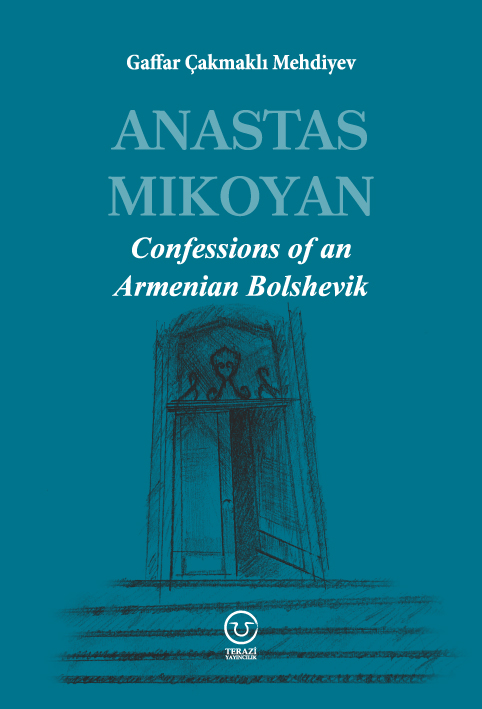
Anastas Mikoyan: Confessions of an Armenian Bolshevik -
08.04.2020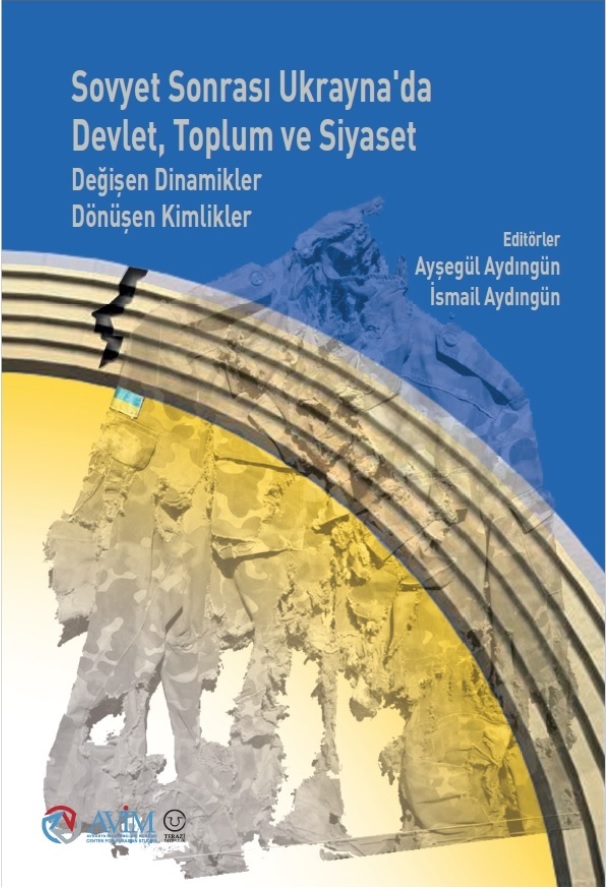
Sovyet Sonrası Ukrayna’da Devlet, Toplum ve Siyaset - Değişen Dinamikler, Dönüşen Kimlikler -
12.06.2018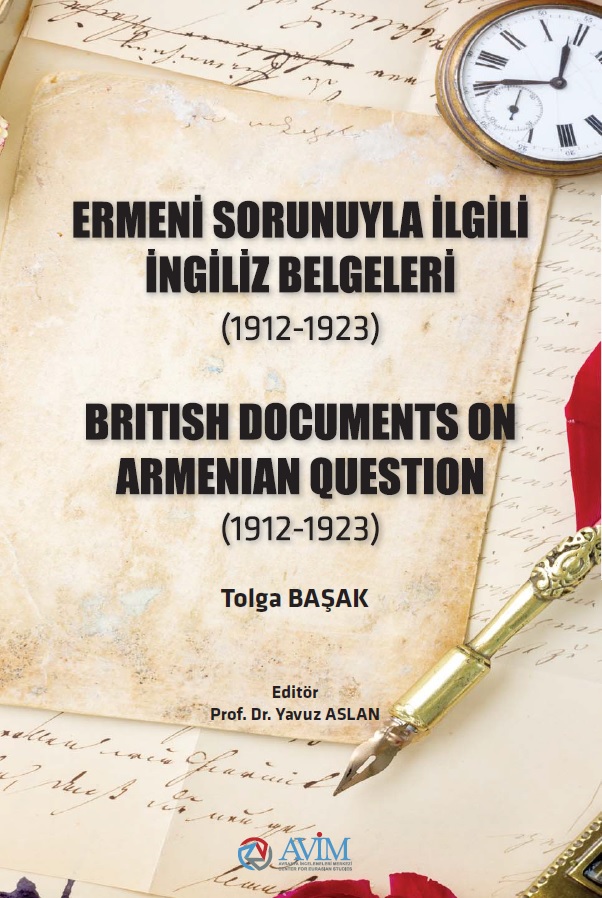
Ermeni Sorunuyla İlgili İngiliz Belgeleri (1912-1923) - British Documents on Armenian Question (1912-1923) -
02.12.2016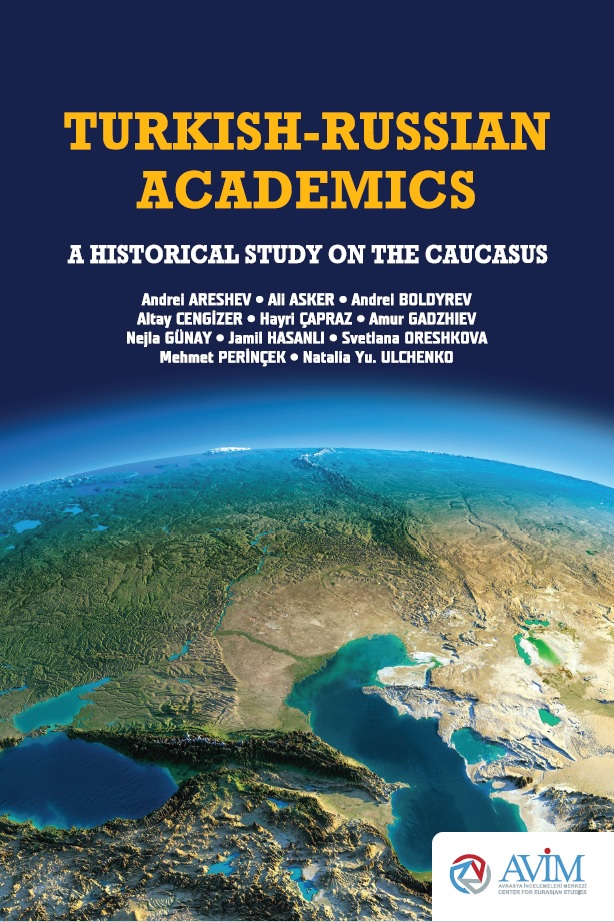
Turkish-Russian Academics: A Historical Study on the Caucasus -
01.07.2016
Gürcistan'daki Müslüman Topluluklar: Azınlık Hakları, Kimlik, Siyaset -
10.03.2016
Armenian Diaspora: Diaspora, State and the Imagination of the Republic of Armenia -
24.01.2016
ERMENİ SORUNU - TEMEL BİLGİ VE BELGELER (2. BASKI)
-
AVİM Conference Hall 24.01.2023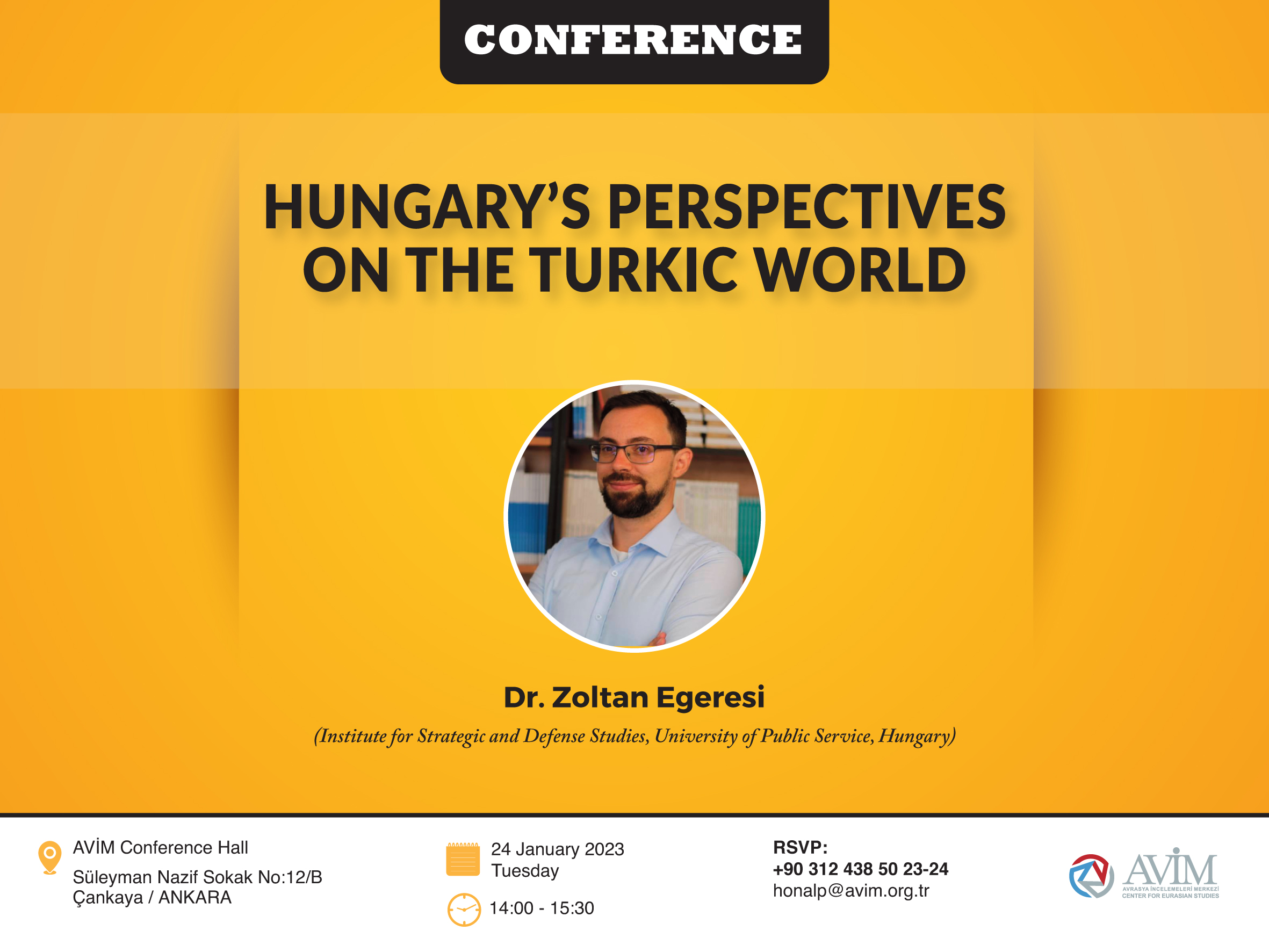
CONFERENCE TITLED “HUNGARY’S PERSPECTIVES ON THE TURKIC WORLD"