This is the English translation of a Turkish language article that was originally published by AVİM on 29 June 2026.
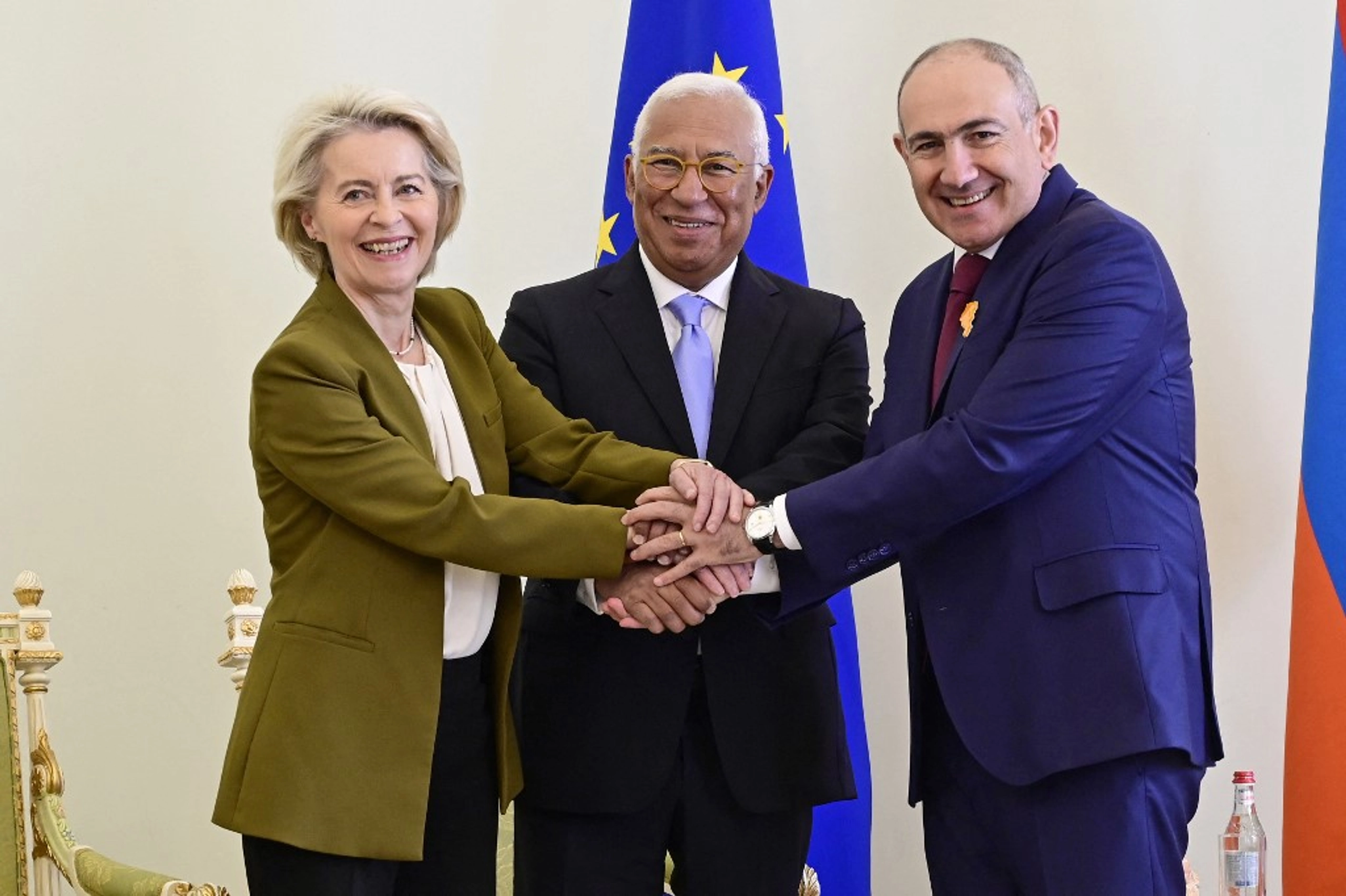
It can be observed that the European Union (EU) has recently accelerated its initiatives toward transport and connectivity projects in the South Caucasus. In this context, the technical preparation process for the Akhurik-Kayan and Margara-Kayan road projects has been initiated with the letter of intent signed between the European (Union) Commission, the European Investment Bank (EIB), and Armenia. The projects in question aim to integrate border gates into Armenia's transport network within the scope of the country's "Crossroads of Peace" initiative and to strengthen regional connectivity in line with the EU's "Connectivity Agenda" and "Global Gateway" strategies.[1] In the same period, the visits expected to be paid by European Commission President Ursula von der Leyen to Azerbaijan on 1 July, and subsequently to Armenia on 2-3 July, also demonstrate that the strategic importance attributed to the South Caucasus by Brussels has increased.[2]
The developments that have taken place demonstrate that the EU is placing greater emphasis on Armenia in its South Caucasus strategy. Both the technical and financial support for transport infrastructure and the high-level visit to be paid by von der Leyen to Yerevan point to the EU's effort to position Armenia as an important actor in its regional connectivity policies. While this situation enhances the visibility of Armenia in the EU's geopolitical approach in the South Caucasus, it also brings the positions of the actors in the region to the fore.
The political dimension of the EU’s approach is at least as remarkable as its economic dimension. Von der Leyen’s visit to Yerevan can be evaluated as a continuation of the momentum that EU-Armenia relations have recently gained. Particularly, the visible EU support for the pro-Western rapprochement policies of Armenian Prime Minister Nikol Pashinyan, who reaffirmed confidence in the recent elections, can be read as part of a strategy to distance Armenia from Russia’s traditional sphere of influence. The European Commission’s recent announcement of financial support for Armenian companies affected by Russian trade pressures stands out as an element complementing this political message.
The discourse recently utilized by the EU also clearly reveals this strategic orientation. European Commission officials emphasize that the Northern Corridor passing through Russia and the Suez route are no longer reliable, stating that Europe needs "reliable routes" for its trade, energy, and digital security. Therefore, the Middle Corridor is not merely an economic project but also a security project aimed at mitigating the EU’s geopolitical risks.
At this point, Türkiye's position carries a distinct importance. The European leg of the Middle Corridor passes through Türkiye, and Ankara continues to be one of the indispensable actors of this route due to its geographical location.
However, the policy recently pursued by Brussels points to a search for creating a multi-actor structure in the South Caucasus that integrates Armenia more strongly into the system, rather than a regional architecture in which Türkiye is decisive. This approach is also observed in the EU’s Central Asia policy. While deepening its direct relations with the countries of the region, the EU attempts to develop alternative partnerships that will reduce dependency on traditional regional powers. Nonetheless, geography ensures that Türkiye maintains its strategic role in the connectivity between Europe and Asia.
In conclusion, the recent steps of the EU are consistent with the goal of transforming the South Caucasus into an alternative connectivity belt to Russia and Iran. While Armenia becomes an increasingly visible and supported actor in this strategy, Türkiye’s status as the indispensable transit country of the Middle Corridor is strengthened as well. In this process, while Armenia is prioritized as a strategic partner, the efforts aimed at attempting to limit Türkiye's regional hub position also do not go unnoticed. The EU’s connectivity policy should therefore be read not merely as an economic project but as a geopolitical strategy aimed at reshaping the balance of power in the South Caucasus.
*Picture: KyivPost
© 2009-2025 Center for Eurasian Studies (AVİM) All Rights Reserved
















 ELECTION YEAR TENSION: LOBBIES AND BROKEN PROMISES IN THE USA
 AN OBSTACLE TO THE AZERBAIJAN-ARMENIA PEACE AGREEMENT: CONSTITUTIONAL AMENDMENTS
 OBSTACLES TO PEACE BETWEEN AZERBAIJAN AND ARMENIA
 THE AZERBAIJAN-ARMENIA PEACE PROCESS AND THE IMPACTS OF LOBBIES
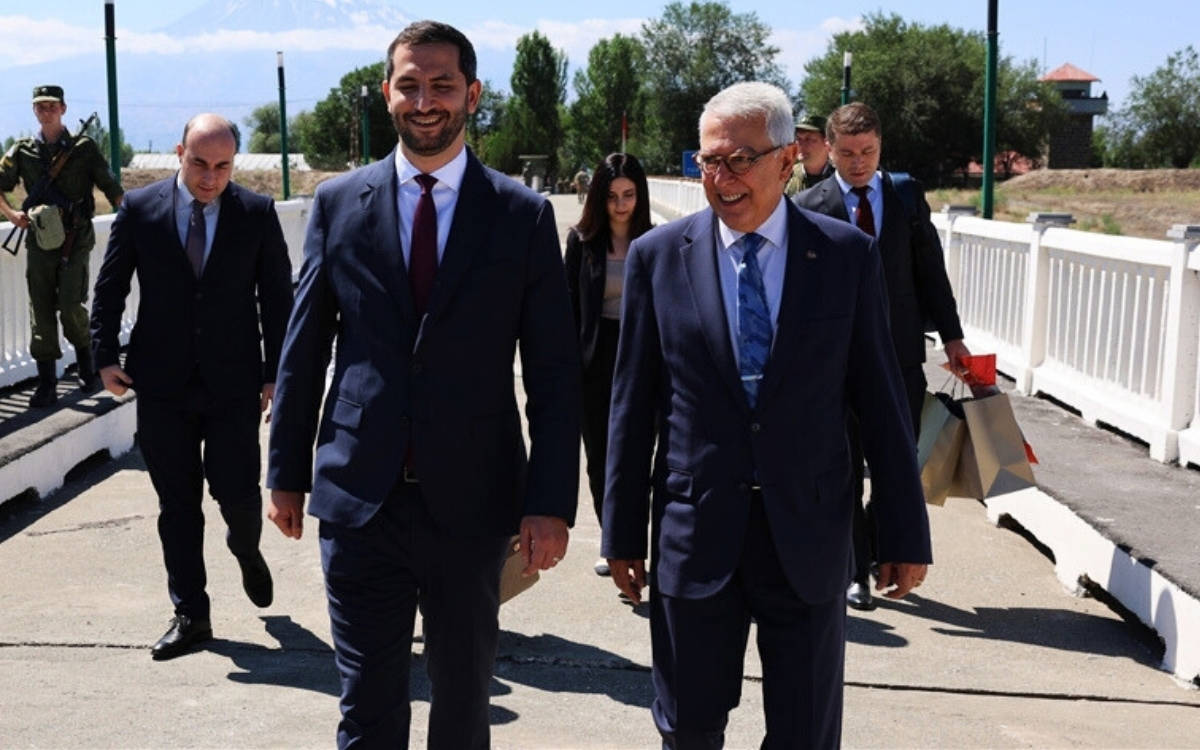 A NEW STAGE IN THE TÜRKİYE-ARMENIA NORMALIZATION PROCESS: THE YEREVAN MEETING
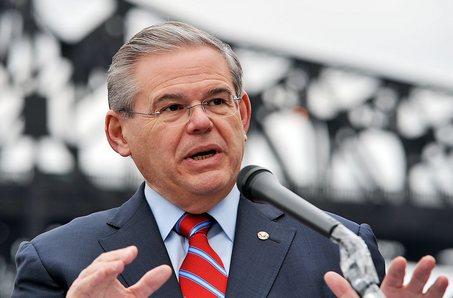 THE US SENATOR SUPPORTING THE ARMENIAN RHETORIC TO BE TRIED FOR CORRUPTION
 VICTIMIZED TURKS IN SWITZERLAND
 AN OVERVIEW OF THE YEAR 2024