














This is the English translation of a Turkish language article that was originally published by AVİM on 1 July 2026.
The inconsistencies exhibited by the European Union (EU) in international affairs have become even more pronounced recently following Israel’s recognition of the 1915 Events as "genocide." This recognition stands out not as a purely historical evaluation, but rather as a reflection of current geopolitical interests. The harsh critical approach displayed by the EU toward Türkiye in its reports, contrasted with its silence regarding Israel's actions in Gaza and Lebanon, seriously calls into question the credibility and seriousness of the Union. In this framework, turning historical tragedies into current political tools carries the risk of eroding universal principles of law and morality.
The 2025 Türkiye Report adopted by the European Parliament on 17 June 2026, constitutes a concrete example of this double standard. The report contains severe criticisms directed at Türkiye in the fields of democracy, the rule of law, judicial independence, and fundamental rights, emphasizing that the EU accession process is de facto frozen. Conversely, the same report defines Türkiye as a NATO ally and states that in the fields of security and defense, "pragmatic cooperation can be strengthened in line with mutual strategic interests." While common interests are brought to the fore in regions such as the Black Sea, the South Caucasus, the Middle East, and Ukraine, Türkiye is characterized as a "key partner for stability in the Eastern Mediterranean" and an "important actor in trade, economy, security, migration, and the fight against terrorism." Particularly in the field of connectivity, the report supports the "Middle Corridor as an alternative trade route that will strengthen the Europe-Asia connectivity" and states that this route will enhance the resilience of EU supply chains. The statement made by the EU Commissioner for Enlargement, Marta Kos, on 23 June 2026 clearly reveals this strategic reality; "I cannot imagine having a strong Middle Corridor and all these digital, energy, and trade relations without the strong participation of Türkiye." These expressions clearly demonstrate the contradiction between the EU’s value-based criticisms and geopolitical imperatives. The reality that the European leg of the Middle Corridor cannot be completed without Türkiye demonstrates that the Union's efforts to "leave Türkiye out of the equation" will harm its own strategic goals. [1]
In this context, the attitude displayed by the EU toward Israel's actions in Gaza and southern Lebanon constitutes another dimension of the above-mentioned double standard. Catholic Cardinal Víctor Manuel Fernández, in his statement made at the Vatican, called on the EU to implement sanctions against Israel, criticizing the Union for its contradictory stance of providing financial aid and weapons to Israel while applying economic sanctions to Russia.[2]The Cardinal emphasized that "the destruction of entire cities cannot be accepted as a proportional act of defense" in Gaza and southern Lebanon, pointing out the "immense disproportionality of military interventions," the high rate of civilian deaths (especially children), and that the bombing of houses presents evidence of "total destruction." He evaluated the EU's inaction against Israel as an indication of the absence of a "real and stable framework of truth and values." Similarly, former EU High Representative Josep Borrell described an EU Commissioner holding a warm meeting with the Israeli Foreign Minister, immediately after Israel declared the EU High Representative Kaja Kallas persona non grata, as a weak demonstration of "solidarity and coordination."[3]
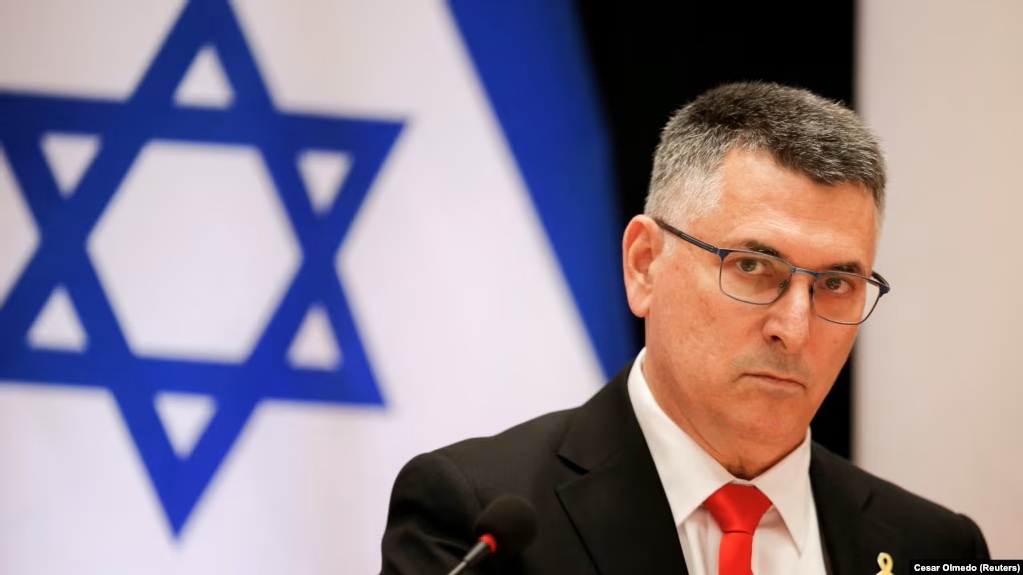
Israel's recognition of 1915 Events as "genocide" further consolidates this double standard. This step can be evaluated as an asymmetric political move taken following the tension in relations with Türkiye and Türkiye’s stance against the Israeli administration. When historical memory is viewed through the prism of tactical threats instead of universal morality, the tragedies of other nations (Armenia or Ukraine) will continue to be seen in Tel Aviv not through a "lens of universal morality," but as an "asset or liability on the current geopolitical chessboard." This determination clearly reveals Israel's tendency to instrumentalize historical tragedies.[4] Israel’s approach undoubtedly weakens and dilutes the country’s claim of the uniqueness of the Holocaust, to which the Jewish people were subjected in the past.
Similarly, as mapped by historian Ilan Pappe, the violence that Israel is currently embroiled in is the direct continuation of the ethnic cleansing that began before the 1948 Nakba. Israel's sudden interest in a century-old tragedy in the Caucasus is defined as a "desperate psychological operation", stated to be designed to fracture regional alliances and to whitewash the reputation of a state facing unprecedented genocide charges at the International Court of Justice (ICJ). True moral courage requires the "uncompromising and universal" application of international justice and human rights. Those who tragically lost their lives in history must not be used as "disposable poker chips" in a broader US-Israeli war aimed at dominating the Middle East.[5]
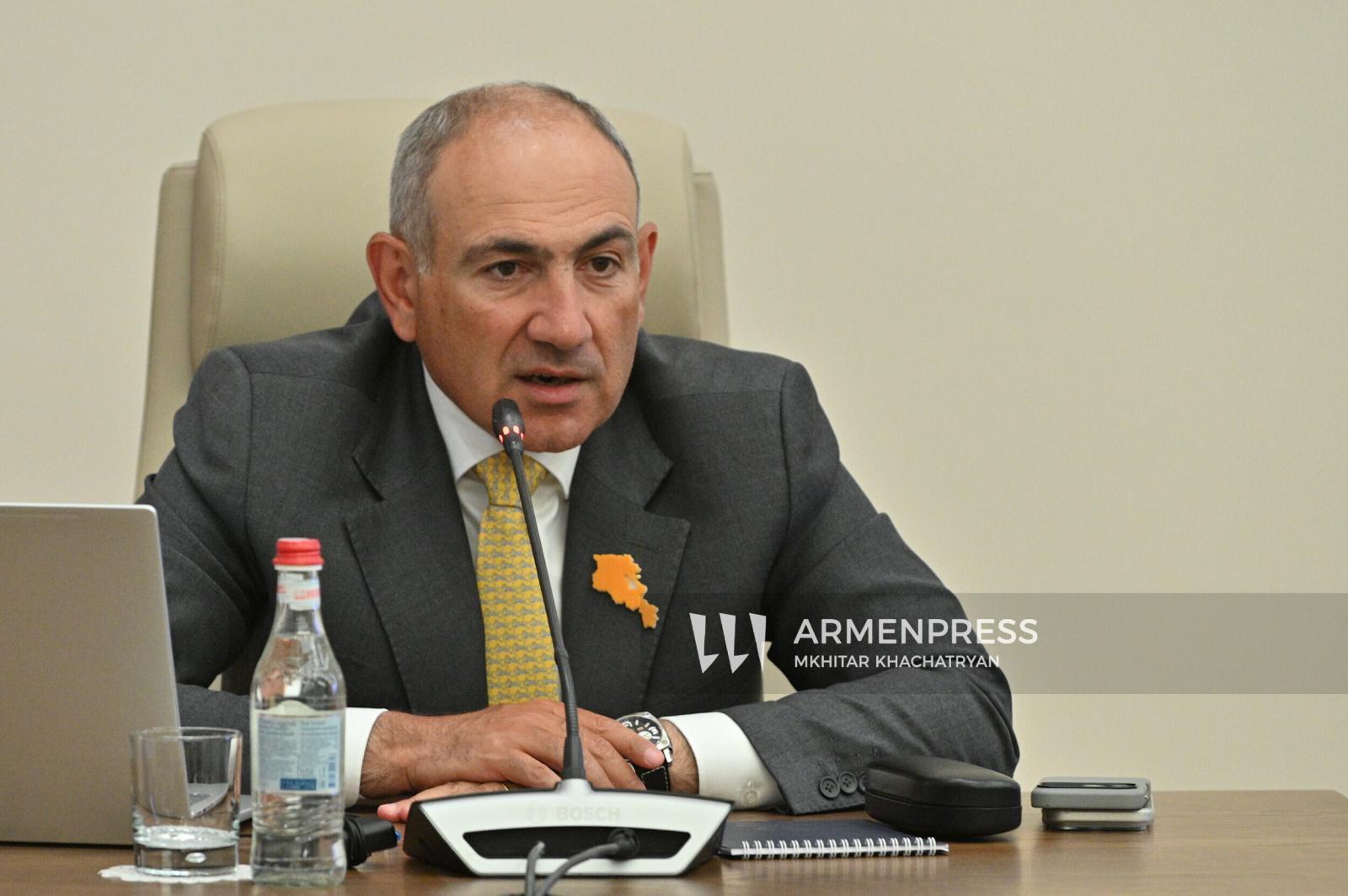
Armenian Prime Minister Nikol Pashinyan explicitly stated that they oppose the "weaponization" or "politicization" inherent in Israel’s decision, and that it is in Armenia's national interest not to engage in the matter of "misuse". By stating, "We see it in the interest of the Republic of Armenia not to enter into this issue," Pashinyan displayed a clear stance against turning the issue into a political tool. Türkiye has also condemned Israel’s decision due to its political motivation.[6]
In conclusion, the weaponization of historical events for current geopolitical interests serves neither universal morality nor international law. The inconsistency between the EU's value-based criticisms toward Türkiye and its acceptance of Türkiye’s indispensable role in strategic areas (such as the Middle Corridor) damages the Union's own credibility. Similarly, the gap between the indulgence shown toward Israel's actions and the standards applied to other actors confirms the global order's lack of a "framework of truth and values". In terms of Türkiye’s diplomatic interests, displaying a consistent and principled stance against the political exploitation of historical matters is essential. The equal application of universal standards to all actors, the maintenance of pragmatic cooperation in strategic projects such as the Middle Corridor, and preventing historical tragedies from being instrumentalized for current political calculations are imperative for regional stability and international credibility. Otherwise, double standards will continue to erode not only credibility but also the pursuit of justice.
*Image: https://www.azatutyun.am/a/33791097.html
[1] Hazel Çağan Elbir, “Avrupa Parlamentosu’nun 2025 Türkiye Raporu Işığında: Orta Koridor’un Stratejik Önemi ve Türkiye’nin Vazgeçilmez Rolü,” avim.org.tr, AVİM, 26 Haziran 2026, https://avim.org.tr/tr/Yorum/BaglantiBaglantiAVRUPA-PARLAMENTOSU-NUN-2025-TURKIYE-RAPORU-ISIGINDA-ORTA-KORIDOR-UN-STRATEJIK-ONEMI-VE-TURKIYE-NIN-VAZGECILMEZ-ROLU.
[2] Andrew Rettman, “Catholic cardinal risks Israel’s wrath in moral appeal for EU sanctions,” euobserver.com, EU Observer, June 28, 2026, https://euobserver.com/224502/catholic-cardinal-risks-israels-wrath-in-moral-appeal-for-eu-sanctions/.
[3] Andrew Rettman, “Catholic cardinal risks Israel’s wrath in moral appeal for EU sanctions.”
[4] Anton Filippov, “Why Israel recognised the Armenian genocide but still does not recognise the Holodomor as genocide,” eurointegration.com.ua, European Pravda, June 29, 2026, https://www.eurointegration.com.ua/eng/news/2026/06/29/7240600/.
[5] Garsha Vazirian, “Israel maliciously turns Armenian grief into diplomatic grenade masking Gaza atrocities,” tehrantimes.com, Tehran Times, June 29, 2026, https://www.tehrantimes.com/news/527748/Israel-maliciously-turns-Armenian-grief-into-diplomatic-grenade.
[6] Kanyshai Butun, “Armenia says it opposes ‘weaponization’ of 1915 events after Israeli recognition,” aa.com.tr, Anadolu Ajansı, June 29, 2026, https://www.aa.com.tr/en/world/armenia-says-it-opposes-weaponization-of-1915-events-after-israeli-recognition/3981632.
© 2009-2025 Center for Eurasian Studies (AVİM) All Rights Reserved
No comments yet.
-
 A MEETING WAS HELD IN ANKARA WITH THE COOPERATION OF AVIM AND AZERBAIJAN SAM
Hazel ÇAĞAN ELBİR 24.11.2014 -
 THE PROBLEM OF BIASED INTERNATIONAL NEWS AGENCIES
Hazel ÇAĞAN ELBİR 17.03.2017 -
 THE EU'S POLICY IS STARTING TO OVERLAP WITH PASHINYAN'S STANCE
Hazel ÇAĞAN ELBİR 15.05.2024 -
TWISTED LAW AND DOCUMENTED HISTORY - GEOFFREY ROBERSON'S OPINION ON GENOCIDE AGAINST PROVEN FACTS
Hazel ÇAĞAN ELBİR 30.11.2013 -
THE SANDCASTLE GIRLS – BOOK REVIEW
Hazel ÇAĞAN ELBİR 20.12.2012
-
 15TH SUMMIT OF LEADERS OF THE ECONOMIC COOPERATION ORGANIZATION
Gülperi GÜNGÖR 14.12.2021 -
 OBITUARY: MAVERICK HISTORIAN AND TURKEY’S GREAT FRIEND NORMAN STONE PASSED AWAY
AVİM 21.06.2019 -
 THE ISRAELI CABINET’S DISTORTION OF THE FIRST WORLD WAR EVENTS AND PASHINYAN’S STATEMENTS
Selenay Erva YALÇIN 28.07.2026 -
 MACEDONIA BETWEEN THE EU AND RUSSIA
Yiğit ALPOGAN 15.05.2017 -
 BAKALIAN CASE APPEAL HEARING HELD IN CALIFORNIA
Aslan Yavuz ŞİR 08.02.2019
-
25.01.2016
THE ARMENIAN QUESTION - BASIC KNOWLEDGE AND DOCUMENTATION -
12.06.2024
THE TRUTH WILL OUT -
27.03.2023
RADİKAL ERMENİ UNSURLARCA GERÇEKLEŞTİRİLEN MEZALİMLER VE VANDALİZM -
17.03.2023
PATRIOTISM PERVERTED -
23.02.2023
MEN ARE LIKE THAT -
03.02.2023
BAKÜ-TİFLİS-CEYHAN BORU HATTININ YAŞANAN TARİHİ -
16.12.2022
INTERNATIONAL SCHOLARS ON THE EVENTS OF 1915 -
07.12.2022
FAKE PHOTOS AND THE ARMENIAN PROPAGANDA -
07.12.2022
ERMENİ PROPAGANDASI VE SAHTE RESİMLER -
01.01.2022
A Letter From Japan - Strategically Mum: The Silence of the Armenians -
01.01.2022
Japonya'dan Bir Mektup - Stratejik Suskunluk: Ermenilerin Sessizliği -
03.06.2020
Anastas Mikoyan: Confessions of an Armenian Bolshevik -
08.04.2020
Sovyet Sonrası Ukrayna’da Devlet, Toplum ve Siyaset - Değişen Dinamikler, Dönüşen Kimlikler -
12.06.2018
Ermeni Sorunuyla İlgili İngiliz Belgeleri (1912-1923) - British Documents on Armenian Question (1912-1923) -
02.12.2016
Turkish-Russian Academics: A Historical Study on the Caucasus -
01.07.2016
Gürcistan'daki Müslüman Topluluklar: Azınlık Hakları, Kimlik, Siyaset -
10.03.2016
Armenian Diaspora: Diaspora, State and the Imagination of the Republic of Armenia -
24.01.2016
ERMENİ SORUNU - TEMEL BİLGİ VE BELGELER (2. BASKI)
-
AVİM Conference Hall 24.01.2023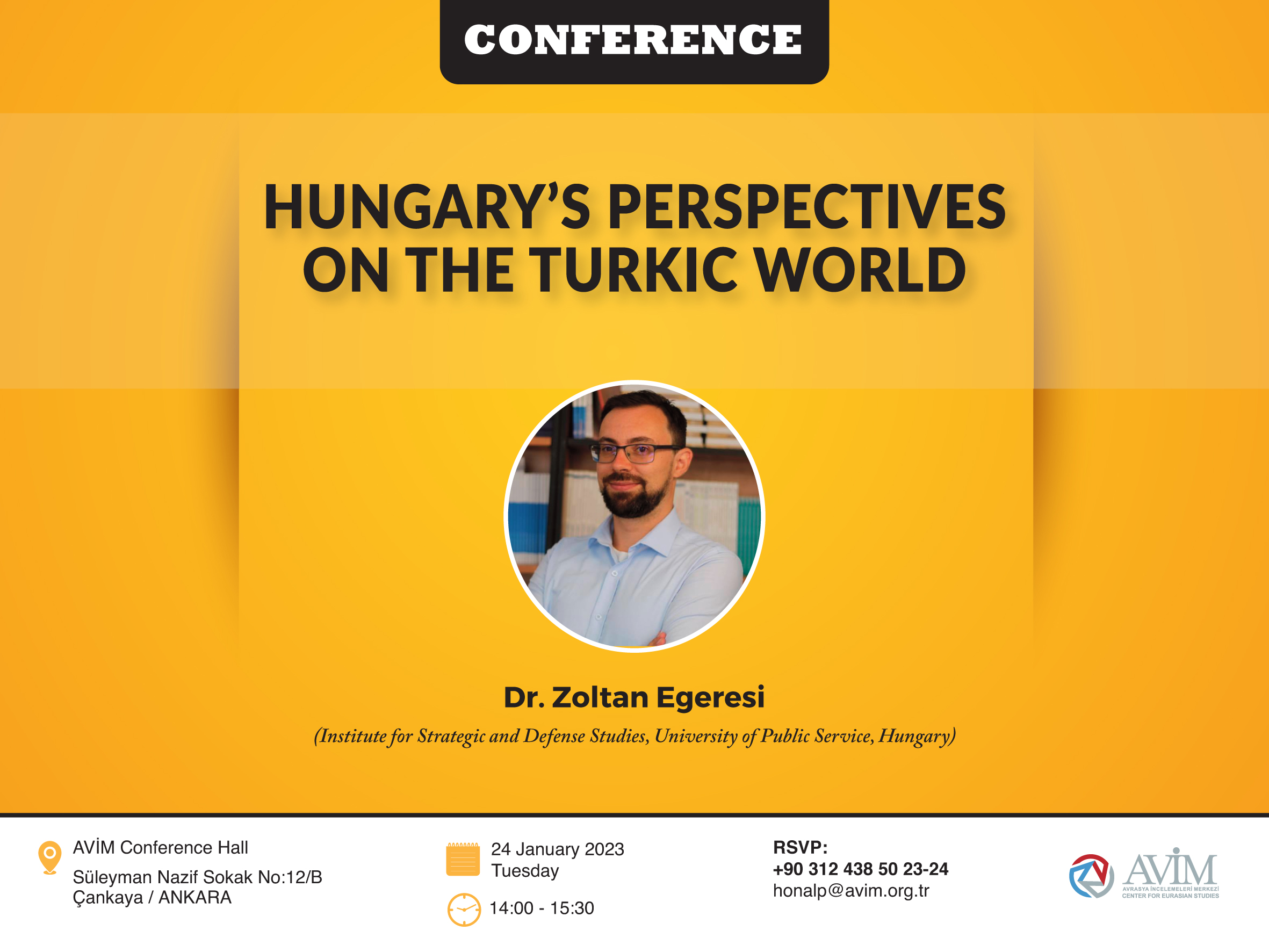
CONFERENCE TITLED “HUNGARY’S PERSPECTIVES ON THE TURKIC WORLD"