














This is the English translation of a Turkish language article that was originally published by AVİM on 17 July 2026.
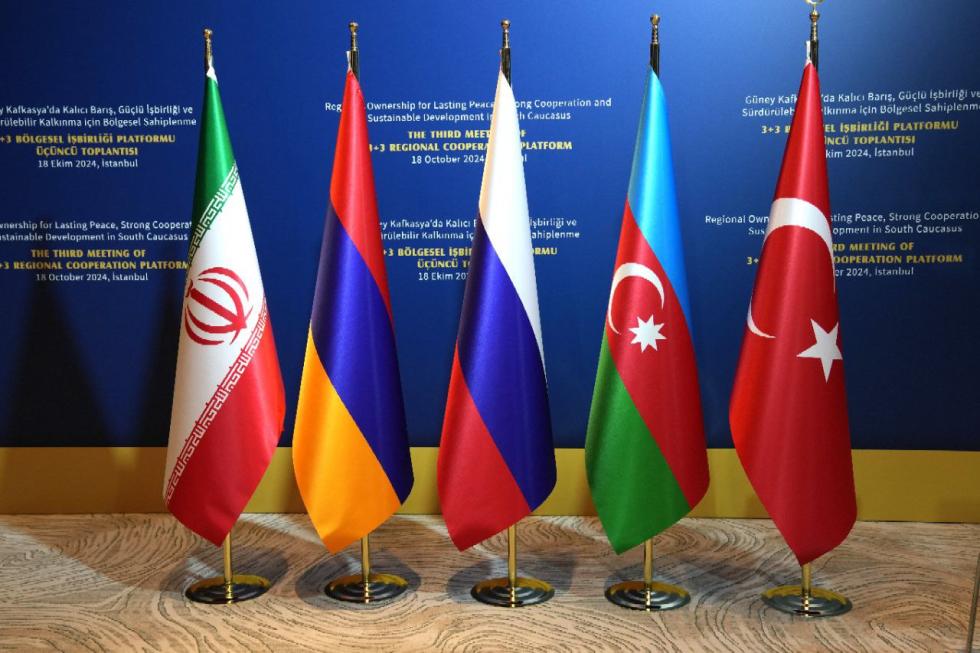
The "3+3 Platform", launched through the initiative of Türkiye and Azerbaijan to enable regional countries and their close partners (both geographically and politically) to resolve regional issues among themselves, continues to exist with the same objective. Recent developments and the current state of affairs have once again demonstrated the importance of the parties' resolve to settle regional conflicts free from external interference.
Aimed at eliminating the instability that occurred following the Second Karabakh War, the Platform has hosted numerous meetings to date, facilitating a more constructive framework for consultations among regional countries. The momentum gained by the Azerbaijan-Armenia peace treaty process following the Washington Agreement, the progress made in recent years regarding the normalization of relations between Türkiye and Armenia, Russia’s stance regarding these relations, and the European Union’s (EU) increasingly active involvement have all contributed to a better understanding of the Platform’s purpose.
Noting that meetings had previously been held in Tehran, Moscow, and İstanbul, Russian Foreign Ministry Spokesperson Maria Zakharova recently stated that the next meeting should be hosted by either Azerbaijan or Armenia and that they are awaiting proposals from the parties to reach a final decision.[1] In the same statement, Zakharova expressed the view that the Platform should take on an economic character and avoid politicization, thereby adding to the public record in a way that is consistent with earlier remarks by Russian Minister of Foreign Affairs Sergey Lavrov[2] regarding the importance Russia attaches to the Platform.
Developments regarding the Trump Route for International Peace and Prosperity (TRIPP), Iran’s frequently voiced concerns about this corridor, and the balancing act Tehran maintains in its separate relations with Armenia and Azerbaijan all underline the importance of urgently convening the next meeting of the Platform. Considering the principle that regional countries should resolve their own issues, the recent shift in the EU’s South Caucasus policy is also noteworthy.
While the observer missions the EU deploys at Armenia’s borders exemplify its typical "observer" stance (distinct from the active interventions it pursues in other geographies), it must be noted that the EU has recently deviated from this established policy regarding the South Caucasus, adopting an attitude that, while not strictly active, cannot be described as merely passive either. This development, which conflicts with the logic of excluding third-party interventions that regional countries have successfully upheld until now, has served to emphasize the significance of the Platform.
In conclusion, the 3+3 Platform is not merely a temporary post-war entity with a short-term mandate. It is a rather significant organization with the potential to generate substantial benefits for the peace, prosperity, and stability of the region. Serving as a tangible indicator of the regional countries' resolve to address their own issues, the Platform has gained importance by demonstrating that their problems can be resolved through negotiations without external interference. The acceleration of peace and normalization processes, in addition to Iran’s efforts to establish a policy based on balance with regional countries, show that the Platform has not lost its functionality, but rather plays a more important role today than ever before.
*Image: Caucasus Watch
[1] “Zaharova: “3+3” Görüşmelerinin Sırası Ermenistan ve Azerbaycan Tarafından Belirlenecek,” ArmenPress, July 16, 2026, https://armenpress.am/tr/article/1255656.
[2] “Russia Urges Armenia and Azerbaijan to Host Next 3+3 Meeting”, Caucasus Watch, September 9, 2025, https://caucasuswatch.de/en/news/russia-urges-armenia-and-azerbaijan-to-host-next-33-meeting.html.
© 2009-2025 Center for Eurasian Studies (AVİM) All Rights Reserved
No comments yet.
-
 THE ORGANIZATION OF TURKIC STATES AND THE CLAIMS OF TURANISM AND PANTURKISM
Selenay Erva YALÇIN 19.12.2024 -
 SWITZERLAND'S BIASED STANCE AND ITS HARMFUL EFFECTS ON PEACE EFFORTS - 2
Selenay Erva YALÇIN 02.07.2025 -
 SWITZERLAND'S BIASED STANCE AND ITS HARMFUL EFFECTS ON PEACE EFFORTS
Selenay Erva YALÇIN 26.06.2025 -
 THE EU'S REFUGEE POLICY IN LIGHT OF VON DER LEYEN'S VISIT TO EGYPT AND THE CASE OF RWANDA
Selenay Erva YALÇIN 10.07.2024 -
 GERMANY'S CONTRADICTORY STANCE ON THE GAZA ISSUE
Selenay Erva YALÇIN 09.07.2024
-
 ROMANIA, THE BLACK SEA, AND THE LIMITS OF STRATEGIC SUBSTITUTION
Teoman Ertuğrul TULUN 12.02.2026 -
 CONFERENCE ORGANIZED BY LSE’S CONTEMPORARY TURKISH STUDIES CHAIR
Ali Murat TAŞKENT 04.06.2015 -
ECONOMIC CRISIS IN THE EUROPEAN UNION AND THE GREEK ADMINISTRATION OF SOUTHERN CYPRUS
Alev KILIÇ 14.01.2013 -
 BOOK REVIEW-SASUN: THE HISTORY OF AN 1890S ARMENIAN REVOLT
Ali Murat TAŞKENT 12.04.2015 -
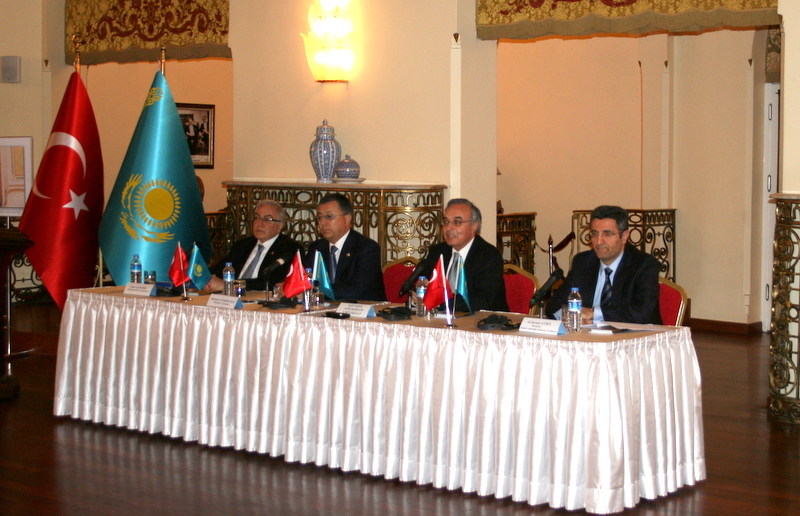 CENTER FOR EURASIAN STUDIES (AVİM) HELD A BRAIN-STORMING MEETING ON THE TOPIC “ EURASIAN PERSPECTIVES- THE VIEWS FROM KAZAKHSTAN AND TURKEY”.
Hande Apakan 25.02.2014
-
25.01.2016
THE ARMENIAN QUESTION - BASIC KNOWLEDGE AND DOCUMENTATION -
12.06.2024
THE TRUTH WILL OUT -
27.03.2023
RADİKAL ERMENİ UNSURLARCA GERÇEKLEŞTİRİLEN MEZALİMLER VE VANDALİZM -
17.03.2023
PATRIOTISM PERVERTED -
23.02.2023
MEN ARE LIKE THAT -
03.02.2023
BAKÜ-TİFLİS-CEYHAN BORU HATTININ YAŞANAN TARİHİ -
16.12.2022
INTERNATIONAL SCHOLARS ON THE EVENTS OF 1915 -
07.12.2022
FAKE PHOTOS AND THE ARMENIAN PROPAGANDA -
07.12.2022
ERMENİ PROPAGANDASI VE SAHTE RESİMLER -
01.01.2022
A Letter From Japan - Strategically Mum: The Silence of the Armenians -
01.01.2022
Japonya'dan Bir Mektup - Stratejik Suskunluk: Ermenilerin Sessizliği -
03.06.2020
Anastas Mikoyan: Confessions of an Armenian Bolshevik -
08.04.2020
Sovyet Sonrası Ukrayna’da Devlet, Toplum ve Siyaset - Değişen Dinamikler, Dönüşen Kimlikler -
12.06.2018
Ermeni Sorunuyla İlgili İngiliz Belgeleri (1912-1923) - British Documents on Armenian Question (1912-1923) -
02.12.2016
Turkish-Russian Academics: A Historical Study on the Caucasus -
01.07.2016
Gürcistan'daki Müslüman Topluluklar: Azınlık Hakları, Kimlik, Siyaset -
10.03.2016
Armenian Diaspora: Diaspora, State and the Imagination of the Republic of Armenia -
24.01.2016
ERMENİ SORUNU - TEMEL BİLGİ VE BELGELER (2. BASKI)
-
AVİM Conference Hall 24.01.2023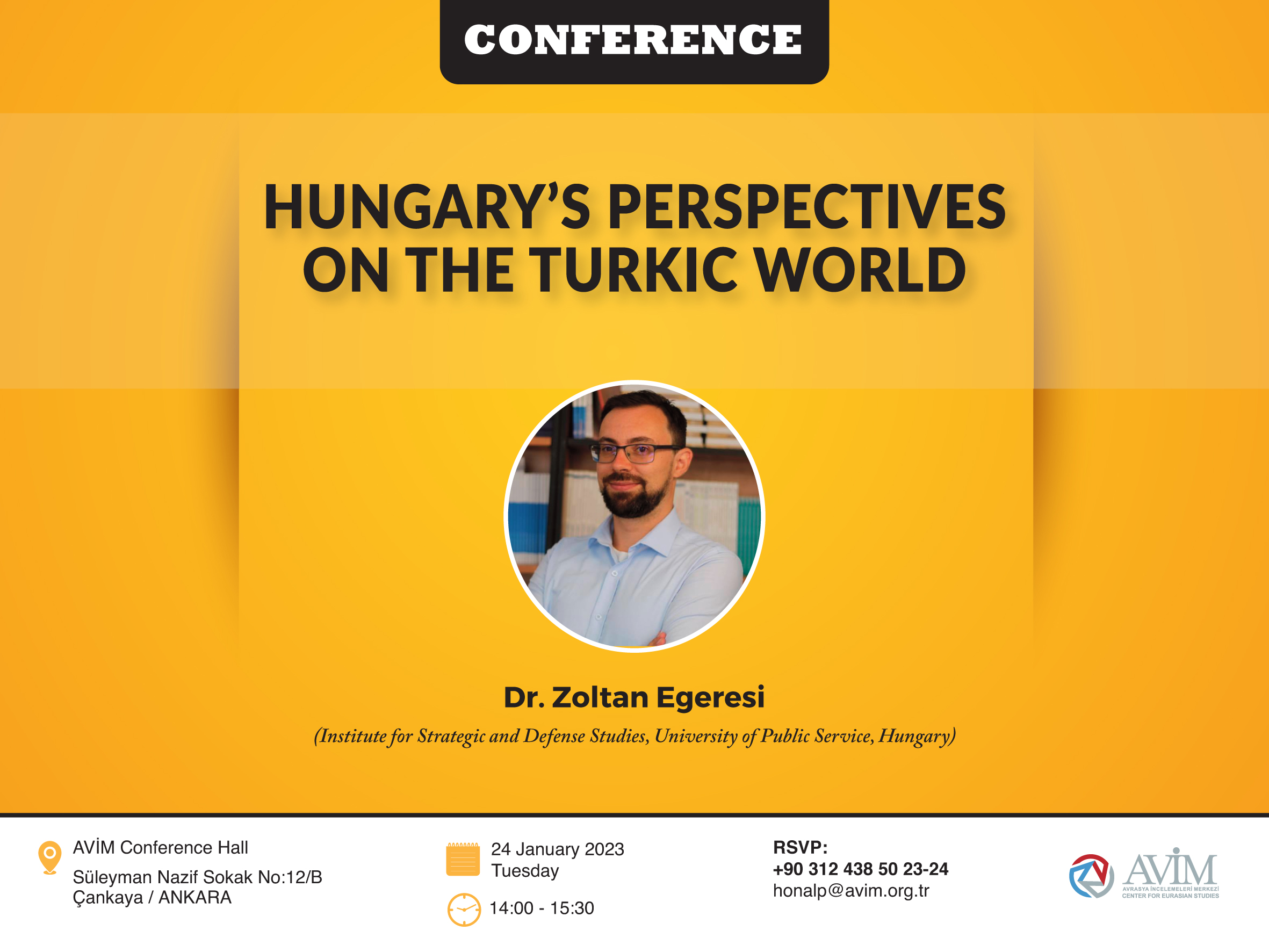
CONFERENCE TITLED “HUNGARY’S PERSPECTIVES ON THE TURKIC WORLD"