














This is the English translation of a Turkish language article that was originally published by AVİM on 12 June 2026.
The Organization of Turkic States (OTS) has emerged as one of the regional structures attracting increasing attention in Eurasian geopolitics in recent years. Once viewed primarily through the lens of shared history, language, and culture, the organization now has a broad agenda including transport corridors, digital transformation, energy security, and economic connectivity. The shift in the OTS’s development is not limited to the importance member states place on the organization. The OTS has also become part of the strategic interests of various global and regional actors.
Underlying this shift is, first and foremost, the transformation taking place in Eurasia. Following the Russia-Ukraine War, regional trade and transportation networks have begun to reshape, and the need for alternative routes connecting Europe and Asia has grown. In this process, the importance of The Middle Corridor (Trans-Caspian International Transport Route) which links Türkiye, Azerbaijan, and Central Asian countries has become more evident. Passing over the Caspian Sea and extending from China to Europe, this route is not merely an economic project but also stands out as a strategic link that strengthens cooperation among Turkic states.[1] The OTS’s recent initiatives in the fields of transportation, logistics, and trade can also be evaluated within this framework.
The Informal Turkistan Summit of the OTS held in May 2026 is remarkable in that it reflects the organization’s evolving agenda. The summit addressed topics such as artificial intelligence, digital transformation, transportation networks, energy cooperation, and regional connectivity.[2] This situation demonstrates that the organization’s scope of activities has expanded beyond cultural cooperation. Today, while the OTS continues its initiatives aimed at preserving a shared identity, it is also evolving into an institutional platform that seeks to enhance economic and technological cooperation.
Türkiye stands out as one of the key actors of this process. When Ankara’s approach to the OTS is considered, the priority is not to establish an ideological unity but to strengthen connectivity among Turkic states. Türkiye’s emphasis on The Middle Corridor in recent years, the strategic partnership developed with Azerbaijan and the deepening multilateral relations with Central Asian countries are among the concrete examples of this approach. In addition, joint alphabet initiatives, educational collaborations, and digital transformation projects can be viewed as components of Türkiye’s long-term vision for the organization. Türkiye’s approach can be viewed as an effort to expand common areas of action and deepen institutional cooperation among Turkic states with differing foreign policy priorities.
Perhaps the most significant indicator of the OTS’s growing international visibility is observed in the approaches of external actors toward the organization. Recently, various US-based assessments have argued the view that Washington needs to develop closer relations with Turkic states. These assessments highlight the OTS’s energy resources, critical minerals, transportation corridors, and strategic geographic location.[3] In particular, the growing importance of Central Asia in global supply chains is making the Turkic states more prominent not only at the regional level but also on a global scale. Consequently, instead of being viewed solely as a cooperation platform comprising member states, the OTS is now recognized as a structure capable of influencing the balance of power in Eurasia.
Russia is also seen to be monitoring integration processes in the Turkic world more closely. From Moscow’s perspective, Central Asia has long been a sphere of influence of particular importance. However, in recent years, the increasing coordination, joint projects and institutional cooperation initiatives among Turkic states have been closely followed by Russian experts.[4] The issue here is not only the growing influence of Türkiye in the region. The main point of interest is that Central Asian states have begun to develop cooperation among themselves and are working to institutionalize it. These developments indicate that assessments regarding the Turkic world are being made more and more through the lens of geopolitical implications.
Publications by AVİM also point to the effects of integration processes in the Turkic world on regional power balances; it is emphasized that actors such as Russia, China, and Iran are closely monitoring this process.[5]
The European Union’s (EU) growing interest in Central Asia was highlighted by the first EU-Central Asia Summit held in Samarkand in April 2025. Cooperation in the fields of transportation, energy, critical minerals and digital connectivity are discussed at the summit, and the parties set goals to elevate their relations to the level of a strategic partnership.[6] However, when the summit’s format is examined, the fact that the region was addressed through an approach independent of the cooperation mechanisms developing within the framework of the OTS indicates that the EU prefers to develop its relations with the region directly through bilateral relations and its own framework. The fact that the OTS, which constitutes the institutional framework of the Turkic world, did not play any role in the process and was not mentioned in the joint declaration does not align with the integration vision that the Turkic world is promoting. Given Türkiye’s geostrategic role in the region’s connection to Europe and its position within the OTS, the framework emerging in Samarkand diverges from Türkiye’s regional vision. The Samarkand Summit clearly reflects Europe’s effort to bring Central Asian countries into its orbit by leveraging the capacity demonstrated through the €10 billion investment package it has proposed.
Recent developments indicate that the organization’s presence in the international arena has increased significantly. One way to gauge the importance of a regional organization is to observe the attention paid to it by other actors. The fact that the US is currently discussing the establishment of closer ties with the OTS, that Russia is closely monitoring integration within the Turkic world, and that the EU is intensifying its strategic initiatives toward Central Asia all signal that the organization has entered a new phase. However, these developments also reveal that the priorities and approaches of different actors toward the region are diverging. While the US sees the OTS as a partner offering new opportunities for cooperation in Eurasia, Russia assesses these developments primarily in terms of regional power balances. The EU, meanwhile, is seeking to deepen its relations with Central Asia, but is doing so within a framework that hinders the institutional integration of the Turkic world.
The OTS’s growing presence is the result of a process that extends beyond the steps taken by member states and is also shaped by changing international dynamics. Cooperation among Turkic states has become more visible in a period when trade routes in Eurasia are being reshaped and energy and transportation security are gaining greater importance. There may be differing assessments regarding the future of the OTS today, but it is clear that the organization is no longer just a platform for internal dialogue within the Turkic world. The approaches of the United States, Russia, and the European Union toward the region also demonstrate that the OTS has become a structure that is increasingly taken into account in Eurasian geopolitics.
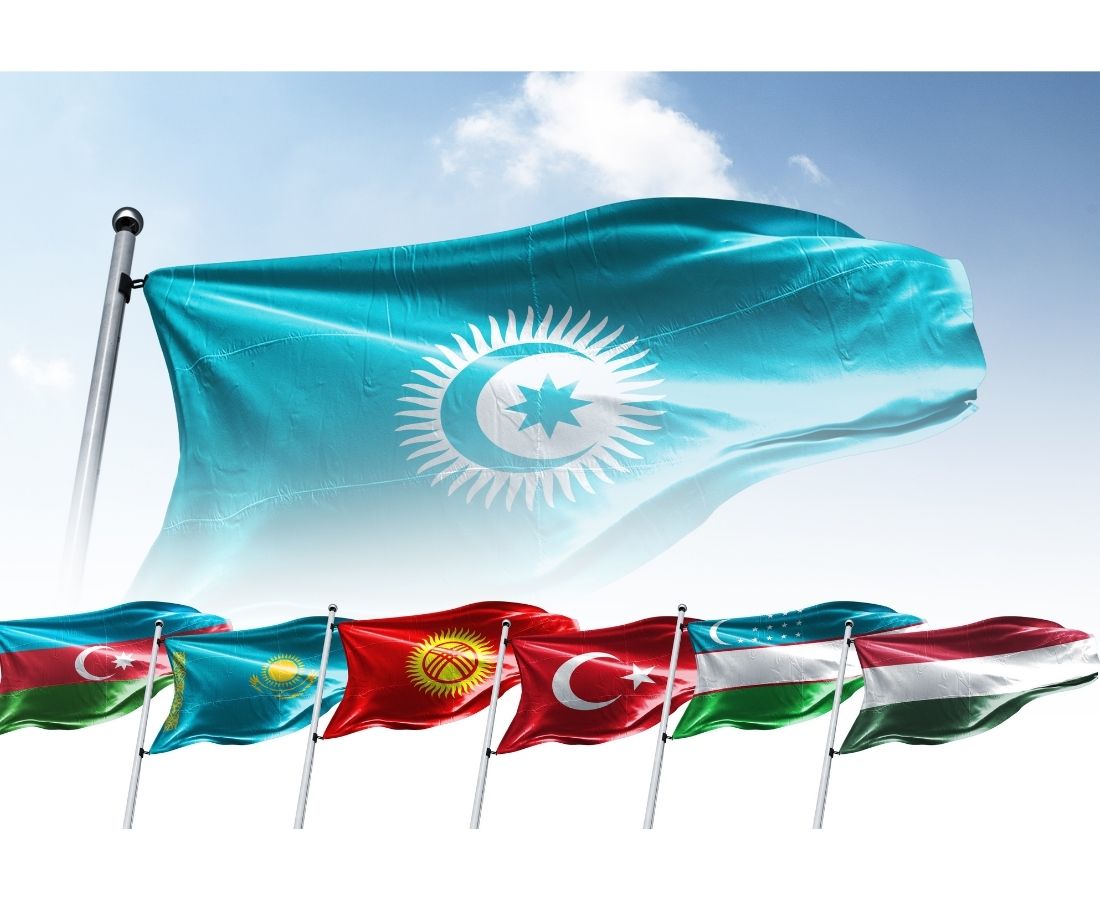
*Image: EkoAvrasya
[1] “Middle Corridor touted as alternative to routes affected by ongoing conflicts,” Anadolu Agency, April 18, 2026, https://www.aa.com.tr/en/asia-pacific/middle-corridor-touted-as-alternative-to-routes-affected-by-ongoing-conflicts/3910823
[2] “Turkistan Declaration of the Informal Summit of the Organization of Turkic States,” Organization of Turkic States, May 15, 2026, https://turkicstates.org/en/news/turkistan-declaration-of-the-informal-summit-of-the-organization-of-turkic-states
[3] “Washington Should Work With the Turkic States,” RealClearWorld, May 30, 2026, https://www.realclearworld.com/articles/2026/05/30/washington_should_work_with_the_turkic_states_1185807.html
[4] “Moscow Worried by Rise of Pan-Turkism Across Central Asia,” Jamestown Foundation, June 4, 2026, https://jamestown.org/moscow-worried-by-rise-of-pan-turkism-across-central-asia/
[5] “The Integration of The Turkic World And Its Implications For Regional Power Dynamics,” AVİM, June 1, 2026, https://avim.org.tr/en/Analiz/THE-INTEGRATION-OF-THE-TURKIC-WORLD-AND-ITS-IMPLICATIONS-FOR-REGIONAL-POWER-DYNAMICS
[6] “Joint Declaration Following the First European Union-Central Asia Summit,” European Commission, April 4, 2025, https://ec.europa.eu/commission/presscorner/detail/fr/statement_25_980
© 2009-2025 Center for Eurasian Studies (AVİM) All Rights Reserved
No comments yet.
-
 CHANGING ARCTIC AGENDA AT THE DAVOS SUMMIT
Özge Emine ÖZÇELİK 28.01.2026 -
 THE PEACE WATER PIPELINE PROJECT CAN BE UPDATED THROUGH EXPANSION
Özge Emine ÖZÇELİK 04.05.2026 -
ORGANIZATION OF TURKIC STATES: THE INSTITUTIONALIZATION OF THE TURKIC WORLD
Özge Emine ÖZÇELİK 16.06.2026 -
 SECURITY IN THE TURKISH STRAITS AND THE BLACK SEA
Özge Emine ÖZÇELİK 08.04.2026
-
 AVIM HELD MEETINGS WITH THINK TANKS AND ACADEMIC CIRCLES IN TEHRAN
AVİM 17.09.2015 -
 DONALD TUSK’S VISIT TO SOUTH CAUCASUS
Şakire (FURTUN) TAHNAL 03.08.2015 -
IS IT REALLY A SUCCESS?
Ömer Engin LÜTEM 05.03.2010 -
 ONLINE DISAPPEARANCE OF THE ACCUMULATED INFORMATION OF TÜRKİYE REGARDING THE MILITANT-RADICAL ARMENIAN NARRATIVE
AVİM 06.10.2026 -
 ANCA ADDS ANOTHER REALITY-DETACHED CLAIM TO ITS RHETORIC
Tuğçe TECİMER 28.07.2026
-
25.01.2016
THE ARMENIAN QUESTION - BASIC KNOWLEDGE AND DOCUMENTATION -
12.06.2024
THE TRUTH WILL OUT -
27.03.2023
RADİKAL ERMENİ UNSURLARCA GERÇEKLEŞTİRİLEN MEZALİMLER VE VANDALİZM -
17.03.2023
PATRIOTISM PERVERTED -
23.02.2023
MEN ARE LIKE THAT -
03.02.2023
BAKÜ-TİFLİS-CEYHAN BORU HATTININ YAŞANAN TARİHİ -
16.12.2022
INTERNATIONAL SCHOLARS ON THE EVENTS OF 1915 -
07.12.2022
FAKE PHOTOS AND THE ARMENIAN PROPAGANDA -
07.12.2022
ERMENİ PROPAGANDASI VE SAHTE RESİMLER -
01.01.2022
A Letter From Japan - Strategically Mum: The Silence of the Armenians -
01.01.2022
Japonya'dan Bir Mektup - Stratejik Suskunluk: Ermenilerin Sessizliği -
03.06.2020
Anastas Mikoyan: Confessions of an Armenian Bolshevik -
08.04.2020
Sovyet Sonrası Ukrayna’da Devlet, Toplum ve Siyaset - Değişen Dinamikler, Dönüşen Kimlikler -
12.06.2018
Ermeni Sorunuyla İlgili İngiliz Belgeleri (1912-1923) - British Documents on Armenian Question (1912-1923) -
02.12.2016
Turkish-Russian Academics: A Historical Study on the Caucasus -
01.07.2016
Gürcistan'daki Müslüman Topluluklar: Azınlık Hakları, Kimlik, Siyaset -
10.03.2016
Armenian Diaspora: Diaspora, State and the Imagination of the Republic of Armenia -
24.01.2016
ERMENİ SORUNU - TEMEL BİLGİ VE BELGELER (2. BASKI)
-
AVİM Conference Hall 24.01.2023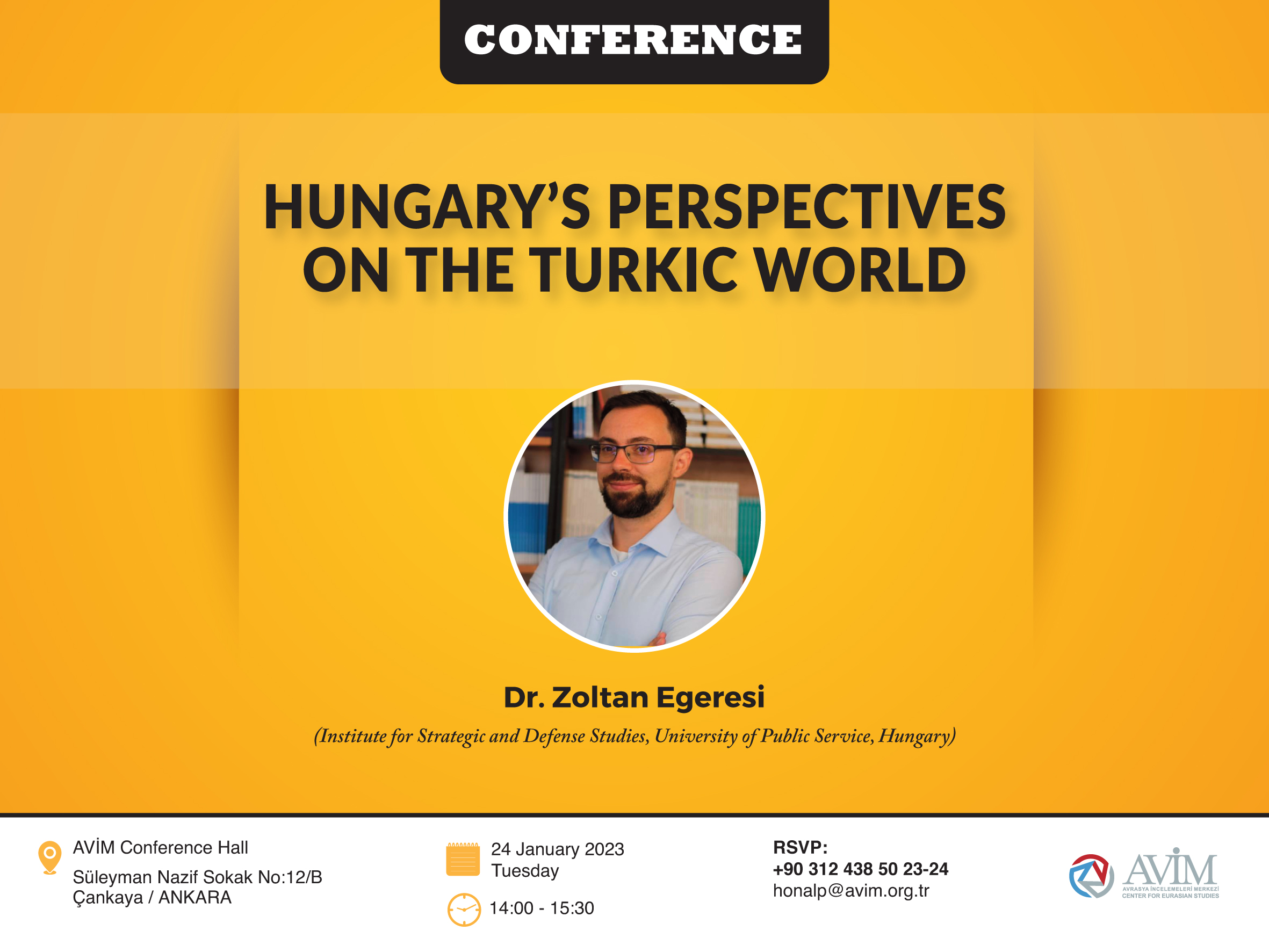
CONFERENCE TITLED “HUNGARY’S PERSPECTIVES ON THE TURKIC WORLD"