














This is the English translation of a Turkish language article that was originally published by AVİM on 29 April 2026.
In recent years, the issue of water has moved beyond being merely an environmental concern and has become part of broader security discussions. Access to water directly affects a wide range of areas, from healthcare and economic production to the continuity of daily life and social order. Particularly in arid and fragile regions such as the Middle East, water is not only a natural resource but also one of the fundamental elements of stability. In this context, the deepening of water crisis brings with it new debates that may affect regional balances. One of the most striking aspects of this transformation is the increasing tendency for water infrastructure to become a target in conflict environments.
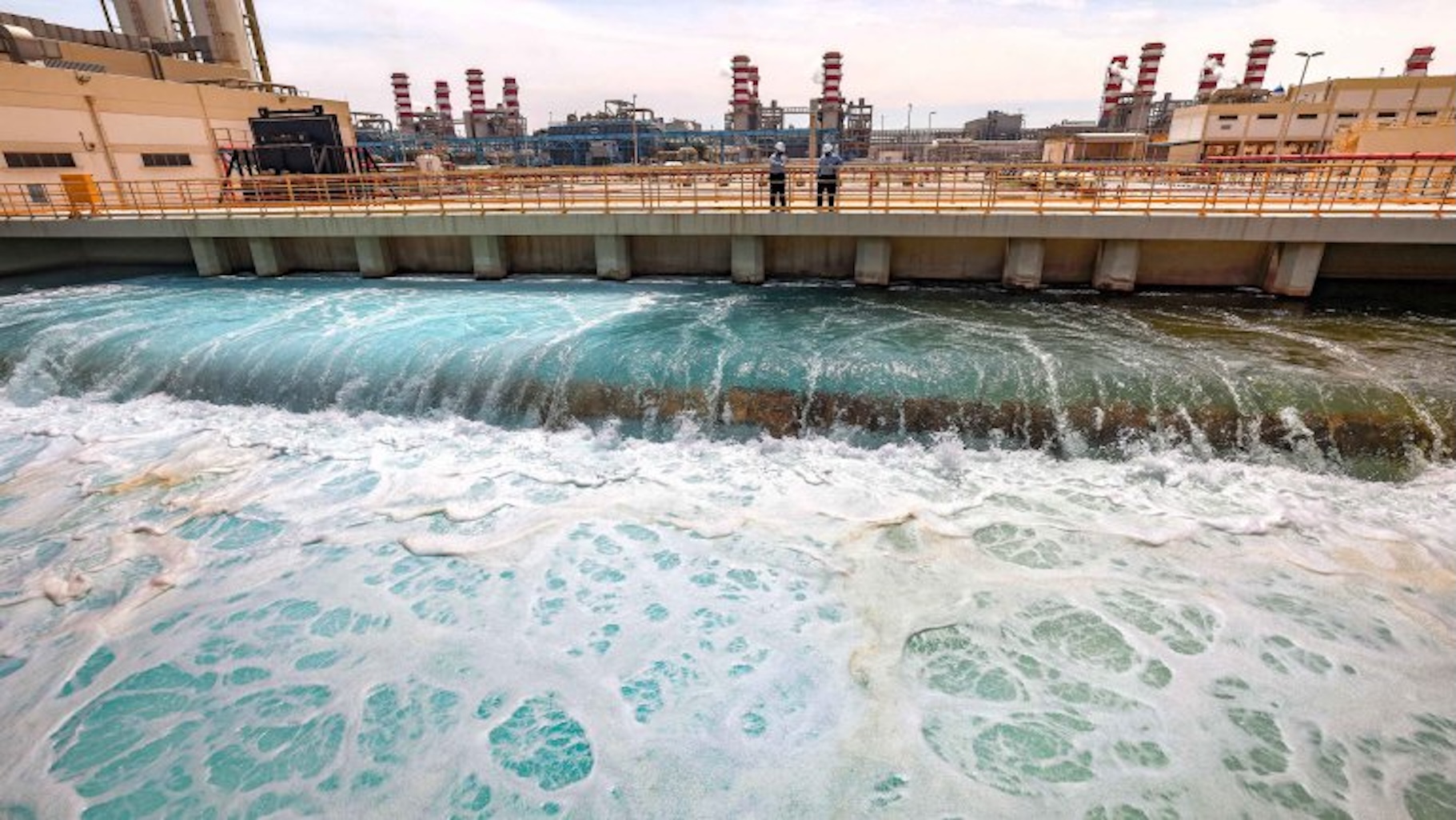
Conventionally, energy facilities, ports and transportation routes have been among the primary targets in conflicts. However, recent developments indicate that water infrastructure has begun to gain similar strategic importance. This situation creates a serious vulnerability, particularly for Gulf countries that rely heavily on desalination for their drinking water supply. A large number of countries, including the United Arab Emirates, Kuwait, Qatar, Oman and Saudi Arabia, depend on desalination to meet their water needs. Indeed, approximately 99% of drinking water in Qatar, 90% in Kuwait, 86% in Oman and around 70% in Saudi Arabia is supplied through desalination plants.[1] Moreover, Gulf countries account for roughly 40% of the world’s desalinated water production.[2] However, this method is both costly and debated in terms of sustainability. More importantly, this system has proven to be highly vulnerable to external disruption, particularly during times of conflict. While disruptions to energy infrastructure can, to some extent, be managed over time, interruptions in water infrastructure tend to produce far more immediate and direct consequences. Since desalination facilities operate through interconnected infrastructure, damage at any single point does not remain isolated but instead creates cascading and long-term effects that require system-wide repair. Therefore, damage to such facilities has the potential to generate crises that directly affect daily life, rather than merely causing economic losses.
It is evident that water has increasingly been used as a “strategic tool” (water as a weapon) over the past century. This demonstrates that water is not a necessity but also a means of exerting pressure and shaping balances of power. In this regard, recent developments in the Middle East, including attacks and threats directed at water desalination facilities in Kuwait and Bahrain in March, serve as examples supporting this trend. Furthermore, statements by Iran indicating that desalination plants could be directly targeted show that such infrastructure is now considered a potential military objective.[3]
At this point, Türkiye’s position is of particular importance. Although Türkiye is not generally considered a water-rich country, its geographical advantages allow it to assume a supportive role in addressing water-related challenges. Rivers such as Ceyhan and Seyhan, which originate within Türkiye’s borders and flow into the Mediterranean, stand out as potential sources. Türkiye’s position as a pivotal country bridging the Middle East and Europe has long been regarded as an advantage in the energy sector. Projects such as the Trans-Anatolian Natural Gas Pipeline (TANAP) have strengthened Türkiye’s role in energy transportation. However, recent developments raise the question of whether a similar approach could be considered for water as well.
Certain past projects should be revisited in this context. In particular, the idea of transporting water to the Middle East, proposed during the period of Turgut Özal and known as the “Peace Water Pipeline,” was long considered impractical and could not be implemented for various reasons.[4] Similarly, projects such as the sale of water from Türkiye to Israel were discussed in the 2000s but no progress was made due to political conditions. Despite this, Türkiye’s successful transfer of water to the Turkish Republic of Norther Cyprus (TRNC) via an undersea pipeline demonstrates that such projects are technically feasible.[5]
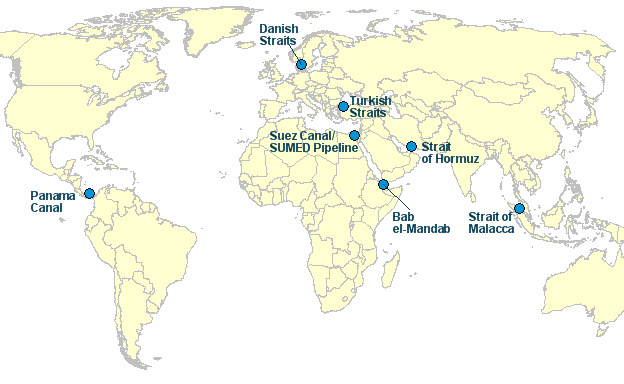
The ongoing conflict in the Middle East has made it imperative to consider energy and water security in tandem. The fact that a significant portion of global oil and natural gas trade depends on a chokepoint like the Strait of Hormuz has clearly demonstrated how tensions in the region directly impact global energy supplies. This increases the importance of alternative and more secure transit routes. One of Türkiye’s existing energy infrastructure projects, TANAP, is a key example that transports natural gas from Azerbaijan to the European market via Georgia and Türkiye, thereby contributing to the diversification of supply sources. With the commissioning of the pipeline, Europe’s options for non-Russian energy supply have increased and the role of transit countries in energy flows has become more pronounced.
A similar approach can also be conceptualized as a water and energy corridor for the Gulf countries. Türkiye’s geographical location and water resources in certain basins present an alternative model for Gulf countries, which have limited natural water availability and are largely dependent on the Strait of Hormuz for energy transportation. A structure developed within this framework has the potential to create a mutually beneficial area of cooperation between the parties. A water and energy corridor between Türkiye and the Gulf countries can be envisioned as a bidirectional infrastructure model. Under this model, Türkiye could transport water obtained from Ceyhan and Seyhan river basins, which flow into the Mediterranean, through pipelines via Syria and Iraq to countries such as Kuwait and Saudi Arabia. Thus, the pipeline could provide an alternative to desalination, reducing dependence on a method that is both costly and environmentally burdensome. At the sime time, oil and natural gas resources from the Gulf could be transported northward through the same or parallel infrastructure. This would make it possible to transport energy resources from southern Iraq to Türkiye and onward to Europe. Existing projects like TANAP already demonstrate the feasibility of such a transit model by transporting Azerbaijani gas to Europe via Türkiye. When this system is expanded, energy from the Gulf can also be routed to the European market through Türkiye. In this way, Gulf countries would gain the opportunity to diversify their water supply, while Türkiye would expand its role in energy transportation and creates an alternative energy route both for Gulf countries dependent on Hormuz and for Europe.
Overall, a water and energy corridor between Türkiye and the Gulf countries stands out as a concrete model when existing infrastructure examples and regional needs are taken into account. This structure, based on the reciprocal flow of water and energy, not only enables the transfer of resources but also allows for the establishment of long-term bond between the parties. Türkiye’s geographical position and the experience it has gained through existing infrastructure indicate its capacity to play a central hub in such a system. If the appropriate conditions are met, such a model holds the potential to redefine regional cooperation on an economic basis.
*Picture: Center for Strategic and International Studies (CSIS)
[1] “Are water desalination plants the Gulf’s Achilles’ in the latest Middle East conflict?,” Arab News, March 10, 2026, https://www.arabnews.com/node/2635971/amp
[2] “How much of the Gulf’s water comes from tuzdan arındırma plants?” Al Jazeera, March 12, 2026, https://www.aljazeera.com/news/2026/3/12/how-much-of-the-gulfs-water-comes-from-desalination-plants
[3] “Iran threatens to retaliate after Trump gives 48-hour ultimatum to reopen Strait,” Euronews, March 22, 2026, https://www.euronews.com/2026/03/22/iran-threatens-to-retaliate-after-trump-gives-48-hour-ultimatum-to-reopen-strait
[4] Turan, İ. (2012). Ortadoğu’da Su Krizi ve Türkiye: Sorun ve Çözümler. İstanbul Üniversitesi Siyasal Bilgiler Fakültesi Dergisi, 3-4-5. https://izlik.org/JA97BS94TR
[5] “The Project of the Century inaugurated,” Turkish Republic of Norther Cyprus Ministry of Foreign Affairs, October 19, 2015, https://mfa.gov.ct.tr/1421/the-project-of-the-century-inaugurated
© 2009-2025 Center for Eurasian Studies (AVİM) All Rights Reserved
No comments yet.
-
THE PEACE WATER PIPELINE PROJECT CAN BE UPDATED THROUGH EXPANSION
Özge Emine ÖZÇELİK 04.05.2026 -
 CHANGING ARCTIC AGENDA AT THE DAVOS SUMMIT
Özge Emine ÖZÇELİK 28.01.2026 -
 ORGANIZATION OF TURKIC STATES: THE INSTITUTIONALIZATION OF THE TURKIC WORLD
Özge Emine ÖZÇELİK 16.06.2026 -
 SECURITY IN THE TURKISH STRAITS AND THE BLACK SEA
Özge Emine ÖZÇELİK 08.04.2026
-
 THE ARMENIAN DIASPORA, STATE CONTROL, AND THE LIMITS OF DIASPORA POLITICS
Teoman Ertuğrul TULUN 27.02.2026 -
 THE EUROPEAN PARLIAMENT RESOLUTION AND THE TERRORIST ATTACK AT CHRISTCHURCH
Teoman Ertuğrul TULUN 15.03.2019 -
 SHIFTING REGIONAL DYNAMICS AND THE 3+3 PLATFORM
Selenay Erva YALÇIN 07.10.2026 -
 THE NEW LEGAL BASIS FOR EU-ARMENIA RELATIONS
Teoman Ertuğrul TULUN 31.07.2018 -
 “MONTENEGRO AND THE BALKANS” MEETING ORGANIZED BY AVIM AND ANKARA UNI. CENTER OF INTERNATIONAL ECONOMIC AND POLITICAL RESEARCH
Hande Apakan 17.03.2015
-
25.01.2016
THE ARMENIAN QUESTION - BASIC KNOWLEDGE AND DOCUMENTATION -
12.06.2024
THE TRUTH WILL OUT -
27.03.2023
RADİKAL ERMENİ UNSURLARCA GERÇEKLEŞTİRİLEN MEZALİMLER VE VANDALİZM -
17.03.2023
PATRIOTISM PERVERTED -
23.02.2023
MEN ARE LIKE THAT -
03.02.2023
BAKÜ-TİFLİS-CEYHAN BORU HATTININ YAŞANAN TARİHİ -
16.12.2022
INTERNATIONAL SCHOLARS ON THE EVENTS OF 1915 -
07.12.2022
FAKE PHOTOS AND THE ARMENIAN PROPAGANDA -
07.12.2022
ERMENİ PROPAGANDASI VE SAHTE RESİMLER -
01.01.2022
A Letter From Japan - Strategically Mum: The Silence of the Armenians -
01.01.2022
Japonya'dan Bir Mektup - Stratejik Suskunluk: Ermenilerin Sessizliği -
03.06.2020
Anastas Mikoyan: Confessions of an Armenian Bolshevik -
08.04.2020
Sovyet Sonrası Ukrayna’da Devlet, Toplum ve Siyaset - Değişen Dinamikler, Dönüşen Kimlikler -
12.06.2018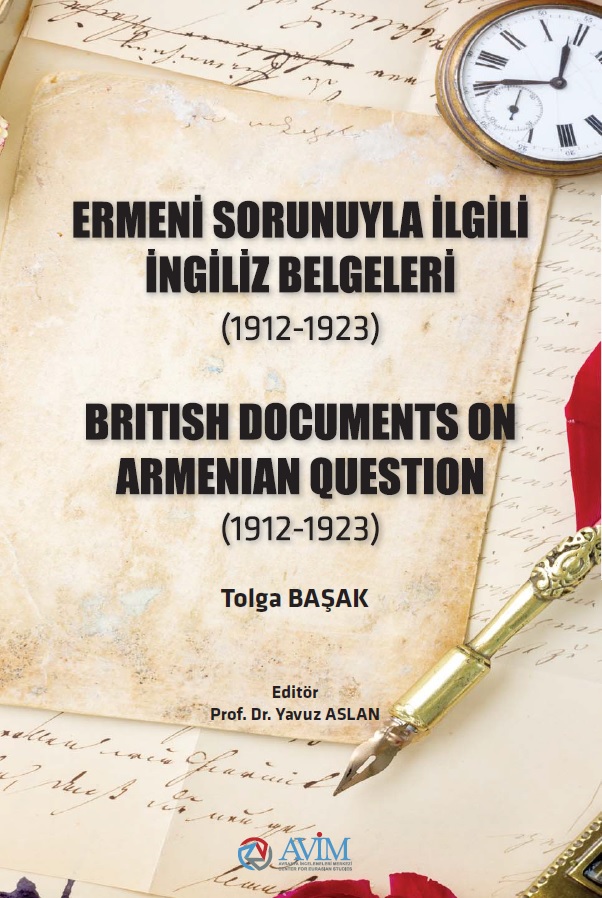
Ermeni Sorunuyla İlgili İngiliz Belgeleri (1912-1923) - British Documents on Armenian Question (1912-1923) -
02.12.2016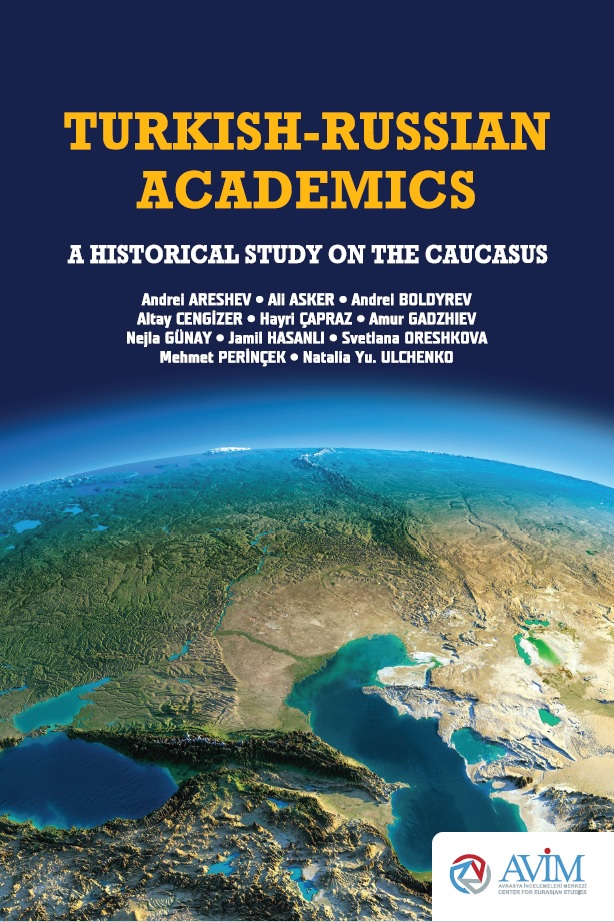
Turkish-Russian Academics: A Historical Study on the Caucasus -
01.07.2016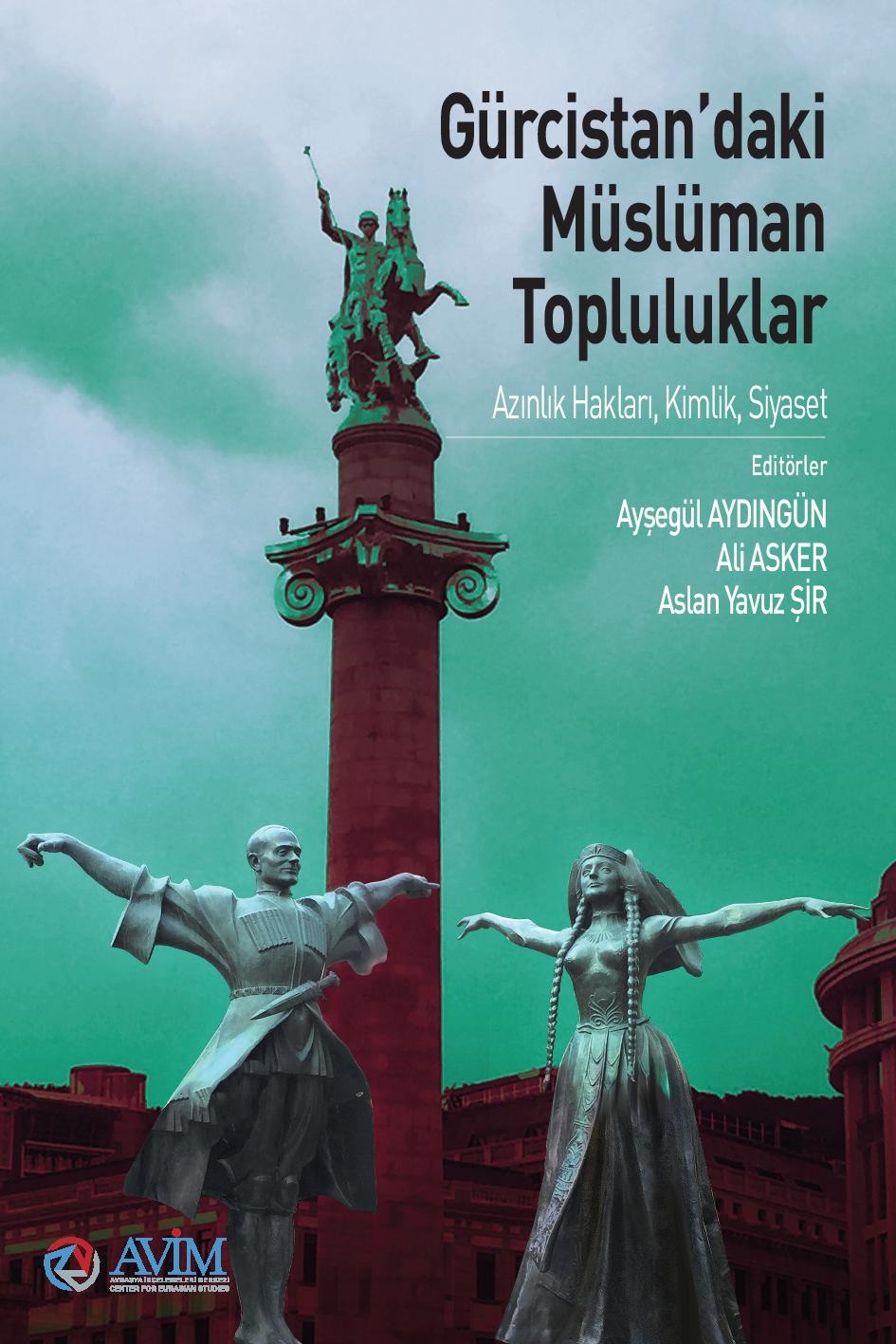
Gürcistan'daki Müslüman Topluluklar: Azınlık Hakları, Kimlik, Siyaset -
10.03.2016
Armenian Diaspora: Diaspora, State and the Imagination of the Republic of Armenia -
24.01.2016
ERMENİ SORUNU - TEMEL BİLGİ VE BELGELER (2. BASKI)
-
AVİM Conference Hall 24.01.2023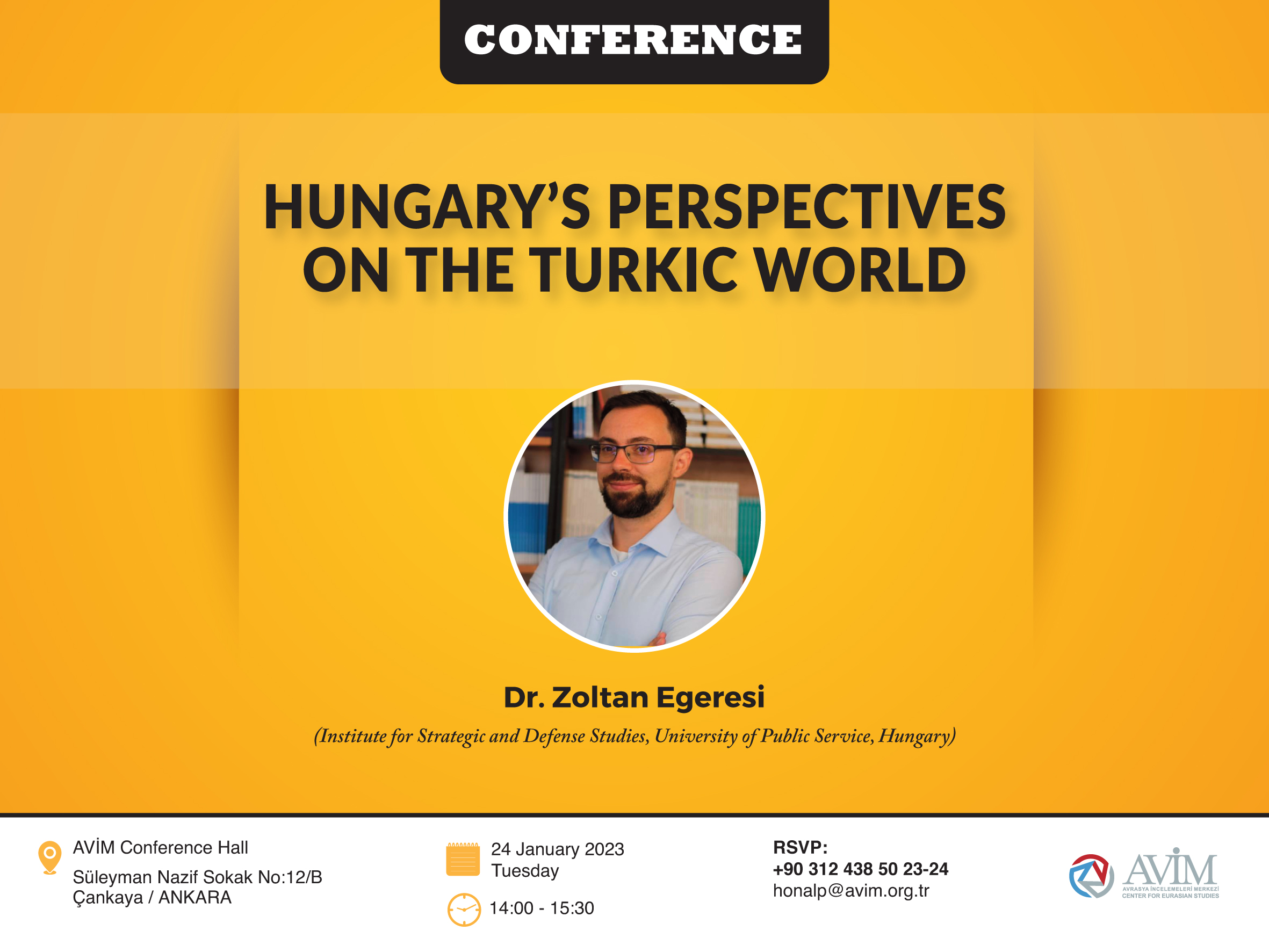
CONFERENCE TITLED “HUNGARY’S PERSPECTIVES ON THE TURKIC WORLD"