














1. Introduction
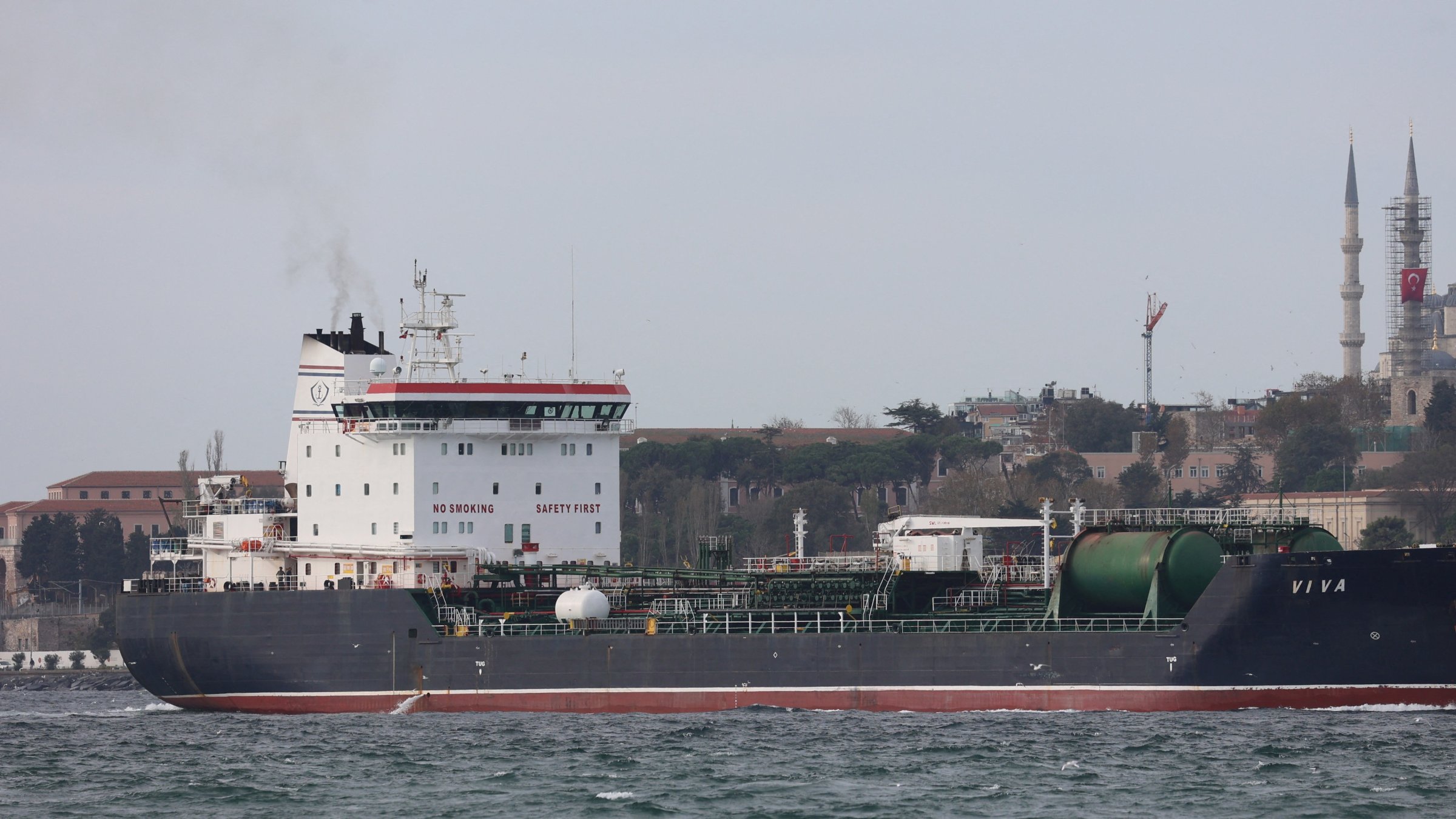
The recent incident in which a surveillance drone, widely reported as Russian, was brought down by Turkish air assets near the Black Sea theatre once again illustrates how the Russia–Ukraine war continues to export escalation risks toward Türkiye’s immediate maritime environment. It is observed that such episodes are not isolated tactical events but manifestations of a broader pattern in which the basin is drawn into an increasingly dense web of military activities and signalling. In parallel, Ukraine’s own use of long‑range drones and maritime unmanned systems against targets in Crimea, Sevastopol, and along Russia’s Black Sea logistics routes has further contributed to a security environment in which offensive actions at sea are no longer the prerogative of a single party.
At the same time, the relative stability of the Black Sea since the Second World War has not been secured by episodes of confrontation between NATO and Russia, but by the disciplined application of international law—above all the Montreux Convention—and by Türkiye’s cautious exercise of its responsibilities over the Straits. This commentary, therefore, argues that, under conditions of mounting militarization, it is Türkiye’s law-based guardianship, rather than warfighting postures, that continues to constitute the primary anchor of order in the Black Sea and that frames the subsequent discussion of the evolving security environment, the Montreux regime, and emerging hybrid pressures.[1]
2. The evolving militarized environment
Russia’s annexation of Crimea in 2014 marked the beginning of a sustained militarization process in the Black Sea, in which Moscow has constructed an A2/AD architecture that increasingly turns the basin into a semi-closed and contested zone. In response to this environment, Ukraine has conducted a growing number of drone and maritime strike operations against Russian naval units, bases, and energy infrastructure in and around the Black Sea, reinforcing a pattern of reciprocal escalation at sea even as the underlying structural advantage remains with Moscow’s A2/AD posture.[2]
Successive deployments of coastal defense missile systems, reinforcement of the Black Sea Fleet, and the integration of drones and other unmanned systems into maritime operations have further consolidated this posture. In response, various NATO members and partners have periodically advocated for an expanded naval presence and more visible exercises, arguing that deterrence requires a larger regional footprint. However, such parallel buildups risk redefining the Black Sea as a permanent “forward defense” theater, thereby heightening the risk of escalation and placing additional pressure on the legal‑and political framework that has underpinned relative stability to date. The key question, therefore, is not which side prevails militarily but how stability can be maintained amid continuous confrontation.[3]
3. The Montreux anchor and Türkiye’s guardianship role
Against this background of mounting military capabilities, the enduring significance of the Montreux Convention of 1936 becomes even more evident as the principal legal instrument that structures naval access to the Black Sea. By imposing apparent limitations on the tonnage, composition, and duration of stay of non-littoral warships, and by regulating passage through the Straits, Montreux creates structural constraints that prevent the basin from becoming an unrestricted arena of great‑power naval rivalry. Türkiye’s consistent and cautious implementation of these provisions over decades has enabled it to act as guardian of the Straits system, a role that AVİM commentaries have characterized as “guardianship rather than domination,” aimed at preserving equilibrium among competing interests rather than favoring any single bloc. In this perspective, neither episodic NATO deployments nor large-scale wars have been the authentic guarantors of stability; rather, it is international law, backed by Ankara’s restraint, that has kept escalation in check. NATO’s rotational naval presence may provide reassurance to allies, but under the strictures of the Montreux Convention, Türkiye’s primary duty and added value are to keep the Black Sea non-militarized and stable to the greatest extent possible.[4]
4. Hybrid pressure and adaptation needs
Yet the very success of this law-based guardianship also exposes its vulnerability to forms of pressure that Montreux could not explicitly anticipate, particularly hybrid tactics that blur the boundary between peace and armed conflict. The increased use of armed and unarmed drones, electronic warfare assets, and other gray‑zone instruments in and around the Black Sea allows state actors to test thresholds, probe defences, and intimidate shipping without formally violating the Convention’s provisions on warship tonnage and presence. In this environment, Türkiye faces the dual task of interpreting Montreux in light of new technologies while simultaneously defending the Convention’s integrity against calls—whether for more permissive or more restrictive readings—that would erode its stabilizing function. Whether through carefully calibrated preemptive restrictions, enhanced maritime and airspace surveillance, or discreet diplomatic coordination with both littoral and non-littoral states, the core objective must remain de-escalation through law: preserving stability by measured, predictable enforcement rather than by aligning with maximalist alliance rhetoric or by accepting a drift toward permanent confrontation.[5]
5. Türkiye as arbiter, not frontline
Taken together, these dynamics underscore that Black Sea security is shaped by two competing logics: a confrontation logic driven by NATO–Russia military posturing and an order logic grounded in Türkiye’s implementation of international law, above all the Montreux Convention. The fact that the Black Sea has remained relatively insulated from the worst forms of open great‑power war since 1945, despite recurrent crises and the current high-intensity conflict in Ukraine, attests to the weight of Türkiye’s legal stewardship and its preference for equilibrium over bloc confrontation. In this sense, the continuation of this guardianship function—law-based, balanced, and sensitive to regional ownership—remains the sole credible guarantee that the Black Sea will not become another theatre of uncontrolled confrontation, and it points toward a policy course that privileges multilateral dialogue and faithful application of Montreux procedures over further expansion of military presence as the primary instrument of security.[6]
*Picture: Daily Sabah
[1] Euro Maiden, “Frontline Report: Russian Drone Incurssionspush Turkey tothe Brinkof closing Black Sea shippingroutes ” Euromaidan Press, December 26, 2025, https://euromaidanpress.com/2025/12/26/frontline-report-2025-12-25/, accessed January 5, 2026
[2] Natalie Sabanadze, Gali Dalay, “Understanding Russia’s Black Sea Strategy: Summary,” Chatham House, The Royal Institute of International Affairs, July 2025, https://www.chathamhouse.org/2025/07/understanding-russias-black-sea-strategy/summary , accessed January 5, 2026.
[3] Ben Hodges, Steven Horrell, and Ivanna Kuz, Russia’s Militarization of the Black Sea: Implications for the United States and NATO (Washington, DC: Center for European Policy Analysis, December 6, 2022), https://cepa.org/comprehensive-reports/russias-militarization-of-the-black-sea-implications-for-the-united-states-and-nato/, accessed January 5, 2026.
[4] Center for Eurasian Studies (AVİM), “Black Sea,” AVİM, 2025, https://avim.org.tr/Tags/Black-Sea, accessed January 5, 2026.
[5] Ben Hodges, Joseph L. Votel, and William Courtney; Teoman Ertuğrul Tulun, “Black Sea Attacks on Merchant Vessels: Türkiye’s EEZ, the Montreux Regime, and the Risk of War Spillover,” AVİM Commentary no. 2025/53, December 2, 2025, Center for Eurasian Studies (AVİM), https://www.avim.org.tr/en/Yorum/BLACK-SEA-ATTACKS-ON-MERCHANT-VESSELS-TURKIYE-S-EEZ-THE-MONTREUX-REGIME-AND-THE-RISK-OF-WAR-SPILLOVER, accessed January 5, 2026.
[6] Teoman Ertuğrul Tulun, “Black Sea Attacks on Merchant Vessels: Türkiye’s EEZ, the Montreux Regime, and the Risk of War Spillover,” AVİM Commentary no. 2025/53, December 2, 2025, Center for Eurasian Studies (AVİM), https://www.avim.org.tr/en/Yorum/BLACK-SEA-ATTACKS-ON-MERCHANT-VESSELS-TURKIYE-S-EEZ-THE-MONTREUX-REGIME-AND-THE-RISK-OF-WAR-SPILLOVER, accessed January 5, 2026.
© 2009-2025 Center for Eurasian Studies (AVİM) All Rights Reserved
No comments yet.
-
 BOSNIA-HERZEGOVINA ELECTION RESULTS SIGNAL ROUGH CHALLENGES FOR EU DESIGNS IN THE BALKANS
Teoman Ertuğrul TULUN 16.10.2018 -
 DENMARK’S MIGRATION DISCOURSE AND THE RISK OF ANTI-ISLAM POLITICAL GENERALIZATION
Teoman Ertuğrul TULUN 16.09.2026 -
GUARDIANSHIP UNDER PRESSURE: DRONE ESCALATION, RUSSIAN MILITARIZATION, AND TÜRKIYE’S LEGAL ORDER IN THE BLACK SEA
Teoman Ertuğrul TULUN 05.01.2026 -
 TRIPOLITSA: SELECTIVE MEMORY AND THE DESTRUCTION OF THE MUSLIM TURKISH MOREA
Teoman Ertuğrul TULUN 24.09.2026 -
 AVİM ON THE ROAD TO THE FIFTEENTH ANNIVERSARY OF ITS FOUNDING
Teoman Ertuğrul TULUN 12.01.2023
-
 PRESIDENT ALIYEV’S VISIT TO IRAN AND ASTARA RAILWAY
Özge Nur ÖĞÜTCÜ 17.03.2017 -
 OBITUARY: MAVERICK HISTORIAN AND TURKEY’S GREAT FRIEND NORMAN STONE PASSED AWAY
AVİM 21.06.2019 -
 PONTIC GREEK GENOCIDE LOBBY FOLLOWS THE FOOTSTEPS OF THE ARMENIAN GENOCIDE LOBBY
Turgut Kerem TUNCEL 07.06.2017 -
 FURTHER QUESTIONS ON THE INTEGRITY OF WATS ORGANIZERS
AVİM 22.09.2017 -
SARKOZY IS IN ARMENIA III
Ömer Engin LÜTEM 13.10.2011
-
25.01.2016
THE ARMENIAN QUESTION - BASIC KNOWLEDGE AND DOCUMENTATION -
12.06.2024
THE TRUTH WILL OUT -
27.03.2023
RADİKAL ERMENİ UNSURLARCA GERÇEKLEŞTİRİLEN MEZALİMLER VE VANDALİZM -
17.03.2023
PATRIOTISM PERVERTED -
23.02.2023
MEN ARE LIKE THAT -
03.02.2023
BAKÜ-TİFLİS-CEYHAN BORU HATTININ YAŞANAN TARİHİ -
16.12.2022
INTERNATIONAL SCHOLARS ON THE EVENTS OF 1915 -
07.12.2022
FAKE PHOTOS AND THE ARMENIAN PROPAGANDA -
07.12.2022
ERMENİ PROPAGANDASI VE SAHTE RESİMLER -
01.01.2022
A Letter From Japan - Strategically Mum: The Silence of the Armenians -
01.01.2022
Japonya'dan Bir Mektup - Stratejik Suskunluk: Ermenilerin Sessizliği -
03.06.2020
Anastas Mikoyan: Confessions of an Armenian Bolshevik -
08.04.2020
Sovyet Sonrası Ukrayna’da Devlet, Toplum ve Siyaset - Değişen Dinamikler, Dönüşen Kimlikler -
12.06.2018
Ermeni Sorunuyla İlgili İngiliz Belgeleri (1912-1923) - British Documents on Armenian Question (1912-1923) -
02.12.2016
Turkish-Russian Academics: A Historical Study on the Caucasus -
01.07.2016
Gürcistan'daki Müslüman Topluluklar: Azınlık Hakları, Kimlik, Siyaset -
10.03.2016
Armenian Diaspora: Diaspora, State and the Imagination of the Republic of Armenia -
24.01.2016
ERMENİ SORUNU - TEMEL BİLGİ VE BELGELER (2. BASKI)
-
AVİM Conference Hall 24.01.2023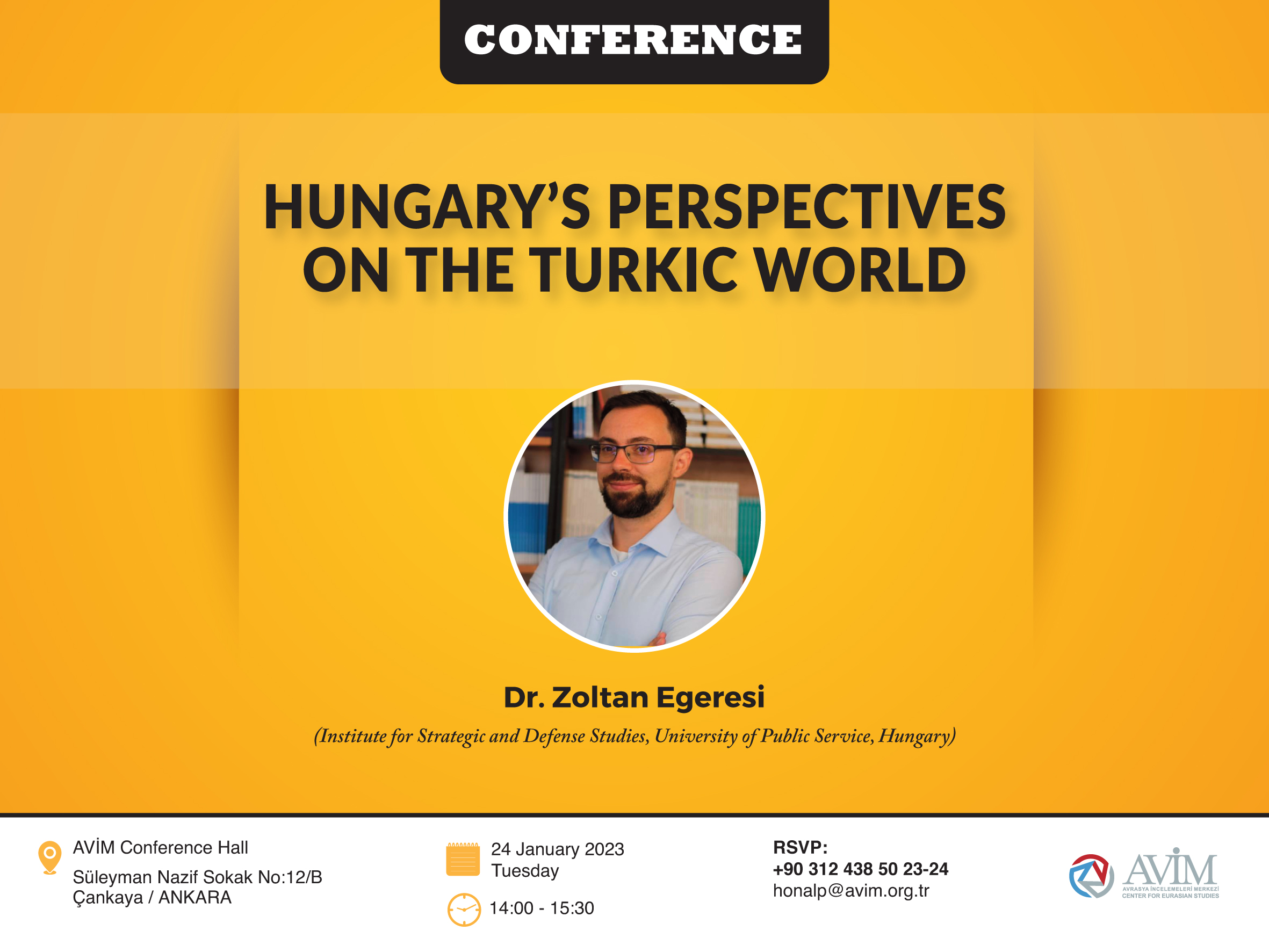
CONFERENCE TITLED “HUNGARY’S PERSPECTIVES ON THE TURKIC WORLD"