













The peer review debate in contemporary context
Peer review is widely regarded as a central mechanism through which modern scholarship validates new knowledge and maintains minimum standards of quality. Yet the growing debate surrounding its perceived decline, bias, and structural limitations suggests that this mechanism does not always function as its idealized image would imply. [1]
Recent controversies have drawn attention to situations in which editorial filters appear particularly restrictive when submissions touch on politically sensitive topics, including contested historical and legal characterizations such as the 1915 events, challenge entrenched narratives, or question institutionalised interpretations of history.[2] This analysis does not argue for the abolition of peer review, but rather examines how it operates under such conditions of controversy. Its focus is on the points at which quality control can drift into intellectual gatekeeping, and on the implications of this drift for academic credibility, balanced historical inquiry, and the protection of scholarly standards against propaganda and opportunistic misuse.
AVİM’s prior reflections on bias, distortion, and institutional selectivity
Peer review, while conventionally regarded as an indispensable instrument of scholarly quality assurance, may in practice assume a conservative character when it confronts ideas that unsettle entrenched paradigms. The issue lies not in the existence of review as such, but in the manner of its operation. Where editorial and refereeing practices privilege familiarity, disciplinary comfort, and reputational caution, originality may be implicitly recast as a liability rather than acknowledged as a scholarly contribution.
In such circumstances, the evaluation of a text may become less a matter of substantive merit than of its degree of conformity to prevailing intellectual expectations, a pattern that AVİM has repeatedly observed in discussions of the 1915 events and the South Caucasus, where political or ideological alignment is privileged over a balanced assessment of the suffering of all communities and over the full documentary record. [3]
This creates a structural tension between the pursuit of knowledge and the instinct for institutional self‑preservation, particularly visible in fields where states, advocacy institutes, or media outlets systematically instrumentalize historical narratives and legal concepts, while ignoring large segments of Muslim and Turkish suffering or alternative scholarly views.[4]
Submissions that are methodologically defensible yet politically sensitive, conceptually disruptive, or otherwise inconvenient may thus be delayed, diluted, or rejected, not because they are demonstrably deficient, but because they disturb narratives that have been carefully constructed and disseminated over decades.
The resulting dynamic is one of subtle gatekeeping, in which caution can overpower inquiry and orthodoxy can overshadow critical engagement. From the perspective developed in AVİM’s work on the Cold War-era fabrication and export of certain historical claims, this kind of gatekeeping does not arise in a vacuum, but can intersect with longer‑term propaganda strategies and institutional biases that seek to entrench particular readings of history in academic and public discourse. The concern is not merely procedural inefficiency, but the possibility that peer review, if insufficiently self‑reflective, may inhibit the very originality and corrective scholarship that could challenge such entrenched distortions.[5]
Peer review, conservatism, and the suppression of inconvenient ideas
Peer review does not merely filter scholarship; it also shapes the conditions under which certain ideas are allowed to enter the academic conversation. When this mechanism becomes overly cautious or insufficiently supervised, it may drift from quality control toward intellectual gatekeeping and even allow structurally embedded malpractice to develop around it.
The underlying logic is familiar: to protect standards—or at least to appear to do so—institutions may favor submissions that seem methodologically safe and uncontroversial, even as less visible dynamics, such as networks of mutually supportive editors or the operations of ‘paper mills’, exploit weaknesses in the system.[6] Yet such caution can be restrictive when applied to ideas that are original precisely because they challenge prevailing assumptions. In these cases, novelty is not engaged on its merits but is often treated as a source of risk.
At the same time, the pressure to increase publication numbers and citation counts can create incentives to wave through low‑quality or even fabricated work, so long as it conforms outwardly to expected formats and metrics.
The consequence is that valid arguments may be delayed, softened, or excluded, not because they fail scholarly criteria, but because they are inconvenient to established interpretive frameworks that have been reinforced by advocacy campaigns, reputational pressure, and one‑sided accusations of ‘denial
This is where the distinction between review and conservatism becomes analytically important. A review process that is insufficiently open to conceptual disruption may preserve professional comfort while narrowing the range of acceptable inquiry. The issue, therefore, is not only the efficiency of publication but the broader epistemic cost of rewarding familiarity over originality, and of tacitly stigmatizing scholars who question inflated casualty figures, legally unfounded genocide labels, or selectively framed case studies.
From this standpoint, peer review can both suppress inconvenient ideas and fail to filter out fraudulent or substandard ones, in ways that are subtle, institutional, and difficult to challenge directly, even when such distortions are later shown to have serious scientific and policy consequences.
Wider implications: propaganda, narrative control, and academic credibility
Building on this point, the issue extends beyond journals. It enters the broader ecosystem of knowledge production, where the authority of institutions can shape not only what is published, but also what is regarded as credible, even when long‑term propaganda efforts or organised fraud have contributed to the underlying corpus of ‘accepted’ knowledge.
It should also be recalled that prestigious publishing houses, large scholarly databases, indexing services, and even renowned libraries and book distributors operate within this same ecosystem, and are therefore not automatically immune to the dynamics of bias, reputational calculation, and gatekeeping described in this commentary.
AVİM’s analyses of EU resolutions, online encyclopedias, and institutional statements have shown how such ‘accepted’ knowledge may rest on selective sourcing, circular referencing, and the repetition of unbalanced narratives under the guise of neutrality. [7]When institutions present themselves as neutral while selectively amplifying some claims and marginalizing others—for example, by foregrounding certain victim groups, omitting documented atrocities against others, or treating contested legal qualifications as settled—they create a gap between procedural legitimacy and substantive fairness.[8]
This gap weakens academic credibility because trust in scholarly authority depends less on prestige than on consistency in judgment. The exposure of editor networks facilitating dubious publications, as well as documented cases of state-backed manipulation of historical scholarship, illustrate how such gaps can erode confidence not only in particular journals but also in broader academic and informational architectures. [9]
At this level, the problem is not limited to peer review in the narrow sense; it also involves the strategic use of institutional status in shaping public narratives.
Debates on academic freedom and institutional representation demonstrate how positions presented as ‘official’ or ‘consensual’ may, in reality, reflect narrow advocacy agendas rather than a genuinely plural scholarly field. Propaganda and narrative management become relevant when authoritative channels are used to normalize particular interpretations built on selective or misleading evidence, while excluding alternative analyses from serious consideration. [10]
The consequence is a distortion of scholarly discourse in which visibility is unevenly distributed, and credibility is conferred unequally. In such circumstances, the preservation of academic authority requires more than formal procedure; it requires demonstrable fairness, transparency, and intellectual consistency.
The need for transparent, fair, and consistent scholarly standards
Taken together, these sections point to a single conclusion: the problem is not peer review as such, but a pattern in which conservative habits, institutional self‑protection, and long‑running propaganda strategies converge to narrow the boundaries of what can be said in scholarly form. When review processes reward conformity, punish conceptual disruption, and tolerate networks that facilitate substandard or even fraudulent work, they undermine the very credibility they are meant to safeguard. For a country such as Türkiye, which has long been exposed to selective academic and journalistic treatments of its history and regional role, the defence of such standards is not an abstract concern but an integral part of safeguarding both scholarly integrity and a balanced international perception.
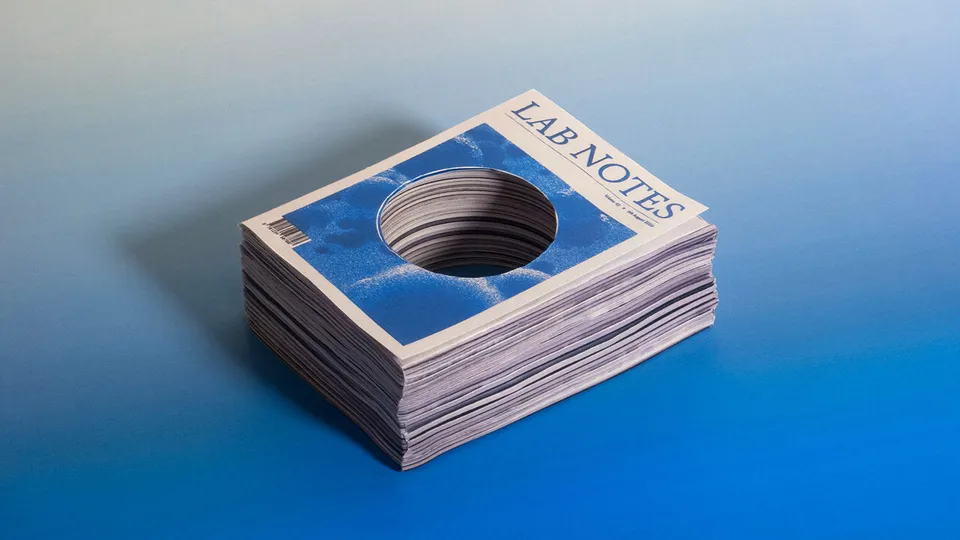
*Picture: Economist
[1] Mulugeta Gebregziabher “[First words of tweet or short description, e.g. ‘Is peer review failing us when it matters most?’],” X (formerly Twitter), March 10, 2026, 13:06 p.m., post, accessed 27.03.2026, https://x.com/ProfMulugeta/status/2031310709103952262
[2] Iñigo San Millán “[First words of tweet or short description, e.g. ‘For decades, peer review has been treated as the gold standard’],” X (formerly Twitter), March 10, 2026, 12:46 a.m, post, accessed 27.03.2026, https://x.com/doctorinigo/status/2031124375437561935
[3] AVİM, “AVİM Condemns the Biased and Distorted Approach to a Wartime Tragedy,” Center for Eurasian Studies (AVİM), Commentary, 26.04.2024, accessed 27.03.2026, https://avim.org.tr/en/Yorum/AVIM-CONDEMNS-THE-BIASED-AND-DISTORTED-APPROACH-TO-A-WARTIME-TRAGEDY
[4] AVİM, “Biased Disparagement of the Late Norman Stone by Two British Dailies,” Center for Eurasian Studies (AVİM), Commentary, 16.07.2019, accessed 27.03.2026, https://avim.org.tr/en/Yorum/BIASED-DISPARAGEMENT-OF-THE-LATE-NORMAN-STONE-BY-TWO-BRITISH-DAILIES.
[5] AVİM, “Display of Bigotry and Bias from the Lemkin Institute,” Center for Eurasian Studies (AVİM), Commentary, 14.06.2023, accessed 27.03.2026, https://avim.org.tr/en/Yorum/DISPLAY-OF-BIGOTRY-AND-BIAS-FROM-THE-LEMKIN-INSTITUTE ;
[6] “Fraudulent Scientific Papers Are Booming,” The Economist, August 6, 2025, accessed March 23, 2026, Gale Academic OneFile, https://link.gale.com/apps/doc/A850696059/AONE
[7] Teoman Ertuğrul Tulun, “The Darkness beyond Wikipedia’s Exposed Face: Examining Its Role in Information Manipulation,” Center for Eurasian Studies (AVİM), Analysis, 22.04.2024, accessed 27.03.2026, https://avim.org.tr/en/Analiz/THE-DARKNESS-BEYOND-WIKIPEDIA-S-EXPOSED-FACE-EXAMINING-ITS-ROLE-IN-INFORMATION-MANIPULATION
[8] AVİM, “EU’s Incorrigible Bias and Antagonism against Turkey Has Been Revealed,” Center for Eurasian Studies (AVİM), Analysis, 21.09.2020, accessed 27.03.2026, https://avim.org.tr/en/Analiz/EU-S-INCORRIGIBLE-BIAS-AND-ANTAGONISM-AGAINST-TURKEY-HAS-BEEN-REVEALED
[9] Maxim Gauin, “The USSR and the emergence of the “Armenian genocide” claims,” unpublished manuscript, Center for Eurasian Studies (AVİM), Ankara, 2026
[10] AVİM, “Academic Freedom, State Policy, and the Limits of Institutional Representation: Reflections on the Gzoyan Controversy,” Center for Eurasian Studies (AVİM), Commentary, 26.03.2026, accessed 27.03.2026, https://avim.org.tr/en/Yorum/ACADEMIC-FREEDOM-STATE-POLICY-AND-THE-LIMITS-OF-INSTITUTIONAL-REPRESENTATION-REFLECTIONS-ON-THE-GZOYAN-CONTROVERSY
© 2009-2025 Center for Eurasian Studies (AVİM) All Rights Reserved
No comments yet.
-
 PROSPECTS FOR EXPANDING TURKEY-ASEAN RELATIONS
Teoman Ertuğrul TULUN 10.08.2018 -
 A QUARTER OF A CENTURY OF INDEPENDENCE OF CENTRAL ASIAN AND SOUTH CAUCASUS COUNTRIES: AN ECONOMIC SNAPSHOT AND PROSPECTS FOR THE FUTURE
Teoman Ertuğrul TULUN 14.12.2016 -
 EUROPEAN UNION’S DISCRIMINATORY APPROACH TO THE BALKANS AND THE RISE OF SLAV-ORTHODOX DOMINANCE IN THE REGION
Teoman Ertuğrul TULUN 24.04.2017 -
 DOUBLE STANDARDS REGARDING THE POLISH LEGISLATION ON THE HOLOCAUST
Teoman Ertuğrul TULUN 22.02.2018 -
 GERMANY’S FAR-RIGHT TERRORISM AND THE TIMID NSU CASE VERDICT
Teoman Ertuğrul TULUN 25.09.2020
-
 THE INTERNATIONAL ORDER BASED ON RIGHTS AND RULES LEAVES ITS SEAT TO A NEW WORLD DISORDER
Teoman Ertuğrul TULUN 23.02.2026 -
 UNITED STATES OF AMERICA CONTINUES ITS HABITS
Hazel ÇAĞAN ELBİR 08.02.2018 -
 INTERNATIONAL COOPERATION IN THE RELATIONS BETWEEN TURKEY AND CENTRAL ASIA
Tutku DİLAVER 17.02.2020 -
 WHAT IS OPERATION NEMESIS?
Hazel ÇAĞAN ELBİR 25.05.2023 -
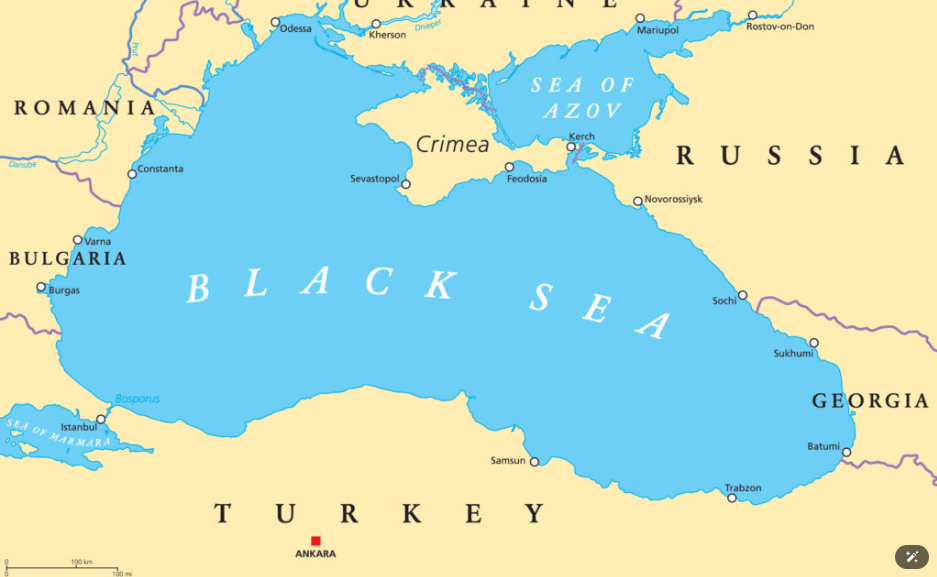 GUARDIANSHIP OR EQUILIBRIUM? POWER, AND THE LEGACY OF ORDER IN THE BLACK SEA
Teoman Ertuğrul TULUN 02.09.2025
-
25.01.2016
THE ARMENIAN QUESTION - BASIC KNOWLEDGE AND DOCUMENTATION -
12.06.2024
THE TRUTH WILL OUT -
27.03.2023
RADİKAL ERMENİ UNSURLARCA GERÇEKLEŞTİRİLEN MEZALİMLER VE VANDALİZM -
17.03.2023
PATRIOTISM PERVERTED -
23.02.2023
MEN ARE LIKE THAT -
03.02.2023
BAKÜ-TİFLİS-CEYHAN BORU HATTININ YAŞANAN TARİHİ -
16.12.2022
INTERNATIONAL SCHOLARS ON THE EVENTS OF 1915 -
07.12.2022
FAKE PHOTOS AND THE ARMENIAN PROPAGANDA -
07.12.2022
ERMENİ PROPAGANDASI VE SAHTE RESİMLER -
01.01.2022
A Letter From Japan - Strategically Mum: The Silence of the Armenians -
01.01.2022
Japonya'dan Bir Mektup - Stratejik Suskunluk: Ermenilerin Sessizliği -
03.06.2020
Anastas Mikoyan: Confessions of an Armenian Bolshevik -
08.04.2020
Sovyet Sonrası Ukrayna’da Devlet, Toplum ve Siyaset - Değişen Dinamikler, Dönüşen Kimlikler -
12.06.2018
Ermeni Sorunuyla İlgili İngiliz Belgeleri (1912-1923) - British Documents on Armenian Question (1912-1923) -
02.12.2016
Turkish-Russian Academics: A Historical Study on the Caucasus -
01.07.2016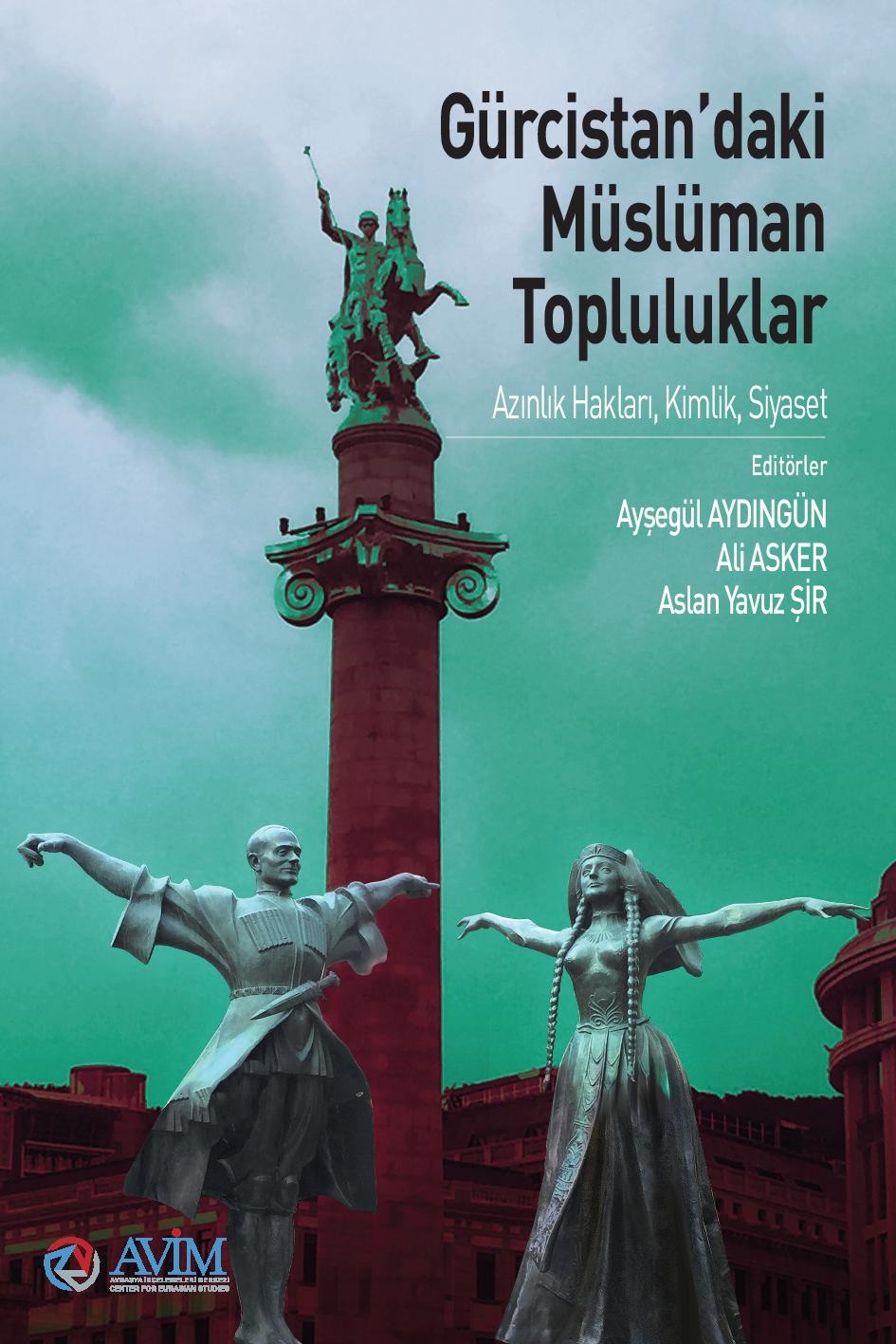
Gürcistan'daki Müslüman Topluluklar: Azınlık Hakları, Kimlik, Siyaset -
10.03.2016
Armenian Diaspora: Diaspora, State and the Imagination of the Republic of Armenia -
24.01.2016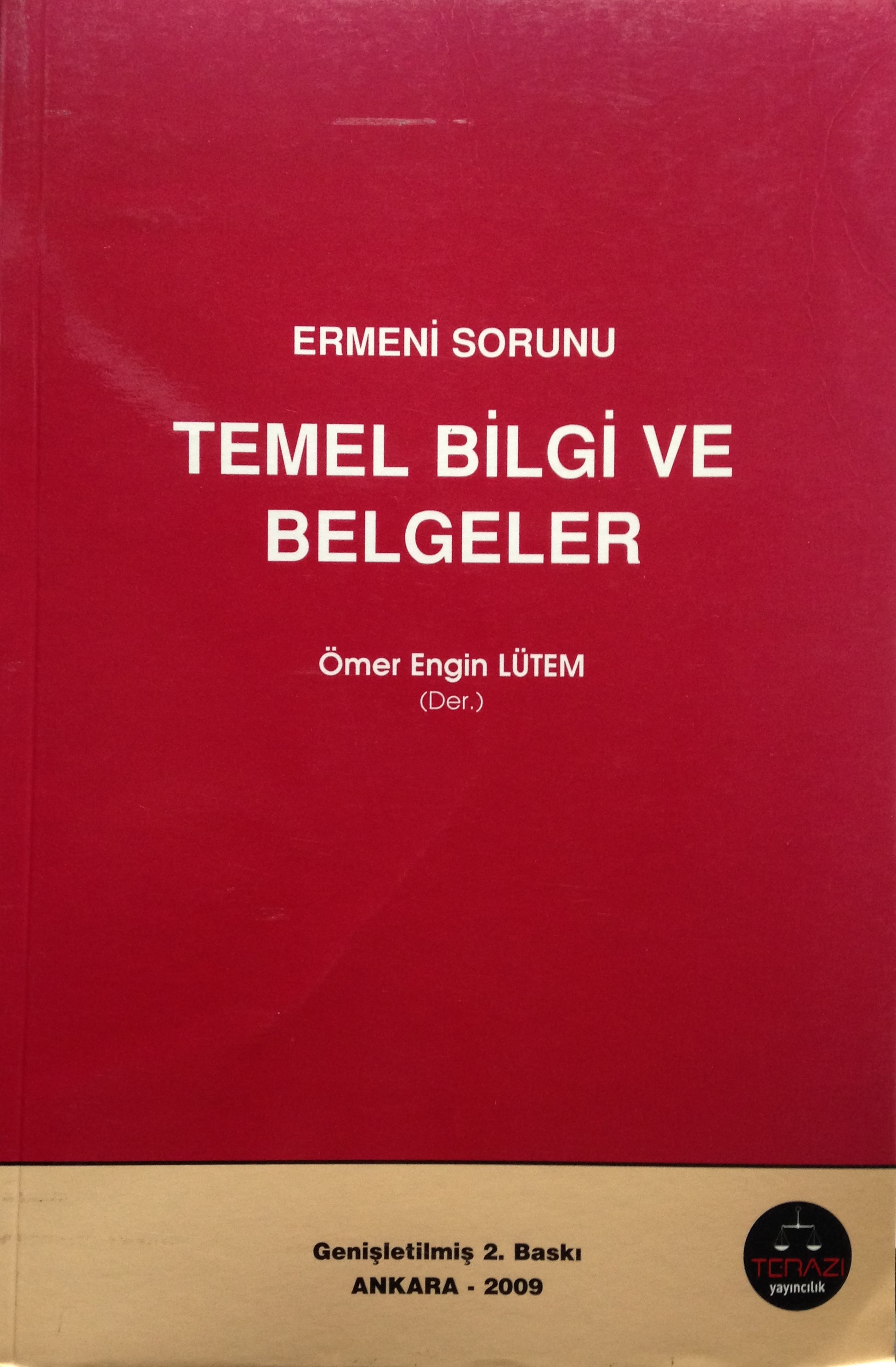
ERMENİ SORUNU - TEMEL BİLGİ VE BELGELER (2. BASKI)
-
AVİM Conference Hall 24.01.2023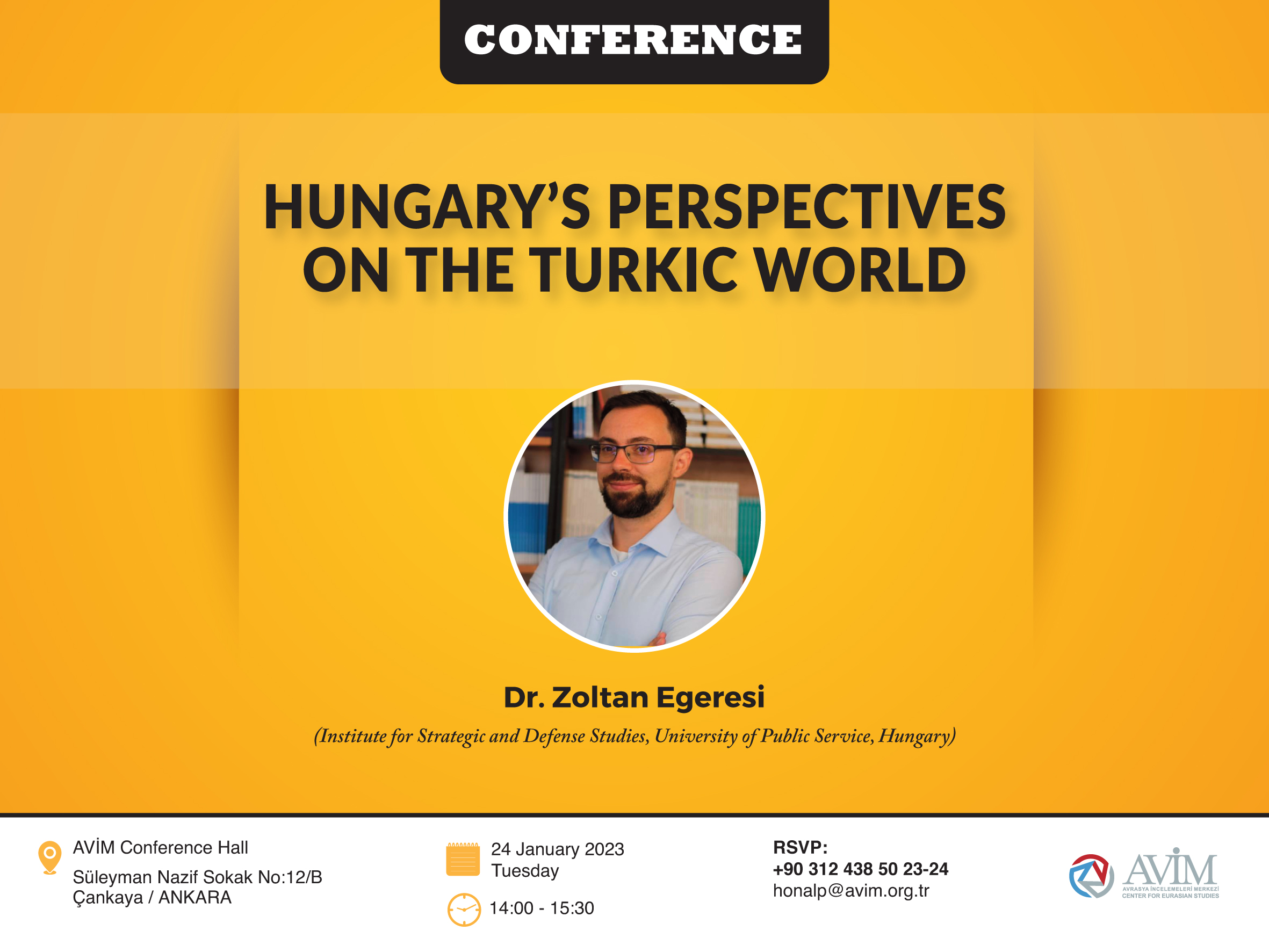
CONFERENCE TITLED “HUNGARY’S PERSPECTIVES ON THE TURKIC WORLD"