On October 12, it was announced that the European Union and Armenia will start negotiations on a new legal framework for their relations. The official statement reads as follows: [1]
“The Foreign Affairs Council authorised the European Commission and the High Representative to open negotiations on a new, legally binding and overarching agreement with Armenia, and adopted the corresponding negotiating mandate. This agreement will replace the current EU-Armenia partnership and cooperation agreement.
The EU is committed to further develop and strengthen comprehensive cooperation with Armenia in all areas of mutual interest within the Eastern Partnership framework. The official launching of negotiations is envisaged to take place before the end of the year.”
This decision by the EU was welcomed by Yerevan. Armenian Foreign Minister Edward Nalbandian hailed the decision and in a statement said: “We [Armenia] are hopeful that the document to be elaborated as a result of the negotiations will best express the depth of Armenia-EU mutually beneficial cooperation, will reflect the joint commitment to raise our relations to a new level and will outline the comprehensive partnership in all areas of mutual interest.”[2]
It is reported that the new deal to be negotiated between Armenia and EU will not contradict Armenia’s membership commitments to the Eurasian Economic Union (EEU).
As it is known, in 2013, Armenia, which was expected to sign an Association Agreement including a Deep and Comprehensive Free Trade Agreement with the EU, backed down from signing the Agreement. Instead, Armenia decided to join the Russia-led Eurasian Customs Union, which was not compatible with the Association Agreement and its aim of establishing a free-trade area, and to participate in the formation of the EEU, which Armenia ended up being a member in January 2015. This unexpected move by Armenia, which was commonly labeled as a “U-turn” had caught the EU by surprise, causing disappointments and leading to criticisms.
It is quite amazing how the EU was able to come up with a new formula for an agreement with Armenia, which just two years ago dealt a blow to EU’s prestige by choosing Russia over the EU and revealed the limits of the EU’s capabilities against Russia.
However, the EU is known for its favorable and privileged approach to Armenia. Its stance on the Nagorno-Karabakh issue is an example of such an approach. While the EU adopted a clear position against Russia on the Ukraine crisis, which led to sanctions against Russia, it retains a passive position against Armenia, which continues to occupy 20 percent of Azerbaijan’s internationally recognized territories for more than 20 years. In other words, it could be said that the EU allows Armenia to get away with its occupation of Azerbaijani territories without having to deal with its consequences. What is ironic is the fact that Armenia is a country which is under the heavy influence of Russia.
Ultimately, considering EU’s approach to Armenia, it is perhaps possible to say that this recent development is not that surprising. However, this approach gives Armenia the freedom to play both the EU and Russia. It also reveals the unprincipled policies of the EU. These privileges provided to Armenia by the EU serve no purpose other than undermining the credibility and moral values of the EU.
© 2009-2025 Center for Eurasian Studies (AVİM) All Rights Reserved















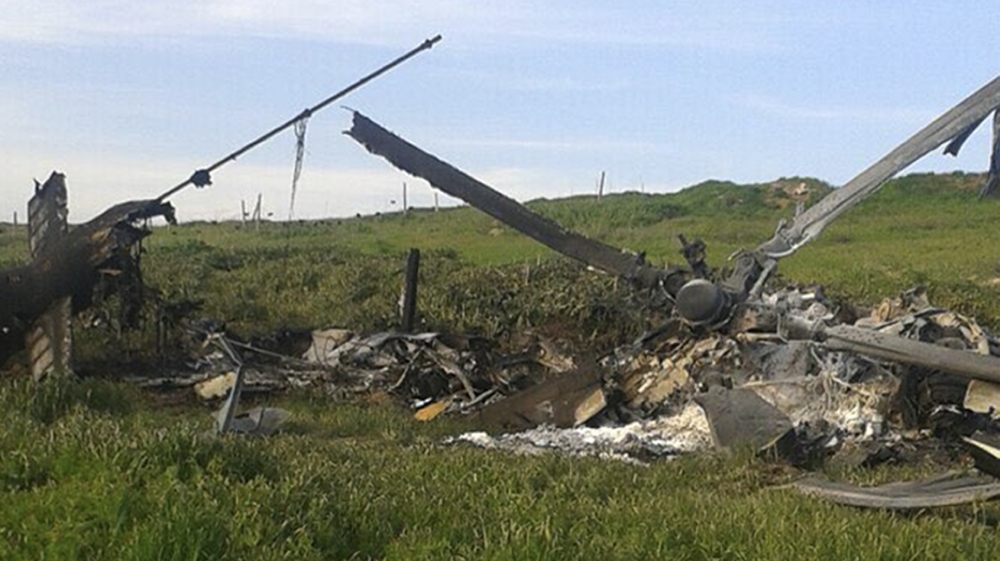 A FLAGRANT VIOLATION OF INTERNATIONAL LAW: THE CASE OF NAGORNO-KARABAKH
 ARMENIAN ALLEGATIONS DO NOT HOLD WATER BEFORE JUDICIARY
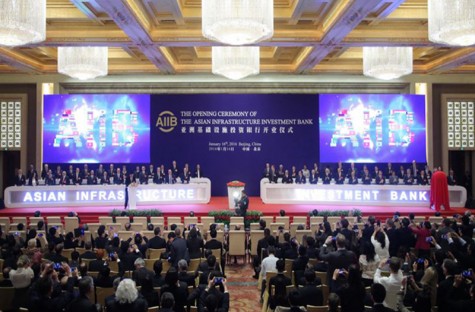 TURKEY BECAME THE 11th LARGEST PARTNER OF THE NEW ASIAN INFRASTRUCTURE INVESTMENT BANK
 THE AFTERMATH OF THE DENIAL OF TERRORIST SASSOUNIAN’S PAROLE
 BOOK REVIEW-SASUN: THE HISTORY OF AN 1890S ARMENIAN REVOLT
 THE POST-WAR LANDMINE ISSUE IN KARABAKH
 GENOCIDE ACCUSATION AS A FORM OF PUNISHMENT
 THE RECENT SHOW OF POWER OF RUSSIA AMID THE DISCOURSE OF DISARMAMENT
 EUROPE’S LIMITS AND ITS LIMITLESS SILENCE
 HAGOP BABIKIAN, THE ADANA UPRISING OF 1909, AND THE HAIGAZIAN UNIVERSITY PRESS