This is the English translation of a Turkish language article that was originally published by AVİM on 19 June 2026.
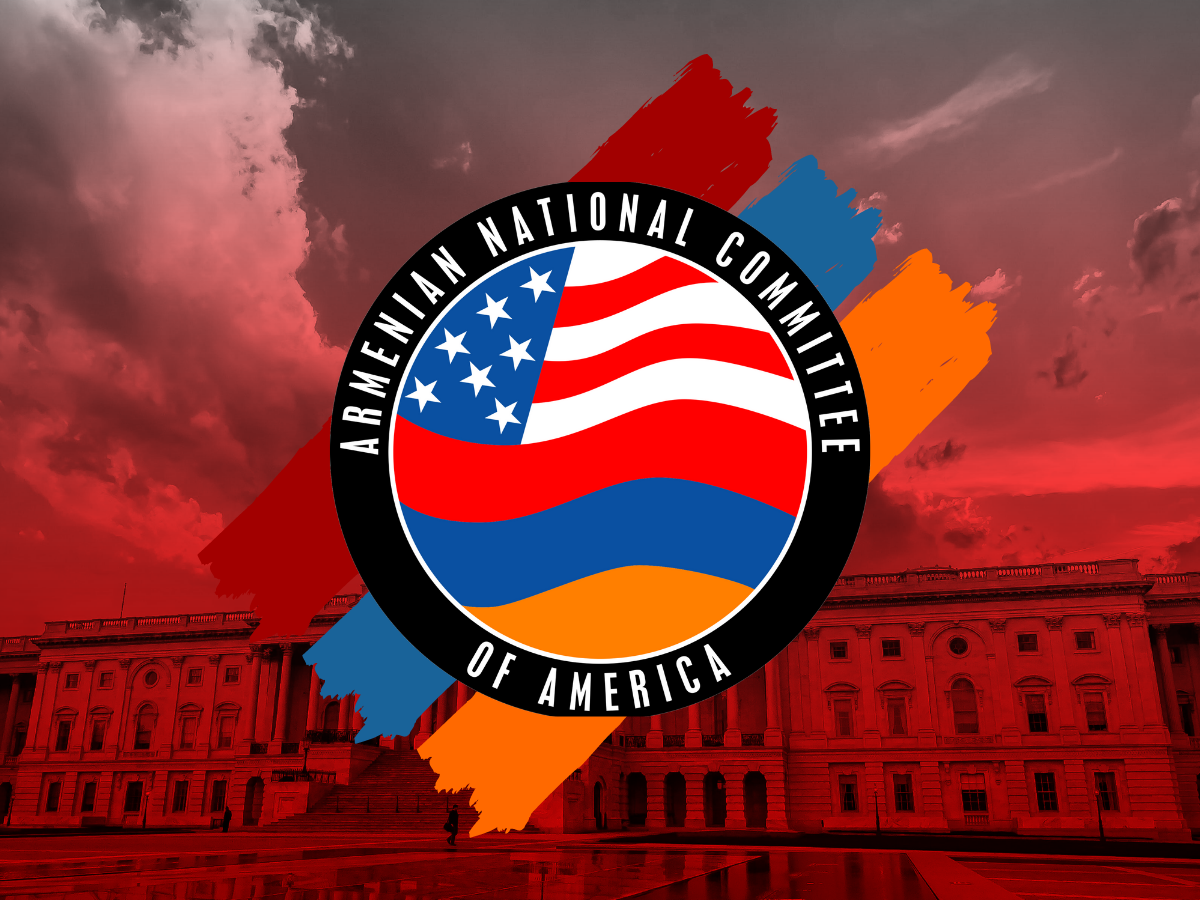
During a panel titled “The Republic of Cyprus: A Strong Strategic Partner of the United States,” held as part of the recently organized 41st Annual PSEKA Conference (International Coordinating Committee – Justice for Cyprus) in Washington, Armenian National Committee of America (ANCA) Executive Director Aram Hamparian made striking remarks advocating closer cooperation between the Armenian and Greek Cypriot lobbies. Speaking before an audience that included several members of the United States (US) Congress, diaspora representatives, and policy experts, Hamparian strongly criticized Türkiye’s presence on the island of Cyprus and called on the Washington administration to adopt a more resolute and sanction-oriented policy toward Türkiye. Hamparian’s remarks not only included issues related to the island of Cyprus but also controversial claims regarding Türkiye’s regional role and the future of Turkish-American relations.[1]
Although Hamparian’s speech appears to have been primarily centered on the idea that the Armenian and Greek Cypriot Diasporas need to act together more effectively around a common political agenda, the assessments highlighted in his remarks were based less on contributing to the resolution of regional problems than on reproducing anti-Türkiye political narratives. The political rhetoric adopted by the ANCA Executive Director, together with his statements targeting Türkiye from a one-sided perspective, constitutes an attempt to undermine the Republic of Türkiye’s persistent efforts to promote peace and stability in the Eastern Mediterranean and the South Caucasus.
In his speech, Hamparian called on the US administration to adopt tougher measures against Türkiye, describing Ankara’s presence on the island of Cyprus as an “occupation” and characterizing the Ottoman State’s Law on Relocation and Resettlement as “genocide,” while disregarding historical facts and legal principles. Moreover, he argued that, instead of pursuing a policy of “quiet diplomacy”, Washington should impose “real costs” on Türkiye. This approach reflects a hostile stance aimed at exerting pressure on the Republic of Türkiye rather than seeking a diplomatic resolution.
First and foremost, the Cyprus issue cannot be reduced to the narrative of “occupation” as presented by Hamparian. Türkiye’s intervention in 1974 was carried out on the basis of the rights granted under the Treaty of Guarantee with the aim of ensuring the security of the Turkish Cypriot community. Today, the principal obstacle to a lasting settlement on the island lies not only in past events, but also in the fact that a political compromise based on the equality of the two communities on the island has yet to be achieved. For this reason, the solution to the dispute should be sought not through sanctions, but within the framework of the principles of international law in the 21st century and through institutionalized diplomatic channels. Indeed, the assumption that interstate disputes can be managed through pressure and exclusion is an approach whose effectiveness has become increasingly questioned in the contemporary literature on international relations.
Another notable aspect of Hamparian’s speech is its complete disregard for Türkiye’s regional role. Türkiye possesses one of NATO’s largest armed forces and is one of the key actors in the regional security architecture, spanning a wide geographical area from the Black Sea to the Middle East and from the Caucasus to the Balkans. During the Russia-Ukraine war, the establishment of the Black Sea Grain Initiative, the facilitation of prisoner exchanges, and its mediation efforts in regional crises have demonstrated Ankara’s strategic importance within the international system. Persistent calls for sanctions and the isolation of such a strategically important country fall short of constituting a realistic foreign policy proposal.
Moreover, Hamparian’s attempt to portray Türkiye as being “more isolated internationally than ever before” is another indication of his failure to assess the current geopolitical landscape. In recent years, Türkiye has emerged as an actor that has expanded its diplomatic and economic influence not only in its immediate neighborhood but also on a global scale. By diversifying its relations across a wide geographical area stretching from the Gulf to Europe and from Africa to the Asia-Pacific, Ankara has become an increasingly influential actor in numerous regional and global dynamics. In this context, the Republic of Türkiye stands out not as a country marginalized within the international system, but rather as an actor that is increasingly consulted and taken into consideration in addressing a wide range of crises.
Promoting their own unilateral historical interpretations may hold significance for the Armenian and Greek Cypriot Diasporas. However, the use of such claims to steer US foreign policy toward an anti-Türkiye stance contributes neither to regional peace nor to the development of intercommunal dialogue. Particularly at a time when Türkiye and Armenia are engaged in a normalization process, discourses that prioritize pressure and sanctions over reconciliation are not only unconstructive but also clearly incompatible with Armenia’s new foreign policy orientation. As AVİM has emphasized in its previous assessments, this once again highlights the growing divergence between Armenia’s (the homeland) state-centered foreign policy priorities and the political ambitions of the Armenian Diaspora, while also making the militant divide within the Diaspora increasingly visible.[2]
What is needed today is not to turn outdated and unfounded claims into instruments of contemporary geopolitical struggles, but rather to establish a new foundation for dialogue based on mutual respect. Hamparian’s speech offers no such vision; on the contrary, it stands out as an example of political activism that deepens long-standing divisions. Calls for sanctions against Türkiye may generate short-term support among like-minded groups, but they will not pave the way for lasting peace in the Eastern Mediterranean, the Caucasus, or the island of Cyprus in the long run. Indeed, such rhetoric stands in stark contrast to the domestic and foreign policy priorities of the Armenian administration, which has once again secured victory in the recent elections, as well as to its approach toward regional normalization. The continued insistence of the militant and radical segments of the Diaspora on maintaining these positions, despite their growing divergence from the policies of the countries in which they reside, may ultimately prove self-defeating.
© 2009-2025 Center for Eurasian Studies (AVİM) All Rights Reserved
















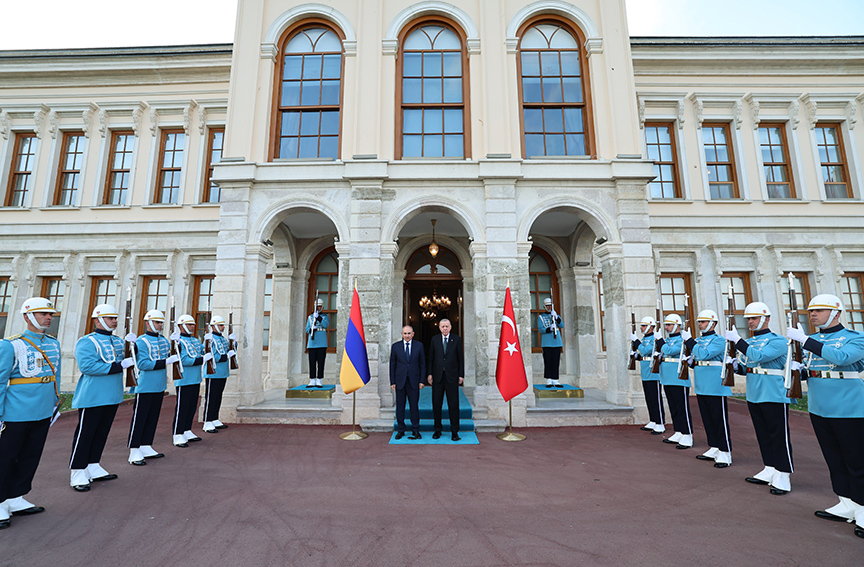 PASHINYAN'S WORKING VISIT: A STEP FORWARD IN THE TÜRKİYE-ARMENIA NORMALIZATION PROCESS
 IDENTITY POLITICS AND THE REGIONAL NORMALIZATION PROCESS IN ARMENIA WITHIN THE FRAMEWORK OF THE “TURKIFICATION” DISCOURSE OF THE DASHNAK ARMENIAN REVOLUTIONARY FEDERATION
 THE DASHNAK ARMENIAN REVOLUTIONARY FEDERATION’S LATEST STATEMENT AND A RECENT EXAMPLE OF VICTIMHOOD POLITICS
 PASHINYAN’S EMPHASIS ON DEMOCRACY
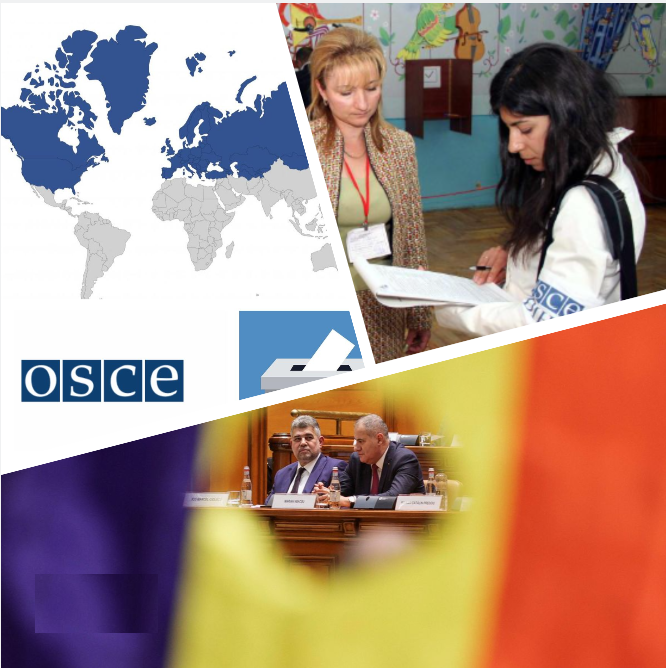 BEYOND DOUBLE STANDARDS IN THE BALKANS: REBUILDING TRUST IN OSCE ELECTION MONITORING
 EUROCENTRIC SUPREMACIST DEPENDENCY AND EURASIA CONCEPT
 THE ARMAMENT EFFORTS OF THE GREEK CYPRIOT ADMINISTRATION OF SOUTHERN CYPRUS ARE CLEARLY BEYOND DEFENSIVE PURPOSES