














We are living through a period in which the rules-based international order, essentially a system of laws, treaties, principles, and institutions established by the Western world after World War II, is giving way to international disorder. It has long been argued that the rules-based international order is in fact a “liberal international order” and its collapse would result in a far more violent and unstable world for all.[1] In fact, while the problems created by the long-running Russia-Ukraine war in the Black Sea region continue with full seriousness, the war that has emerged in the Middle East has taken the current international disorder to a new dimension, beyond a breaking point. It can be said that this new situation has ushered in an era of "hyper-disorder" in international relations, politics, and, most importantly, law.
In such a complex and hyper- disorder period, where a struggle of almost "life or death" is taking place for some neighboring countries of Türkiye, it may seem surprising to go back to the years when the First World War began and recalling the Armenian rebellions that took place during the "life or death" war that the Ottoman Empire faced. In this context, it may be surprising for some to discuss the events of that period, generally referred to as the "Armenian Question" [2]in Turkish academic writing, the problems arising from these rebellions, and to analyse the current state of the unfounded "Armenian Genocide" claims that have been made from that period to the present day and its relation with the rule based international order. To dispel this perplexity and clear the relationship between the rule-based international order and the “Armenian question,” it is necessary to briefly recall and understand the nature of these "genocide" allegations.
The state and social structure of the Ottoman Empire were profoundly affected by political, social, and economic developments that emerged worldwide in the 18th century and peaked in the 19th, leading to the Empire's collapse. In this context, during 1914-1918, coinciding with the First World War, the Ottoman State faced great difficulties in maintaining its existence and had to contend with rebellions by some ethnic groups within the Empire who collaborated with hostile countries at war. It is important to emphasize that these rebellions were armed uprisings carried out by gangs acting in cooperation with enemy forces. The most significant of these rebellions was the Armenian terrorist uprisings. The developments arising from these rebellions, the measures the Ottoman government was forced to take to maintain its existence, including the relocation of some Armenian citizens from their places of residence to other regions within the country and the resettlement of others in those regions, the problems that arose during the implementation of these measures, and in some cases the unfortunate events that occurred, have led to the emergence of "Armenian genocide" allegations over time. Following the Ottoman period, the Republic of Türkiye and Turkish society in general have strived for years to counter the grave and unjust accusations of "genocide" levelled against itself. At the heart of these serious accusations against Türkiye is the fundamental claim of "genocide."
In fact, the "Armenian Question" is a multi-layered problem in terms of the goals pursued by the Armenian groups that created it, and a multifaceted, sui generis problem in terms of the academic studies and research conducted to understand its nature and essence. Because of its sui generis nature, understanding it solely from one perspective—for example, interpreting historical events only through emotionally charged verbal narratives—is not possible, nor is it possible to accurately diagnose the true nature of claims. Besides its historical aspect, the problem also involves international relations, international law, and the psychological state of the Armenians making these claims. In short, studying the Armenian question requires a multidisciplinary approach encompassing history, international relations, international law, psychology, and sociology.[3]
Within such a theoretical framework, when examining the issue in question, it is necessary not only to determine which discipline takes priority methodologically, but also to identify which discipline can provide an answer to the fundamental accusation of "genocide." For years, the Armenian groups' claim of "genocide" has been attempted to be accepted by the world public through a strategic approach based on the narration of historical events, the one-sided "narratives" of events that occurred during a specific period of history, and the frequent use of past suffering as a tool for "emotional manipulation." However, the "genocide" claim has remained at the verbal level, and it has not been possible to substantiate the "genocide" claim with documented evidence. Narratives, poems, epics, and laments may be raw material for historical science. However, they cannot be evidence to substantiate such a serious accusation as "genocide." The inability to present 'documentary' evidence to support the Armenian genocide claims constitutes the weakest aspect of these claims.
There is no doubt that the events of 1915 carry a highly emotional content. This emotionality makes it extremely difficult to make a sound and, as impartially as possible, an assessment of the "genocide" claim by examining only historical events. However, "genocide" is fundamentally a matter of international law. It was included on the international agenda within the framework of the "Convention on the Prevention and Punishment of the Crime of Genocide," adopted by the United Nations in 1948 and entering into force in 1951.[4] It is by no means a matter that can be decided solely through historical assessments, emotional approaches, or "narratives" based on poignant memories from the past whose veracity is very difficult to prove. Approaching the issue from this perspective, it is possible to say that the most sound theoretical framework for examining the "Armenian Question" is the theoretical framework established by the legal framework of genocide law.
Türkiye's fundamental policy in the last quarter of the 20th century and the first quarter of the 21st century has been based on refuting the Armenian claim of "genocide." Within this framework, it has been demonstrated that the concept in question has a legal, not a political or historical, meaning; this view has been effectively defended, and this policy has caused great difficulty for Armenians making "genocide" claims and their supporters from all nations in responding to these claims.
Within the framework of the considerations we have briefly summarized above, it is possible to say that the policy pursued by all Turkish governments with the confidence derived from being resolute and righteous, with faith and patience, has paved the way for a serious defeat for those claiming Armenian genocide in the legal dimension, and that at this stage, the claim of "Armenian genocide" has fundamentally collapsed.
It should be emphasized that the legal framework established by the 1948 Genocide Convention, which is accepted as part of the "rules-based international order" created after the Second World War, has played the most dominant role in reaching this conclusion. In this context, efforts must continue to ensure that the "hyper disorder" period the world has entered is replaced by a "rules-based international order" as soon as possible.
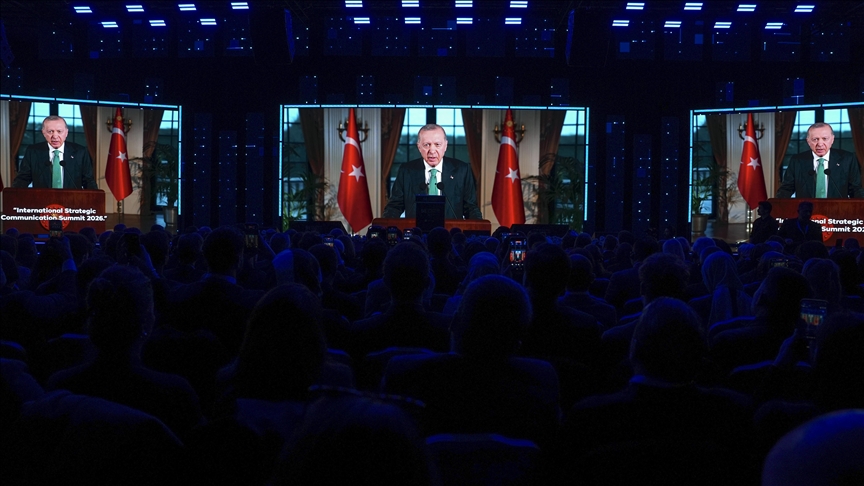
*Picture: Anadolu Agency
[1] Marc Trachtenberg; The Rules-Based International Order: A Historical Analysis. International Security 2025; 50 (2): 7–54. doi: https://doi.org/10.1162/ISEC.a.11
[2] It may not be well-received to associate the name of a particular people with the word "problem. " However, it is not easy to examine an issue that has been on the agenda for over a century and that confronts the Turkish people with a grave accusation like "genocide" without characterizing it as a mild word of "problem. " the accusation leveled against Türkiye and Turkish people concerns a matter generally referred to as "the most serious of crimes" in international legal literature and defined in Article 76 of the Turkish Penal Code as follows: "The perpetrator of the crime of genocide shall be sentenced to life imprisonment... There is no statute of limitations for these crimes."
[3] Ö.E. Lütem. “Lozan’dan Sonra Ermeni Sorunu” ; Ömer Engin Latem (Der.) Ermeni Sorunu Temel Bilgi ve Belgeler, Ankara, Avrasya Stratejik Araştırmalar Merkezi Yayınları, 2007, (s 38-39)
[4] Teoman Ertuğrul Tulun. Degenerating Discursive Attempts in the Balkans to Alter the Legal Definition and Content of the Concept of Genocide. Avrasya İncelemeleri Merkezi (AVİM) Research Paper 3. 2021. DOI:10.31219/osf.io/dpqs4 https://avim.org.tr/tr/Rapor/DEGENERATING-DISCURSIVE-ATTEMPTS-IN-THE-BALKANS-TO-ALTER-THE-LEGAL-DEFINITION-AND-CONTENT-OF-THE-CONCEPT-OF-GENOCIDE
© 2009-2025 Center for Eurasian Studies (AVİM) All Rights Reserved
No comments yet.
-
 BOSNIA AND THE BALKANS: SECESSIONISM, EUROCENTRIC PARTITIONING
Teoman Ertuğrul TULUN 17.02.2026 -
 THE SHATTERING OF REGIONAL ANCHOR FOR STABILITY: THE PASSING OF KING BHUMIBOL ADULYADEJ
Teoman Ertuğrul TULUN 28.11.2016 -
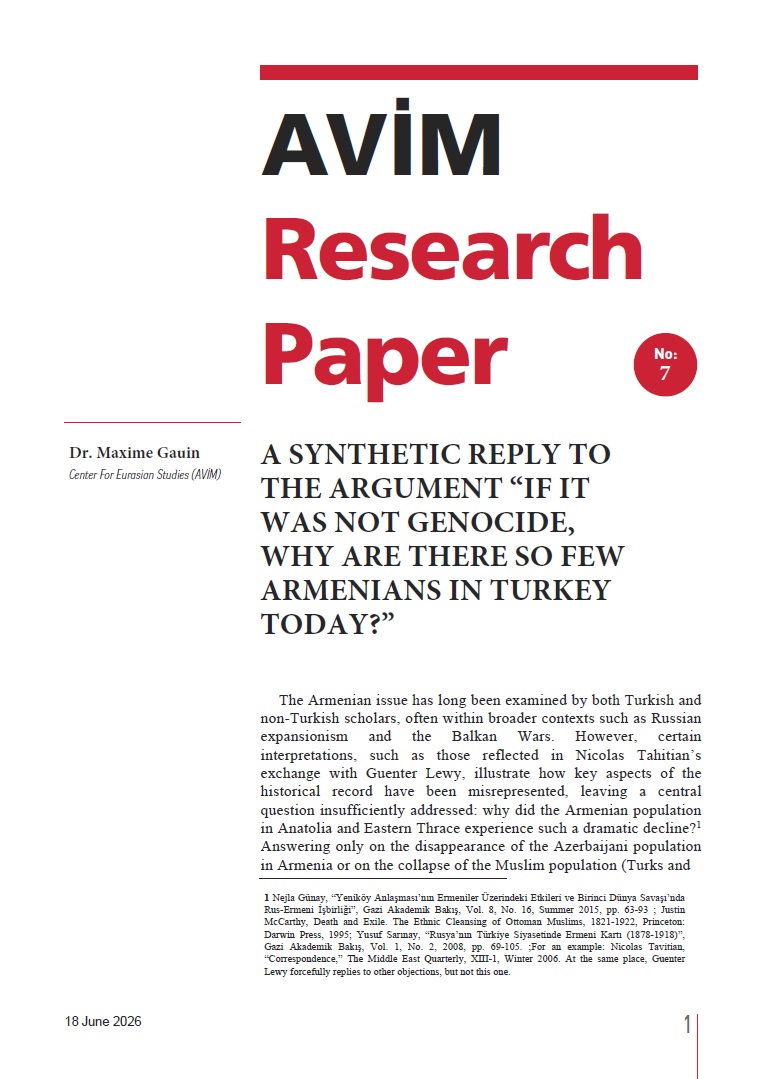
A BRIEF ANALYSIS OF THE PRESENT-DAY IMPLICATIONS OF THE COLLAPSE OF ARMENIAN GENOCIDE CLAIMS WITHIN THE FRAME OF THE RULES-BASED INTERNATIONAL ORDER
Teoman Ertuğrul TULUN 27.03.2026 -
 THE FAILURE OF THE EU’S STRATEGY OF FRAGMENTATION IN THE BALKANS, AMIDST THE FRACTURING INTERNATIONAL RULES-BASED ORDER
Teoman Ertuğrul TULUN 23.09.2026 -
 RUSSIA’S REACTION AGAINST GREECE'S HOSTILE BEHAVIORS AND VIOLATIONS OF THE DEMILITARIZATION PROVISIONS OF THE 1947 PARIS TREATY
Teoman Ertuğrul TULUN 29.12.2022
-
THE DIRECTION OF THE WORLD'S ECONOMY, EURASIA AND TURKEY
Alev KILIÇ 21.11.2012 -
 “GENOCIDE” LAW IN GREECE
Ömer Engin LÜTEM 21.09.2014 -
 RUSSIA AND CHINA CARRY OUT JOINT NAVAL EXERCISE IN EASTERN MEDITERRANEAN
Alev KILIÇ 31.05.2015 -
THE ARMENIAN PRESIDENTIAL ELECTIONS INDICATE THAT THE TENSION IN THE REGION WILL CONTINUE TO BUILD UP
Alev KILIÇ 18.12.2012 -
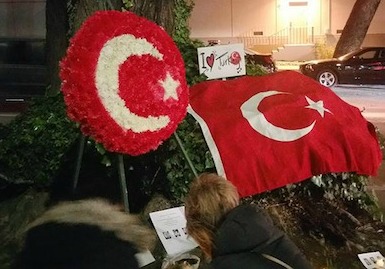 THE AFTERMATH OF THE DENIAL OF TERRORIST SASSOUNIAN’S PAROLE
Ali Murat TAŞKENT 16.05.2017
-
25.01.2016
THE ARMENIAN QUESTION - BASIC KNOWLEDGE AND DOCUMENTATION -
12.06.2024
THE TRUTH WILL OUT -
27.03.2023
RADİKAL ERMENİ UNSURLARCA GERÇEKLEŞTİRİLEN MEZALİMLER VE VANDALİZM -
17.03.2023
PATRIOTISM PERVERTED -
23.02.2023
MEN ARE LIKE THAT -
03.02.2023
BAKÜ-TİFLİS-CEYHAN BORU HATTININ YAŞANAN TARİHİ -
16.12.2022
INTERNATIONAL SCHOLARS ON THE EVENTS OF 1915 -
07.12.2022
FAKE PHOTOS AND THE ARMENIAN PROPAGANDA -
07.12.2022
ERMENİ PROPAGANDASI VE SAHTE RESİMLER -
01.01.2022
A Letter From Japan - Strategically Mum: The Silence of the Armenians -
01.01.2022
Japonya'dan Bir Mektup - Stratejik Suskunluk: Ermenilerin Sessizliği -
03.06.2020
Anastas Mikoyan: Confessions of an Armenian Bolshevik -
08.04.2020
Sovyet Sonrası Ukrayna’da Devlet, Toplum ve Siyaset - Değişen Dinamikler, Dönüşen Kimlikler -
12.06.2018
Ermeni Sorunuyla İlgili İngiliz Belgeleri (1912-1923) - British Documents on Armenian Question (1912-1923) -
02.12.2016
Turkish-Russian Academics: A Historical Study on the Caucasus -
01.07.2016
Gürcistan'daki Müslüman Topluluklar: Azınlık Hakları, Kimlik, Siyaset -
10.03.2016
Armenian Diaspora: Diaspora, State and the Imagination of the Republic of Armenia -
24.01.2016
ERMENİ SORUNU - TEMEL BİLGİ VE BELGELER (2. BASKI)
-
AVİM Conference Hall 24.01.2023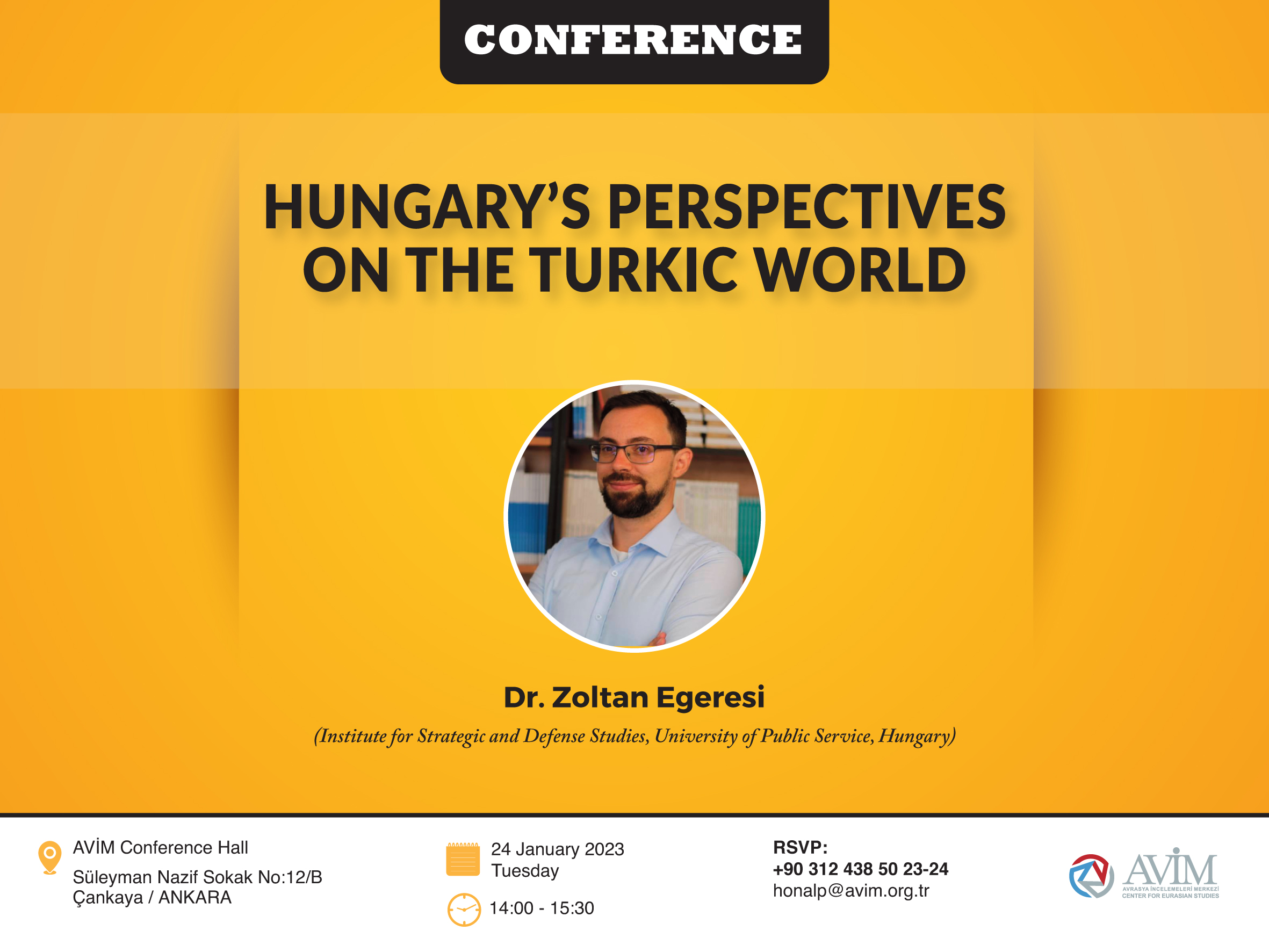
CONFERENCE TITLED “HUNGARY’S PERSPECTIVES ON THE TURKIC WORLD"