













This is the English translation of a Turkish language article that was originally published by AVİM on 23 March 2026.
The European Union has been facing increasing economic competitive pressure in recent years. The shift in global production hubs, the rapid expansion of China’s industrial capacity, and the United States’ move toward increasingly protectionist industrial policies have called into question the sustainability of Europe’s economic model. In particular, the rise in production costs in Europe over the past decade, rising energy prices, and the shift of production to regions outside Europe in certain sectors have emerged as key factors weakening the competitiveness of the European economy. These developments have led to growing debates within the EU on how the European economy can adapt to global competition and how European industry can be strengthened.
The search for answers to these questions is clearly reflected in the new industrial policies developed by the EU in recent years. Various strategy documents prepared by the European Commission and the European Council identify increasing Europe’s production capacity, reducing external dependency in critical sectors, and making supply chains more resilient as key objectives. Official EU documents on industrial policy also emphasize that enhancing the competitiveness of European industry and strengthening Europe’s position in global production networks are among the main priorities.[1] In this context, sectors such as semiconductors, battery production, clean energy technologies, the defense industry, and the automotive sector are defined as strategic sectors for Europe.
One of the key elements of this strategy is the “Made in Europe” or “Made in EU” approach, which has recently come to the forefront. The fundamental aim of this approach can be summarized as encouraging production in Europe and ensuring that European public resources support products manufactured in Europe as much as possible.[2] Some policymakers in Europe argue that, particularly in cases involving state aid and incentives, priority should be given to products produced within Europe. The underlying rationale of this approach is to preserve production capacity in Europe’s strategic sectors and to prevent Europe from falling behind in global competition. In particular, the need to increase Europe’s production capacity in clean energy technologies, electric vehicle manufacturing, and high-tech sectors is frequently emphasized.[3] Such policies aim to reduce Europe’s dependence on major production hubs like China and to revitalize European industry. However, the EU’s new industrial strategy has also raised some important debates. Foremost among these is the relationship between Europe’s protectionist industrial policies and its free trade policies. On the one hand, the EU develops policies aimed at maintaining production within Europe and promotes Europe-based production in certain sectors. On the other, the EU, as one of the longstanding advocates of the global free trade system, continues to sign Free Trade Agreements (FTAs) with various countries. This situation creates a contradiction within Europe’s economic strategy.
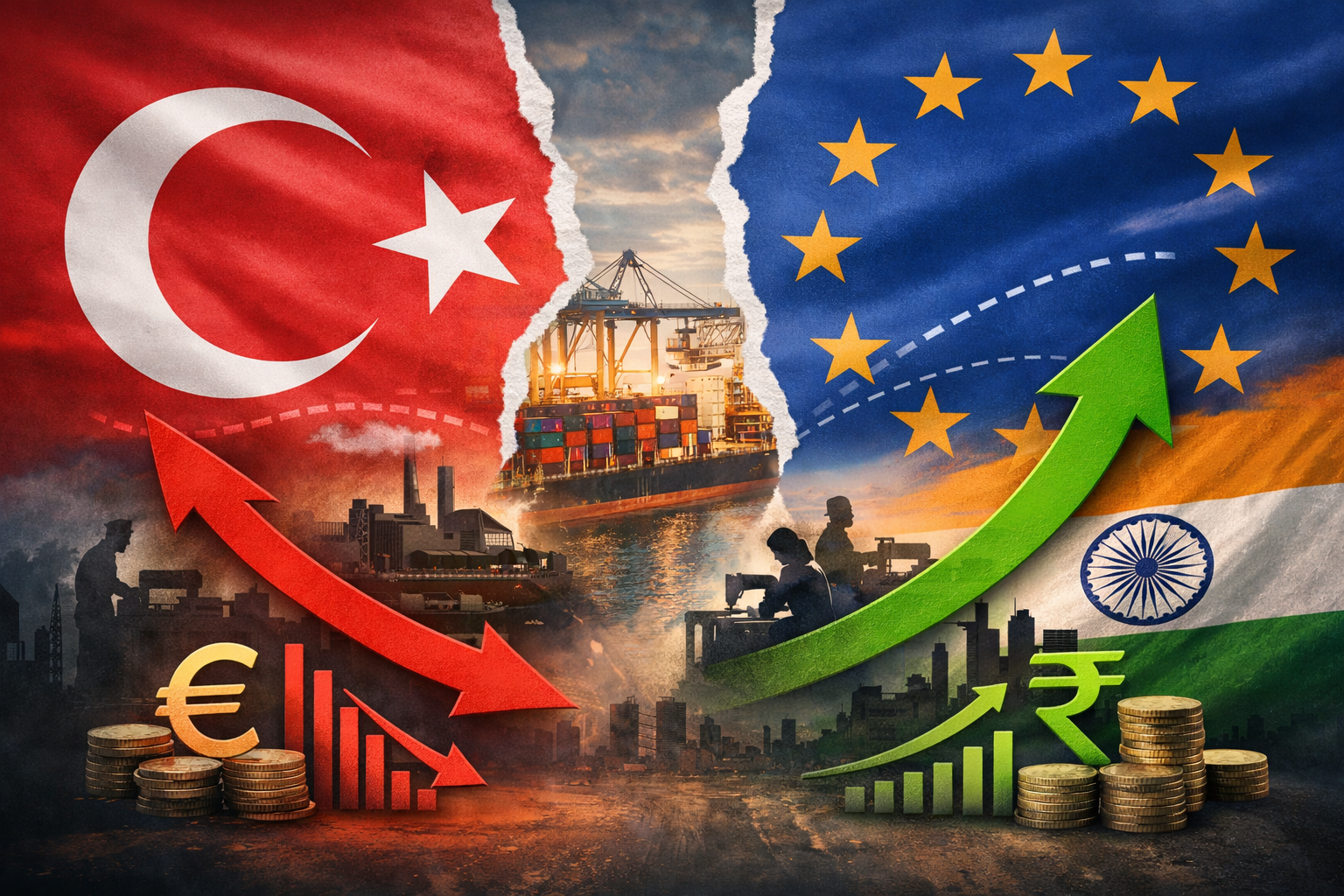
One of the most striking examples of this contradiction is the Free Trade Agreement (FTA) negotiations between the EU and India. Following nearly two decades of negotiations, significant progress has been made toward a comprehensive trade agreement, and on 27 January 2026, the parties signed the FTA. Under the agreement, the aim is to remove tariffs on approximately 90% of Europe’s exports to India.[4] This agreement will facilitate India’s access to the European market and, by increasing trade and industrial investments between Europe and India, holds the potential to strengthen both parties’ production and export capacities.[5]However, such agreements may also lead to increased entry of external competition into the European market.Therefore, the long-term sustainability of Europe’s efforts to maintain production within the EU while simultaneously promoting global free trade remain open to debate.
In recent years, the global economy has been evaluated not only through the lens of free trade but also in terms of the supply chain security. Supply chain issues experienced during the COVID-19 pandemic and developments such as the Russia-Ukraine war have shown many countries that relying entirely on production in other countries can be risky. As a result, a new approach to production strategies has emerged in recent years. This approach does not advocate relocating production entirely within national borders, but rather emphasizes the establishment of production networks among geographically closer and economically reliable countries. In academic literature, this approach is generally referred to as “nearshoring” or “friend-shoring.”[6]Under this model, countries prefer to establish production networks with nations that are geographically close and economically reliable, rather than moving production entirely within their own borders. When the economic strategy pursued by the EU in recent years is examined, it becomes evident that Europe is increasingly moving toward this model. Rather than attempting to carry out all EU production within Europe, the EU aims to establish a more integrated production system with countries that are close to Europe and have strong ties to the European economy. At this point, Türkiye emerges as a key actor. The Customs Union agreement between Türkiye and the EU, which entered into force in 1995, has created strong economic integration between the Turkish and European economies. Thanks to this agreement, customs duties on industrial goods have largely been eliminated, and Türkiye has become an important part of Europe’s production networks. Today, a significant number of European companies carry out certain stages of their production activities in Türkiye. Türkiye has become a major production hub for Europe, particularly in sectors such as the automotive, white goods, textile, and machinery industries. Given the goal of enhancing supply chain security in Europe’s new industrial strategy, Türkiye’s role in this process is of great importance. Considering the high cost of keeping production entirely within Europe’s borders, countries like Türkiye, which are geographically close and possess a strong industrial base, offer important alternatives for Europe. Within the scope of the Industrial Accelerator Act draft published by the EU on 4 March 2026, it has been stated that goods and components produced in Türkiye may be considered “Made in EU” due to the Customs Union relationship.[7]Thus, Türkiye is evaluated as part of Europe’s production networks.
However, economic relations between Türkiye and the EU have not reached their full potential due to certain structural issues. One of the main issues is that the Customs Union agreement is outdated. Signed in 1995, this agreement is unable to fully adapt to today’s economic conditions. For instance, the agreement does not cover the services sector or agriculture. Moreover, Türkiye does not have a direct say in the EU’s trade policy decisions.[8] This situation creates trade diversion risks and adverse effects for Türkiye arising from the EU’s free trade agreements with third countries, despite Türkiye’s high level of integration with the European economy. For instance, while the EU’s signing of FTAs with major economies like India indirectly binds Türkiye, Türkiye must conclude a separate FTA with the relevant third country to directly benefit from these agreements. In practice, however, such a step is rarely preferred by third countries, as they already have advantageous access to the EU market; as a result, Türkiye is unable to benefit from reciprocal trade advantages under these agreements and remains limited to opening its own market. In this context, an examination of the current economic relationship suggests that updating and expanding the scope of the Customs Union would contribute to a more balanced and efficient functioning of economic relations between Türkiye and the EU. Such an update would not only strengthen Türkiye’s integration with the European economy but also facilitate the more effective implementation of the EU’s new industrial strategy. Considering Europe’s strategy of establishing regional production networks and increasing its production capacity, Türkiye’s inclusion as an important part of these networks could create new economic opportunities and strategic advantages for both sides. At the same time, in light of the EU’s expanding network of free trade agreements with third countries, it is of critical importance for Türkiye to anticipate potential risks and shape its own industrial and trade policies accordingly in order to maintain its competitive position.
In conclusion, the industrial and trade policies recently developed by the European Union reflect a search for a new balance in global competition. While Europe seeks to strengthen its own production capacity, it also continues to expand its foreign trade network by signing FTAs with major economies such as India. However, this dual strategy creates new risks, particularly for countries like Türkiye, which are deeply integrated into the EU economy but excluded from decision-making processes. The EU’s FTAs with third countries oblige Türkiye to align with these agreements, yet Türkiye is unable to derive direct benefits from them; as a result, it faces increasing competitive pressure from countries such as India, especially in sectors like textiles and certain industrial products. Therefore, Europe’s economic strategy does not merely aim to strengthen domestic production but also generates new competitive dynamics through external actors. In this context, the fundamental challenge for Türkiye is to go beyond merely preserving the current integration and take steps to balance this asymmetric structure. Updating the Customs Union, balancing trade relations with third countries, and developing policies to enhance competitive strength in strategic sectors emerge as critical necessities for Türkiye to strengthen its position within this emerging economic order.
[1] “EU industrial policy,” Council of European Union, https://www.consilium.europa.eu/en/policies/eu-industrial-policy/
[2] “‘European preference’ signals a wider change of EU doctrine,” Chatham House, March 5, 2026, https://www.chathamhouse.org/2026/03/european-preference-signals-wider-change-eu-doctrine
[3] “EU to include UK and Japan in ‘Made in Europe’ plans,” Financial Times, March 4, 2026, https://www.ft.com/content/bfe77726-ba7b-4e18-ae5f-4dbc7464c770
[4] “The EU-India trade agreement”, European Commission, https://commission.europa.eu/topics/trade/eu-india-trade-agreement_en
[5] “India-EU FTA to benefit industry on both sides, spur investments: Goyal”, Business Standard, January 27, 2026, https://www.business-standard.com/economy/news/india-eu-fta-to-benefit-industry-on-both-sides-spur-investments-goyal-126012701006_1.html
[6] “Nearshoring and Friendshoring Redefine Global Logistics: Building the Next Generation of Resilient Supply Chains,” JUSDA, October 31, 2025, https://www.jusdaglobal.com/en/article/nearshoring-friendshoring-resilient-supply-chain-logistics/
[7] “Türkiye welcomes EU inclusion in 'Made in EU' draft,” Hürriyet Daily News, March 5, 2026, https://www.hurriyetdailynews.com/turkiye-welcomes-eu-inclusion-in-made-in-eu-draft-219619
[8] “Türkiye, EU trade relations with Türkiye. Facts, figures and latest developments,” European Commission, https://www.mfa.gov.tr/turkiye-ab-gumruk-birligi.tr.mfa; https://policy.trade.ec.europa.eu/eu-trade-relationships-country-and-region/countries-and-regions/turkiye_en; “TURKIYE AND THE EU,” Republic of Türkiye Ministry of Trade, https://www.trade.gov.tr/turkiye-and-eu/turkiye-and-the-eu
© 2009-2025 Center for Eurasian Studies (AVİM) All Rights Reserved
No comments yet.
-
TÜRKİYE-EU TRADE RELATIONS: OPPORTUNITIES AND CHALLENGES
Özge Emine ÖZÇELİK 01.04.2026 -
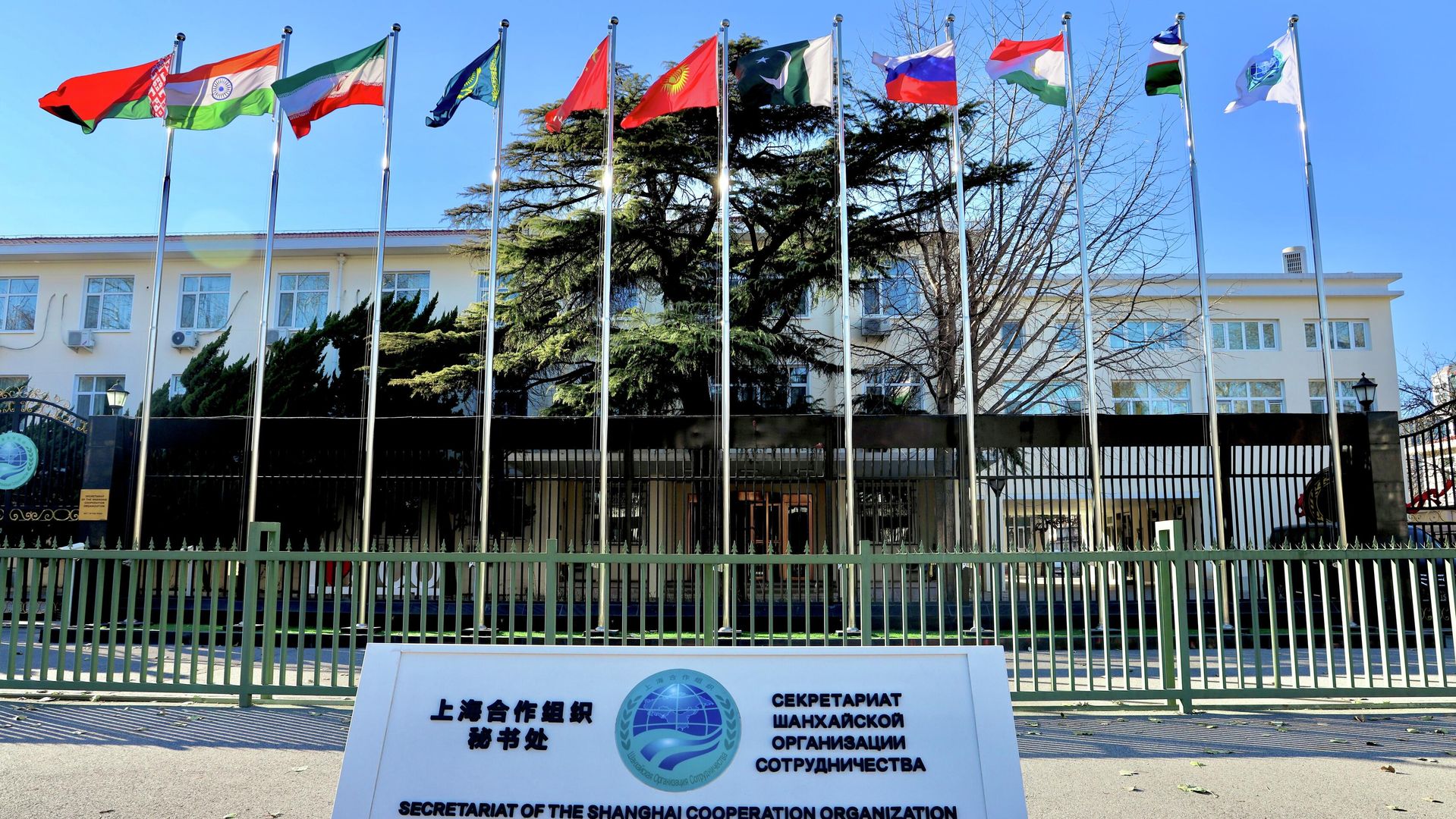 SHANGHAI COOPERATION ORGANIZATION (SCO) BISHKEK SUMMIT
Özge Emine ÖZÇELİK 15.09.2026 -
 TÜRKİYE-TRNC STRATEGIC COOPERATION
Özge Emine ÖZÇELİK 27.07.2026 -
 INDIA’S STRATEGIC BALANCING CHALLENGES THE QUAD
Özge Emine ÖZÇELİK 21.01.2026 -
 TÜRKİYE’S ROLE IN EUROPE’S CHANGING SECURITY STRATEGY
Özge Emine ÖZÇELİK 16.03.2026
-
 ECHR’S DOĞU PERINÇEK - SWITZERLAND DECISION (UNOFFICIAL ENGLISH)
Hazel ÇAĞAN ELBİR 03.03.2014 -
 ISRAEL: HAS THE VICTIM OF GENOCIDE BECOME THE PERPETRATOR OF THE SAME CRIME?
Mehmet Oğuzhan TULUN 31.01.2024 -
 EUROPEAN PARLIAMENT RESOLUTION OF 15 APRIL 2015 ON THE CENTENARY OF THE ARMENIAN GENOCIDE
Turgut Kerem TUNCEL 21.04.2015 -
 REFORMING MOLDOVA: STABILITY THROUGH CONSTRUCTIVE EURASIANISM
Teoman Ertuğrul TULUN 24.10.2025 -
 MAPPING THE CENTRAL ASIA-BLACK SEA AXIS: STRATEGIC IMPERATIVES AMIDST NEW GEOPOLITICAL AND ECONOMIC REALITIES
Teoman Ertuğrul TULUN 08.05.2025
-
25.01.2016
THE ARMENIAN QUESTION - BASIC KNOWLEDGE AND DOCUMENTATION -
12.06.2024
THE TRUTH WILL OUT -
27.03.2023
RADİKAL ERMENİ UNSURLARCA GERÇEKLEŞTİRİLEN MEZALİMLER VE VANDALİZM -
17.03.2023
PATRIOTISM PERVERTED -
23.02.2023
MEN ARE LIKE THAT -
03.02.2023
BAKÜ-TİFLİS-CEYHAN BORU HATTININ YAŞANAN TARİHİ -
16.12.2022
INTERNATIONAL SCHOLARS ON THE EVENTS OF 1915 -
07.12.2022
FAKE PHOTOS AND THE ARMENIAN PROPAGANDA -
07.12.2022
ERMENİ PROPAGANDASI VE SAHTE RESİMLER -
01.01.2022
A Letter From Japan - Strategically Mum: The Silence of the Armenians -
01.01.2022
Japonya'dan Bir Mektup - Stratejik Suskunluk: Ermenilerin Sessizliği -
03.06.2020
Anastas Mikoyan: Confessions of an Armenian Bolshevik -
08.04.2020
Sovyet Sonrası Ukrayna’da Devlet, Toplum ve Siyaset - Değişen Dinamikler, Dönüşen Kimlikler -
12.06.2018
Ermeni Sorunuyla İlgili İngiliz Belgeleri (1912-1923) - British Documents on Armenian Question (1912-1923) -
02.12.2016
Turkish-Russian Academics: A Historical Study on the Caucasus -
01.07.2016
Gürcistan'daki Müslüman Topluluklar: Azınlık Hakları, Kimlik, Siyaset -
10.03.2016
Armenian Diaspora: Diaspora, State and the Imagination of the Republic of Armenia -
24.01.2016
ERMENİ SORUNU - TEMEL BİLGİ VE BELGELER (2. BASKI)
-
AVİM Conference Hall 24.01.2023
CONFERENCE TITLED “HUNGARY’S PERSPECTIVES ON THE TURKIC WORLD"