














Introduction
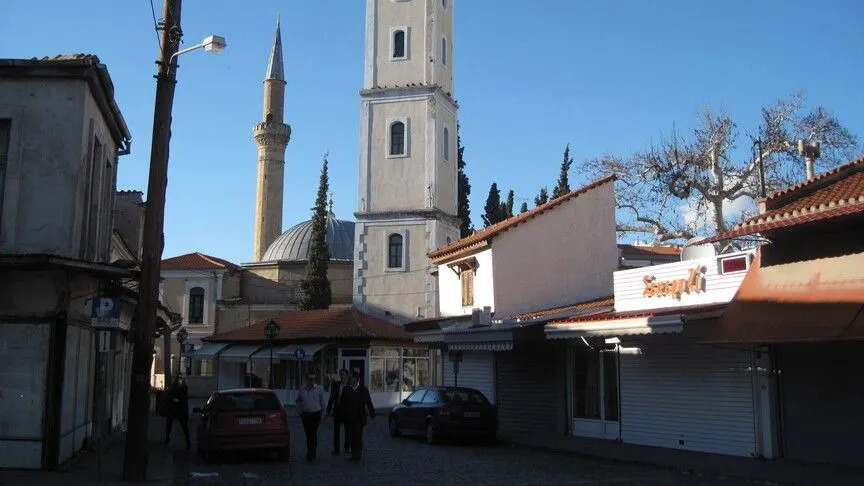
Even though the Turkish Muslim Minority in Western Thrace has the right to elect its own mufti, a demand they have been voicing for years, and notwithstanding European Court of Human Rights (ECHR) decisions that have repeatedly found such practices of the Greek government’s appointments in violation of freedom of religion and association, the Greek government has recently made new appointments to the muftiate of İskeçe and Gümilcine. According to a report by Anadolu Agency, a Presidential Decree regarding these appointments has been published in the Official Gazette of Greece. Under the decree, which has now come into effect, Bilal Kara Halil, formerly the appointed deputy mufti of İskeçe, has been appointed as the Mufti of Gümülcine. In contrast, Şükrü Şerif Damatoğlu, who has been serving as a religious official in İstanköy (Kos), has been appointed as the Mufti of İskeçe. It was stated in the decrees that both muftis will serve a five-year term, which may be renewed once. [1] A link to the page in the Official Gazette of Greece (issue no. 1662, dated October 21, 2026) where the respective decrees were published, along with an English translation of the portions of these decrees concerning Gümülcine and İskeçe is provided in the footnote below to facilitate future academic research on the subject.[2]
The Legal Framework of the Religious Rights of the Turkish-Muslim Minority in Western Thrace, Dating Back to 1913
As we have in numerous AVİM commentaries/analyses examined in detail, in recent years, Greek state intervention in the religious leadership of the Turkish minority has intensified, revealing a systematic approach to undermining the autonomy preserved by the Lausanne Treaty. Since the 1991 legislative reforms, Athens has unilaterally shifted from community-based election of muftis to a top-down system in which the state appoints religious leaders, disregarding both the historic practice and the explicit wishes of the local Turkish population. This policy, criticized in international reports and legal scholarship, directly contradicts the spirit and letter of Articles 37–45 of the Lausanne Treaty, which safeguard minority religious self-governance.[3] In this context, the articles of the Treaty of Lausanne mentioned are not the only international legal framework on this issue. For example, the 1913 Athens Agreement between Greece and the Ottoman Empire serves as an additional foundational legal framework for the religious autonomy of the Turkish minority. Article 11 of this agreement unequivocally secures the right of Muslim communities in Greece to freely elect their religious leaders, supervise religious foundations, and administer their own religious education. The said Article 11 stipulates that “The muftis, each within his own community, shall be elected by Mussulman electors.”[4]
Striking Anomaly in Greek Law 4964/2022 Entitled “Provisions for the simplification of environmental licensing, the establishment of a framework for the development of Offshore Wind Farms”
As an observant reader might have noticed, the decree mentioned in the footnote regarding Greece’s recent appointments of so-called "muftis” cites a law titled "Provisions for the simplification of environmental licensing, the establishment of a framework for the development of Offshore Wind Farms." In this context, the decree states that these appointments were made pursuant to Section C of Part B of this curiously titled law. The section heading is interestingly "Position and Status of Muftis and Acting Muftis in Thrace."[5]
There is no doubt that the appointment and status of Muftis in Western Thrace are highly sensitive political and domestic issues involving delicate relations with Türkiye and international human rights watchdogs. The legislators likely anticipated that introducing a separate bill titled "Appointment and Regulation of Islamic Muftis" would inevitably trigger intense media scrutiny, prolonged parliamentary debate, and a sharp reaction from both the Turkish Muslim minority and Türkiye itself. Consequently, they most likely chose to bury these provisions deep within a comprehensive bill focused on urgent economic and ecological issues. By doing so, they most likely aimed to ensure the matter would go largely unnoticed, while simultaneously minimizing political and media-driven controversy.
It would not be unfair to say that this undemocratic "stealth strategy" followed by Greece in adopting the law in question reflects, to say the least, a hypocritical stance that deliberately obscures significant minority-rights changes from robust public debate.
What do the brief content and discourse analyses of the statements issued by the Turkish and Greek Ministries of Foreign Affairs on this subject reveal?
Turkish MFA’s 24 October 2026 statement entitled “Greece’s Policies Toward the Muftis of the Turkish Minority in Western Thrace” essentially draws attention to the fundamental rights and freedoms of the Turkish Muslim Minority in Western Thrace and underlines that “Greece continues to disregard these rights guaranteed under the Lausanne Peace Treaty and international agreements, by appointing so-called muftis in Komotini and Xanthi.”[6] It draws attention to the fact that “the institution of the Mufti is an integral part of the religious, social, and cultural identity of the Turkish Minority in Western Thrace.” The statement underlines that “by refusing to recognize the Muftis elected by the Turkish Minority in Western Thrace, an official minority in the country, Greece is ignoring the Minority’s will and religious freedom, hereby once again revealing its distorted perspective on fundamental human rights.” The Ministry, at the end of the statement, politely calls on “Greek authorities to recognize the legitimate Muftis elected by the Minority and to put an end to their attempts to impose appointed muftis.”
Now, let us also look at the statement from the Greek Foreign Ministry on the matter. Greek MFA firstly states that “The 1923 Treaty of Lausanne, which governs the legal status of the Muslim Minority in Thrace, is clear: it is a religious minority. Its character cannot be challenged or redefined at will. The Muslim Minority in Thrace comprises Greek citizens and is an integral part of Greek society. Through Law 4964/2022, Greece established a modern and democratic process for the selection of Muftis, involving members of the Minority itself—including women—thereby enhancing transparency and ensuring full respect for religious freedom.” The statement subsequently includes exactly the following remarks:
“It is, to say the least, hypocritical for Türkiye to lecture Greece on religious freedom and respect for human rights, all the more so given that, in Türkiye itself, Muftis are appointed by the state. For such admonitions to be credible, there must, first and foremost, be consistency between words and actions.” [7]
The statement further notes that while the free practice of religious belief is a fundamental right, this right cannot be invoked “selectively”, nor can it be used as a pretext for interfering in the internal affairs of a sovereign state. Furthermore, it is asserted that "Greece, as a European state governed by the rule of law - fully committed to the principles of equality before the law and equal citizenship - protects the rights of all its citizens, while upholding international law in its entirety.”
In this context, an objective assessment suggests that while the statement from the Turkish Ministry of Foreign Affairs is drafted in diplomatic language officially recording Türkiye’s position on the matter and reflecting it professionally, the statement from the Greek Ministry of Foreign Affairs, devoid of diplomatic finesse, conveys an unbalanced, nervous tone, ventures into the troubled waters of harsh verbal confrontation, and appears to be provocative bullying in nature. It is fair to say that this statement employs the same kind of provocative and disrespectful language frequently seen in recent remarks from Greece both at an institutional level and through political figures who ought to act with a sense of responsibility. It is worth bearing in mind that this stance is a dangerous and irresponsible approach.
Conclusion
One of the most significant issues facing the Turkish-Muslim minority in Western Thrace is the appointment of muftis. Greece has consistently avoided reaching an equitable solution to this long-standing problem, choosing instead to disregard documents that carry international legal validity. The recent appointments to the Muftiate of Gümülcine and İskeçe demonstrate once again that the demands and expectations of the Turkish Muslim minority are being ignored. This is not merely an administrative matter falling solely within Greece’s domestic jurisdiction; rather, it is a fundamental issue directly linked to the religious identity of the Turkish Muslim minority in Western Thrace, their collective will, and their right to determine their own religious leaders of such highly anti-democratic models. It is highly advisable for the Greek government to return to the past practice of letting the Turkish minority select their religious leaders instead of electing themselves. The adoption of which could remove at least one contentious issue between the countries.
These rights are rooted in existing international legal instruments. Through a series of persistent faits accomplis, Greece continues to violate the rights of the Turkish-Muslim minority in Western Thrace.
In the aforementioned statement, the Greek Ministry of Foreign Affairs states that a committee selects candidates and that appointments are made through a democratic process facilitated by that body. It is understood that this body is the one established under Article 154 of Law 4964/2022, titled "Establishment of an Advisory Committee." A closer examination of this article reveals that the committee in question is an artificial, arbitrarily constructed entity. One would have to be quite naive to argue that such a body is "modern and democratic."
Greece’s persistent violation of the rights of the Turkish-Muslim minority in Western Thrace—specifically regarding education and religious matters—inevitably causes unease among the Turkish public.[8]
*Picture: Anadolu Agency
[1] Anadolu Ajansı. Yunanistan'da Türk azınlığın itirazlarına rağmen Gümülcine ve İskeçe'ye müftü atandı. ((Despite objections from the Turkish minority, muftis have been appointed to Gümülcine and İskeçe in Greece). By Ayhan Mehmet. 22 October 2026. https://aa.com.tr/tr/dunya/yunanistanda-turk-azinligin-itirazlarina-ragmen-gumulcine-ve-iskeceye-muftu-atandi/4097376
[2] https://religiousaffairs.minedu.gov.gr/images/Files/Law_4964-2022_Articles_137-162_eng.pdf
- For Gümülcine
MINISTRY OF EDUCATION, RELIGIOUS AFFAIRS AND SPORTS
Appointment of Bilal Kara Halil, son of Behri, as Mufti at the Muftiate of Komotini.
THE PRESIDENT OF THE HELLENIC REPUBLIC
Having regard to:
1. The provisions:
a) Of Articles 143, 147 par. 1, 148, 149, 153, and 156 of CHAPTER B’ “POSITION AND STATUS OF MUFTIS AND ACTING MUFTIS IN THRACE,” under PART C’ of Law 4964/2022, titled “Provisions for the simplification of environmental licensing, the establishment of a framework for the development of Offshore Wind Farms, addressing the energy crisis, environmental protection, and other provisions” (Government Gazette, Series A’, 150),
b) Of Article 58, par. 5, case (c) of the Presidential Decree... 18/2018
2. The reasoned opinion dated 07.07.2026 of the Advisory Committee provided for in Article 153 of Law 4964/2022, according to which Bilal Kara Halil is the only suitable candidate for the position of Mufti.
3. The decision of the Minister of Education, Religious Affairs and Sports, bearing reference number 106547/Θ1/07.08.2026, by which Bilal Kara Halil, son of Bechri, is selected as the Mufti of Komotini, on the grounds that: a) he meets the qualifications set out in Article 148 of Law 4964/2022, and b) none of the impediments or incompatibilities stipulated in Article 149 of Law 4964/2022 apply to him. Upon the proposal of the Minister of Education, Religious Affairs and Sports, we hereby decide:
We appoint, in accordance with Article 156, paragraph 1, of Law 4964/2022, in conjunction with Articles 148 and 149 thereof, Bilal Kara Chalil, son of Bechri—holder of Identity Card No. A03887193 and possessing the requisite legal qualifications—as Mufti of the Muftiate of Komotini, for a term of five (5) years, which may be renewed once (1).
We entrust the Minister of Education, Religious Affairs and Sports with the publication and execution of this decree.
(Certification No. G.D.O.Y./Ministry of Education, Religious Affairs and Sports: 7519/6.10.2026).
(Registration Certification No. in the Public Administration Human Resources Management System: 7069336582/13.10.2026).
(Certification No. of the Directorate for Programming and Development (DIPAAD)/Ministry of the Interior: 114650/13.10.2026).
Athens, October 2, 2026
The President of the Republic
KONSTANTINOS AN. TASOULAS
The Minister of
Education, Religious Affairs and Sports
SOFIA ZAKHARAKI
B. For İskeçe
Appointment of Sioukri Serif Damadoglou, son of Achmet, as Mufti at the Muftiate of Xanthi.
THE PRESIDENT OF THE HELLENIC REPUBLIC
Having regard to:
1. The provisions of:
a) Articles 143, 147 par. 1, 148, 149, 153, and 156 of CHAPTER B’ (“Position and Status of Muftis and Acting Muftis in Thrace”) of PART C’ of Law 4964/2022, entitled “Provisions for the simplification of environmental licensing, the establishment of a framework for the development of Offshore Wind Farms, addressing the energy crisis, environmental protection, and other provisions” (Official Gazette, Series A’, No. 150),
b) Article 58, par. 5, case (c) of Presidential Decree 18/2018, entitled “Organization of the Ministry of Education, Research and Religious Affairs” (Official Gazette, Series A’, No. 31). 2. The reasoned opinion dated 08.07.2026 of the Advisory Committee provided for in Article 153 of Law 4964/2022, according to which Sioukri Serif Damadoglou is the only qualified candidate for the position of Mufti.
3. The decision of the Minister of Education, Religious Affairs and Sports, bearing reference number 106549/Θ1/07.08.2026, by which Sioukri Serif Damadoglou, son of Ahmet, is selected as the Mufti of Xanthi, on the grounds that: a) he meets the qualifications set out in Article 148 of Law 4964/2022, and b) none of the impediments or incompatibilities stipulated in Article 149 of Law 4964/2022 apply to him. Upon the proposal of the Minister of Education, Religious Affairs and Sports, we hereby decide:
To appoint, in accordance with Article 156, paragraph 1, of Law 4964/2022, in conjunction with Articles 148 and 149 thereof, Sioukri Serif Damadoglou, son of Ahmet—holder of Identity Card No. A02984726 and possessing the requisite legal qualifications—as Mufti of the Muftiate of Xanthi, for a term of five (5) years, which may be renewed once (1).
We entrust the publication and execution of this decree to the Minister of Education, Religious Affairs and Sports.
(Certification No. G.D.O.Y./Ministry of Education, Religious Affairs and Sports: 6903/18.09.2026).
(Registration No. in the Public Administration Human Resources Management System: 8603654282/13.10.2026).
13.10.2026).
Athens, September 16, 2026
The President of the Republic
KONSTANTINOS AN. TASOULAS
The Minister of
Education, Religious Affairs and Sports
SOFIA ZAHARAKI
[3] Teoman Ertuğrul Tulun. Religious Assımılatıon Policıes In Greece: Pressure On Turkish Muftis As A Continuatıon Of Minorıiy Rights Violatıons. AVİM Commentary No : 2025 / 38, 21.08. 2025 https://avim.org.tr/en/Yorum/RELIGIOUS-ASSIMILATION-POLICIES-IN-GREECE-PRESSURE-ON-TURKISH-MUFTIS-AS-A-CONTINUATION-OF-MINORITY-RIGHTS-VIOLATIONS ; Teoman Ertuğrul Tulun. Lausanne At 103: Selective Abidance By Greece AVİM Commentary No.: 2026/ 42. 24.07.2026. https://avim.org.tr/en/Yorum/LAUSANNE-AT-103-SELECTIVE-ABIDANCE-BY-GREECE
[4] Convention of Athens (Agreement between Greece and the Ottoman Empire), November 14/27, 1913, art. 11, https://www.pollitecon.com/html/treaties/The_Treaty_Of_Peace_Between_Turkey_And_Greece.htm
[5] Official Government Gazette of the Hellenic Republic . Issue A' 150/30.07.2022 . Law 4964/22 (Government Gazette 150 A/30-7-2022): Provisions for the simplification of environmental licensing, establishment of a framework for the development of offshore wind farms, addressing the energy crisis, forestry protection and other provisions. Law 4964/2022 Articles 137-162. PART C MODERNIZATION OF THE MUFTIATES IN THRACE . CHAPTER A ORGANIZATION AND OPERATION OF THE MUFTIATES IN THRACE
https://www.minedu.gov.gr/publications/docs2024/ggth/Law_4964-2022_Articles_137-162_English.pdf
[6] Turkish Ministry of Foreign Affairs. No: 207, 24 October 2026, Regarding Greece’s Policies Toward the Muftis of the Turkish Minority in Western Thrace. 24 October 2026. https://www.mfa.gov.tr/no_-207_-yunanistan-in-bati-trakya-turk-azinliginin-muftuluklerine-yonelik-uygulamalari-hk.en.mfa
[8] Dr. Teoman Ertuğrul Tulun. The Political Aspect Of The Concept Of Ecumenism And The Fener Greek Patriarchate. AVİM Research Paper No: 8. 7 October 2026. https://avim.org.tr/images/uploads/Rapor/TE-Tulun-Pol-Aspect-Concept-Ecumen-FG-Patriarchate-final-2.pdf
© 2009-2025 Center for Eurasian Studies (AVİM) All Rights Reserved
No comments yet.
-
 GEORGIA'S CROSSROADS: STABILITY AND SOVEREIGNTY
Teoman Ertuğrul TULUN 17.12.2024 -
 PEER REVIEW AND SCIENTIFIC GATEKEEPING UNDER PROPAGANDA PRESSURE
Teoman Ertuğrul TULUN 27.03.2026 -
HYPOCRITICAL STATEMENT BY GREEK MFA REGARDING RECENT MUFTI APPOINTMENTS IN İSKEÇE (XANTHI ) AND GÜMÜLCİNE (KOMOTINI)
Teoman Ertuğrul TULUN 26.10.2026 -
 THE SPECTER OF RENEWED ARMED CONFLICTS IN THE BALKANS
Teoman Ertuğrul TULUN 14.02.2017 -
 THE FOUNDATIONAL PILLARS OF STABILITY IN THE BLACK SEA
Teoman Ertuğrul TULUN 16.04.2025
-
 GENOCIDE ACCUSATION AS A FORM OF PUNISHMENT - III
Mehmet Oğuzhan TULUN 27.04.2021 -
 THE BATTLE TO CONTROL THE NARRATIVE OVER KARABAKH: ARMENIAN CIVILIAN SAFETY VS. AZERBAIJANI STATE SOVEREIGNTY
Mehmet Oğuzhan TULUN 06.10.2023 -
 CHAPTER BY CHAPTER SYNOPSIS AND REVIEW OF TURKS AND ARMENIANS: NATIONALISM AND CONFLICT IN THE OTTOMAN EMPIRE BY JUSTIN MCCARTHY - 6
AVİM 22.10.2015 -
 AFTER BREXIT: THE FOOTSTEPS OF A TRULY CAROLINGIAN EUROPEAN UNION
Teoman Ertuğrul TULUN 15.03.2019 -
 REFLECTIONS ON THE EU – CENTRAL ASIA SUMMIT
Hazel ÇAĞAN ELBİR 14.04.2025
-
25.01.2016
THE ARMENIAN QUESTION - BASIC KNOWLEDGE AND DOCUMENTATION -
12.06.2024
THE TRUTH WILL OUT -
27.03.2023
RADİKAL ERMENİ UNSURLARCA GERÇEKLEŞTİRİLEN MEZALİMLER VE VANDALİZM -
17.03.2023
PATRIOTISM PERVERTED -
23.02.2023
MEN ARE LIKE THAT -
03.02.2023
BAKÜ-TİFLİS-CEYHAN BORU HATTININ YAŞANAN TARİHİ -
16.12.2022
INTERNATIONAL SCHOLARS ON THE EVENTS OF 1915 -
07.12.2022
FAKE PHOTOS AND THE ARMENIAN PROPAGANDA -
07.12.2022
ERMENİ PROPAGANDASI VE SAHTE RESİMLER -
01.01.2022
A Letter From Japan - Strategically Mum: The Silence of the Armenians -
01.01.2022
Japonya'dan Bir Mektup - Stratejik Suskunluk: Ermenilerin Sessizliği -
03.06.2020
Anastas Mikoyan: Confessions of an Armenian Bolshevik -
08.04.2020
Sovyet Sonrası Ukrayna’da Devlet, Toplum ve Siyaset - Değişen Dinamikler, Dönüşen Kimlikler -
12.06.2018
Ermeni Sorunuyla İlgili İngiliz Belgeleri (1912-1923) - British Documents on Armenian Question (1912-1923) -
02.12.2016
Turkish-Russian Academics: A Historical Study on the Caucasus -
01.07.2016
Gürcistan'daki Müslüman Topluluklar: Azınlık Hakları, Kimlik, Siyaset -
10.03.2016
Armenian Diaspora: Diaspora, State and the Imagination of the Republic of Armenia -
24.01.2016
ERMENİ SORUNU - TEMEL BİLGİ VE BELGELER (2. BASKI)
-
AVİM Conference Hall 24.01.2023
CONFERENCE TITLED “HUNGARY’S PERSPECTIVES ON THE TURKIC WORLD"