














This is the English translation of a Turkish language article that was originally published by AVİM on 26 November 2025.
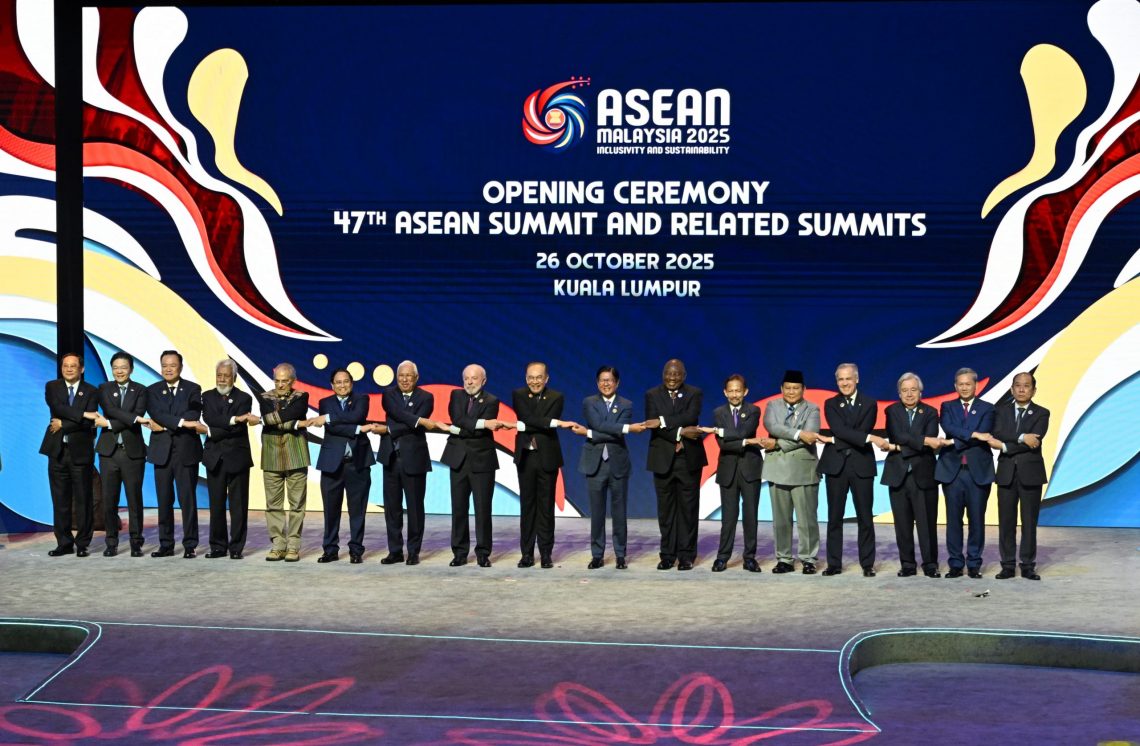
US President Trump carried out his second term’s first Asia trip, including Malaysia, South Korea, and Japan, between 26 and 30 October. It is possible to say that the President’s visit to Asia was highlighted for its focus on the security dimension and custom tariffs negotiations. Tariff discussions, critical mineral negotiations, mediation in regional peace negotiations, and meetings with the Chinese President were the prominent features of the trip. In this context, it can be said that US President Trump's Asia trip represents a significant demonstration in terms of the Trump administration’s strategy of “Make America Great Again” and its foreign policy vision. Preferring bilateral negotiations and meetings in pursuing foreign policy, various implementations of his strategy (dubbed “peace-maker”) were carried out. During his Asia trip, thanks to the 47th ASEAN Leaders’ Summit held in Malaysia and the APEC Leaders’ Summit held in South Korea, the US President made several deals by having bilateral meetings with the presidents of countries in the Asia-Pacific region like Vietnam, and Cambodia, along with the presidents of Malaysia, South Korea, and Japan. Besides China, which has rich sources in terms of critical minerals and rare earth elements, other countries in the Asia-Pacific possess 22% of the world’s rare earth elements, 65% of nickel reserves, and 25% of cobalt reserves.[1] In this respect, the prominent subjects in the meetings between the US leader and the leaders of the other countries were critical minerals along with tariff negotiations.
During his Asia trip, the US President made his first visit to Malaysia. During the 47th ASEAN Leaders Summit held in Malaysia’s capital, Kuala Lumpur, President Trump established various diplomatic connections and met with the presidents of Japan, Brazil, Vietnam, and Thailand, who were present in Malaysia for the ASEAN Summit. Having made mediation attempts regarding the conflict between Cambodia and Thailand in the previous months, the US President facilitated the signing of a peace declaration between Cambodia and Thailand with the participation of the Malaysian President, and the leaders of the mentioned countries. In addition, through a meeting held with the Malaysian President, a contract regarding critical minerals (which is indicated to be highly important in terms of the US national security) was signed between the US and Malaysia.[2] It has also been declared that a commercial agreement was signed between the two countries during the meeting of the US President Trump with his Vietnamese counterpart. A similar meeting was held with the Thai President. These agreements that have been signed are meant to alleviate the customs barriers imposed on US goods and facilitate the US goods' access to the Thai and Vietnamese markets.[3] An agreement regarding critical minerals was signed with Thailand as well.[4] Another development was the signing of a ten-year defense framework agreement between the American and Indian defense delegations.[5]
The US President visited Japan on 28 October, which was the second step of his Asia trip. Through a meeting with Japan’s new Prime Minister Takachi, agreements were signed regarding critical minerals and trade access between the two countries. It has been indicated that the agreements the US signed with Malaysia and Thailand about critical minerals focuses on collaboration in broad terms, while the agreement signed with Japan contains more developed, detailed, and applicable frameworks.[6] The new Japanese prime minister’s political opinions on security are reportedly congruent with the US policies in Asia.
The US President’s last visit during his Asia trip was carried out in South Korea on 30 October. In the meeting of the US and South Korea leaders, which took place before the Asia-Pacific Economic Cooperation Summit (APEC) that was held in South Korea between 31 October and 1 November (without the participation of the US President Trump), several agreements were reached in trade and security fields.[7] In this context, while the customs tariffs are being reduced, South Korea has committed to investing in the US. It has been stated that leading company of the chip sector in the US, Nvidia, will make several investments and collaborations in Sout Korea, while South Korea has been granted permission to construct a nuclear-powered submarine.[8] Lastly, the South Korean President stated that his country would increase its military expenditure similar to the pledge made by the Japanese Prime Minister.[9]
APEC Summit
The APEC summit was held in South Korea’s Gyeongju city between 31 October and 1 November, with the theme of “Building a Sustainable Future”. At the end of the summit, the “Gyeongju Declaration” was accepted, and the two documents called “Collaborative Framework for the Demographic Changes” and “APEC Artificial Intelligence Initiative (2026-2030)” were signed. Thus, while “cultural and creative industries” were being addressed, a common decision was also made about artificial intelligence and demographic issues in the Asia-Pacific region.[10] The APEC Summit is significant in terms of the new administration in South Korea hosting an international organization for the first time. The decisions taken especially related to artificial intelligence at the APEC Summit and the US technology company Nvidia’s investments in South Korea are aligned with South Korea’s goals, which wants to be featured as an important center for artificial intelligence.[11]
While Chinese President Xi’s visit to South Korea to participate in the APEC Summit has been his first visit to the country since 2014, it was also his first meeting with the South Korean President Lee. At the meeting between the two leaders, the foreign exchange swap agreement between China and South Korea was renewed, and a Memorandum of Understanding on collaboration in the struggle against online fraud, which has recently emerged as one of the most significant regional security issues in the Asia-Pacific, was signed.[12]
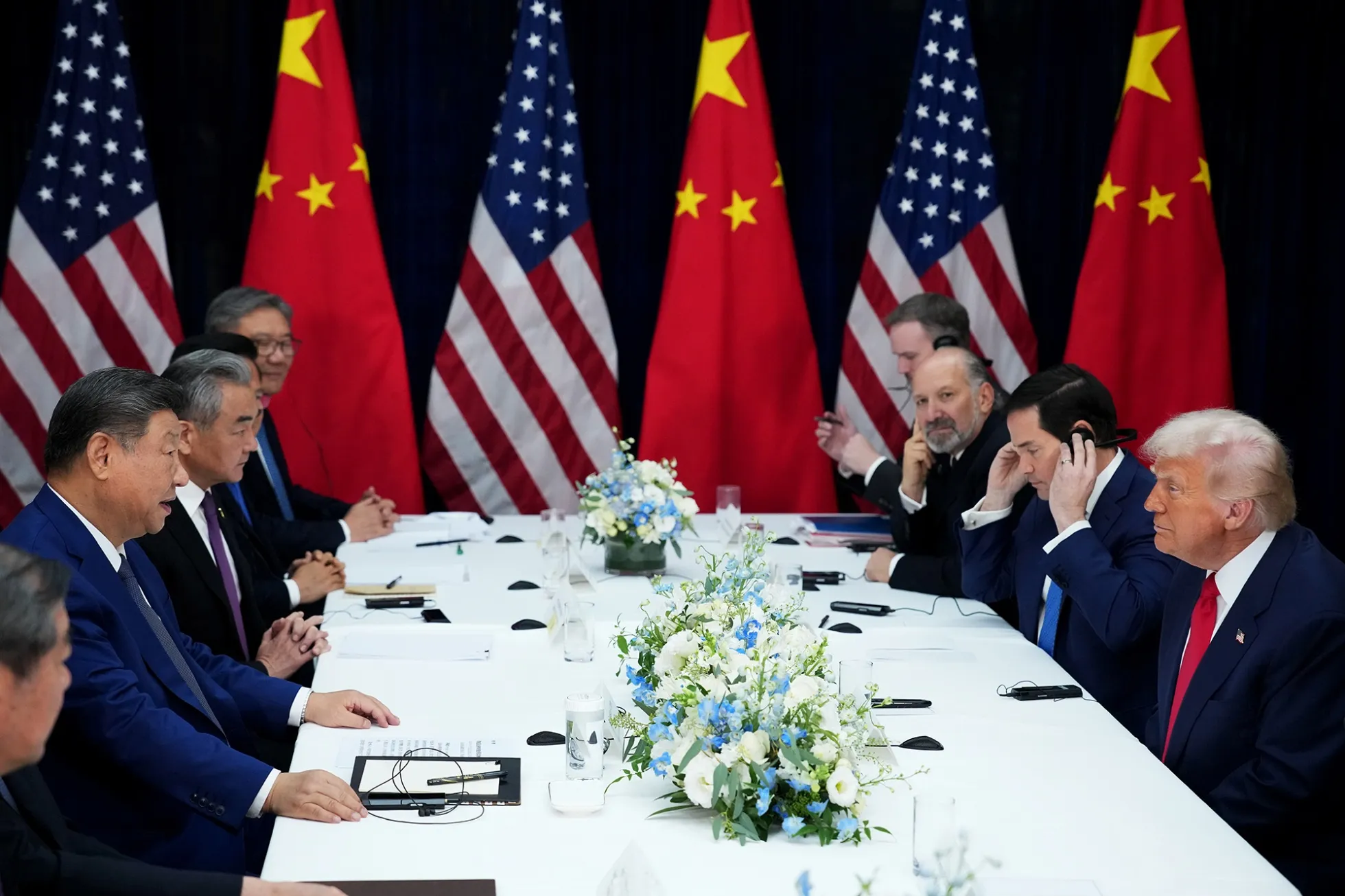
The Meeting Between the US President Trump and the Chinese President Xi
The US President Trump and the Chinese President Xi carried out a bilateral meeting in South Korea’s Busan on 30 October. This meeting has been the first meeting between the two leaders since 2019. The consequences of the US’s additional customs tariffs on China and trade problems between the two countries as a result of China’s retaliatory policies had continued despite the meetings between the delegations of the two sides. The export controls that were imposed on critical minerals by China recently caused important setbacks in the global supply chain, particularly in the US and European countries. This situation demonstrates that China has increased its retaliation capacity against the tariff policy of the US, which it wields as tool of economic pressure and tariff precautions. After the meeting held in South Korea, it has been stated that no official agreement were signed, but a consensus was reached for the resolution of the commercial issues.[13] According to this, agreements were reached regarding the abolition of additional taxes and lowering trade taxes to 10% for a year, as it was understood by the month of May, the continuation of soya bean importation from the US by China, and the delaying of the restrictions on five of the rare earth elements that China has recently imposed exportation restrictions on.[14] However, China’s restrictions on seven of the mentioned critical minerals have still continued. It has been claimed that China, being one of the biggest receivers of soya beans from the US, has negatively influenced the economic situation in some of the states of the US after having suspended the importation of the mentioned product, and that this might have an an impact on the upcoming US elections.[15]
It should be considered that these agreements reached between the US and China can be influenced by future political and economic events. Since economic tools, like tariff barriers in the US-China relations and export restrictions on critical minerals, have been used as retaliatory tools of pressure in the two countries’ relations. This situation renders the nature of the agreements vulnerable. Owing to the rare earth element sources that China possesses and controls, it is seen that China’s response to the US’s economic pressure is facilitated through export controls.
Conclusion
The US President Trump’s Asia trip puts forth a significant example for a foreign policy approach that tries to mediate in peace agreements and engage in bilateral talks rather than prioritizing institutional collaborations. Considering the agreements that were made in security, trade meetings, and critical minerals during the Asia trip of the US President, it can be said that the economic and security participation of the US in Asia has increased. The bilateral meeting between the US and Chinese Presidents held in South Korea provided an important opportunity for halting to the trade war between the US and China. It can be seen that China wields the export control of critical minerals as a pressure tool against the US’s additional taxes. The fragile peace reached in the conflict between Thailand and Cambodia and new economic and political problems that can appear in the US-China relations render the above-mentioned agreements vulnerable; however, this situation does not reduce the importance of the consensuses that have been reached. While critical minerals can be used as a tool of pressure in the great power competition, as the Malaysian case has demonstrated, they can also be seen as a new domain through which the two superpowers can negotiate. This once again highlights the importance of countries formulating expertise-based policies when it comes to the issue of critical minerals.
*Image: Bloomberg
[1] Gracelin Baskaran and Meredith Schwartz, “Ahead of APEC, Trump Signs Flurry of Bilateral Minerals Agreements on Asia Trip”, CSIS, 31 October 2025 https://www.csis.org/analysis/ahead-apec-trump-signs-flurry-bilateral-minerals-agreements-asia-trip
[2] “President Trump Opens Asia Trip by Securing Landmark Wins for America”, White House, 27 October 2025, https://www.whitehouse.gov/articles/2025/10/president-trump-opens-asia-trip-by-securing-landmark-wins-for-america/
[3] “President Trump Opens Asia Trip by Securing Landmark Wins for America”, White House, 27 October 2025, https://www.whitehouse.gov/articles/2025/10/president-trump-opens-asia-trip-by-securing-landmark-wins-for-america/
[4] “President Trump Opens Asia Trip by Securing Landmark Wins for America”, White House, 27 October 2025, https://www.whitehouse.gov/articles/2025/10/president-trump-opens-asia-trip-by-securing-landmark-wins-for-america/
[5] Islamuddin Sajid and Riyaz ul Khaliq, “India, US Sign 10-Year Defense Framework”, Anadolu Ajansı, 31 October 2025, https://www.aa.com.tr/en/americas/india-us-sign-10-year-defense-framework/3731453
[6] Gracelin Baskaran and Meredith Schwartz, “Ahead of APEC, Trump Signs Flurry of Bilateral Minerals Agreements on Asia Tour”, CSIS, 31 October 2025, https://www.csis.org/analysis/ahead-apec-trump-signs-flurry-bilateral-minerals-agreements-asia-tour
[7] Elif Gültekin Karahacıoğlu, “Güney Kore ile ABD, Ticaret ve Güvenlik Anlaşmalarına İlişkin Ortak Bilgi Notu Yayımladı”, Anadolu Ajansı, 14 November 2025, https://www.aa.com.tr/tr/dunya/guney-kore-ile-abd-ticaret-ve-guvenlik-anlasmalarina-iliskin-ortak-bilgi-notu-yayimladi/3743726
[8] Zeynep Katre Oran, “Nvidia, Güney Kore Hükümeti Ve Şirketleriyle Yapay Zeka Alanında İşbirliği Yapacak”, Anadolu Ajansı 1 November 2025, https://www.aa.com.tr/tr/bilim-teknoloji/nvidia-guney-kore-hukumeti-ve-sirketleriyle-yapay-zeka-alaninda-isbirligi-yapacak/3732333 ; Josh Smith, David Brunnstrom and Costas Pitas “Trump Says South Korea Has Approval To Build Nuclear-Powered Submarine”, https://www.reuters.com/world/china/trump-says-south-korea-has-approval-build-nuclear-powered-submarine-2025-10-29/
[9] Samir Puri, “Has Trump’s Asia Tour Reassured the US’s Asian Allies?”, Chatham House, 4 November 2025 https://www.chathamhouse.org/2025/11/has-trumps-asia-tour-reassured-uss-asian-allies
[10] “APEC Ends with Adoption of Gyeongju Declaration”, Koreanet, 3 November 2025, https://www.korea.net/NewsFocus/policies/view?articleId=281512
[11] Sofiya Sayankina, “What the 2025 APEC Summit Means for South Korea’s AI Ambitions”, The Diplomat, 4 November 2025, https://thediplomat.com/2025/11/what-the-2025-apec-summit-means-for-south-koreas-ai-ambitions/
[12] Sofiya Sayankina, “What the 2025 APEC Summit Means for South Korea’s AI Ambitions”, The Diplomat, 4 November 2025, https://thediplomat.com/2025/11/what-the-2025-apec-summit-means-for-south-koreas-ai-ambitions/
[13] Laura Bicker, Anthony Zurcher, Flora Drury , “Trump Hails 'Amazing' Meeting With China's Xi But No Formal Trade Deal Agreed”, BBC, 30 October 2025, https://www.bbc.com/news/articles/crl25xl1gjpo
[14] Laura Bicker, Anthony Zurcher, Flora Drury, “Trump Hails 'Amazing' Meeting With China's Xi But No Formal Trade Deal Agreed”, BBC, 30 October 2025, https://www.bbc.com/news/articles/crl25xl1gjpo
[15] Jianli Yang, “The Trump-Xi APEC Summit: Seeking a Trade Truce”, The Diplomat, 28 October 2025 https://thediplomat.com/2025/10/the-trump-xi-apec-summit-seeking-a-trade-truce/
© 2009-2025 Center for Eurasian Studies (AVİM) All Rights Reserved
No comments yet.
-
 THE 16TH BRICS SUMMIT REGARDING CHINA AND THE GLOBAL SOUTH
Seyda Nur OSMANLI 26.12.2024 -
HIGHLIGHTS FROM THE US PRESIDENT TRUMP’S ASIA TRIP
Seyda Nur OSMANLI 29.01.2026 -
 CHINA’S GROWING PRESENCE IN GEORGIA
Seyda Nur OSMANLI 30.04.2025 -
 CHINA’S TAIWAN POLICY AND APPROACH TO THE CYPRUS QUESTION
Seyda Nur OSMANLI 11.04.2025 -
 HIGHLIGHTS FROM THE 47TH ASEAN SUMMIT
Seyda Nur OSMANLI 20.01.2026
-
 A MOVIE REVIEW: AURORA’S SUNRISE
Hazel ÇAĞAN ELBİR 07.12.2023 -
 OVERLAPPING INTERESTS IN THE SOUTH CAUCASUS: THE AZERBAIJAN, ISRAEL AND IRAN TRIANGLE
İlaha KHANTAMİROVA 29.05.2025 -
 RISING ISLAMOPHOBIA IN THE WESTERN WORLD AND THE TURKISH-ARMENIAN CONTROVERSY
Mehmet Oğuzhan TULUN 15.03.2019 -
 OPPOSITION AGAINST THE TURKEY-ARMENIA NORMALIZATION PROCESS THROUGH THE USE OF CARTOONS
Mehmet Oğuzhan TULUN 13.05.2022 -
 NAVAL STRENGTH IN THE AEGEAN: STRATEGIC LESSONS FROM THE BALKAN WARS
Teoman Ertuğrul TULUN 12.06.2024
-
25.01.2016
THE ARMENIAN QUESTION - BASIC KNOWLEDGE AND DOCUMENTATION -
12.06.2024
THE TRUTH WILL OUT -
27.03.2023
RADİKAL ERMENİ UNSURLARCA GERÇEKLEŞTİRİLEN MEZALİMLER VE VANDALİZM -
17.03.2023
PATRIOTISM PERVERTED -
23.02.2023
MEN ARE LIKE THAT -
03.02.2023
BAKÜ-TİFLİS-CEYHAN BORU HATTININ YAŞANAN TARİHİ -
16.12.2022
INTERNATIONAL SCHOLARS ON THE EVENTS OF 1915 -
07.12.2022
FAKE PHOTOS AND THE ARMENIAN PROPAGANDA -
07.12.2022
ERMENİ PROPAGANDASI VE SAHTE RESİMLER -
01.01.2022
A Letter From Japan - Strategically Mum: The Silence of the Armenians -
01.01.2022
Japonya'dan Bir Mektup - Stratejik Suskunluk: Ermenilerin Sessizliği -
03.06.2020
Anastas Mikoyan: Confessions of an Armenian Bolshevik -
08.04.2020
Sovyet Sonrası Ukrayna’da Devlet, Toplum ve Siyaset - Değişen Dinamikler, Dönüşen Kimlikler -
12.06.2018
Ermeni Sorunuyla İlgili İngiliz Belgeleri (1912-1923) - British Documents on Armenian Question (1912-1923) -
02.12.2016
Turkish-Russian Academics: A Historical Study on the Caucasus -
01.07.2016
Gürcistan'daki Müslüman Topluluklar: Azınlık Hakları, Kimlik, Siyaset -
10.03.2016
Armenian Diaspora: Diaspora, State and the Imagination of the Republic of Armenia -
24.01.2016
ERMENİ SORUNU - TEMEL BİLGİ VE BELGELER (2. BASKI)
-
AVİM Conference Hall 24.01.2023
CONFERENCE TITLED “HUNGARY’S PERSPECTIVES ON THE TURKIC WORLD"