














This is the English translation of a Turkish language article that was originally published by AVİM on 26 November 2025.
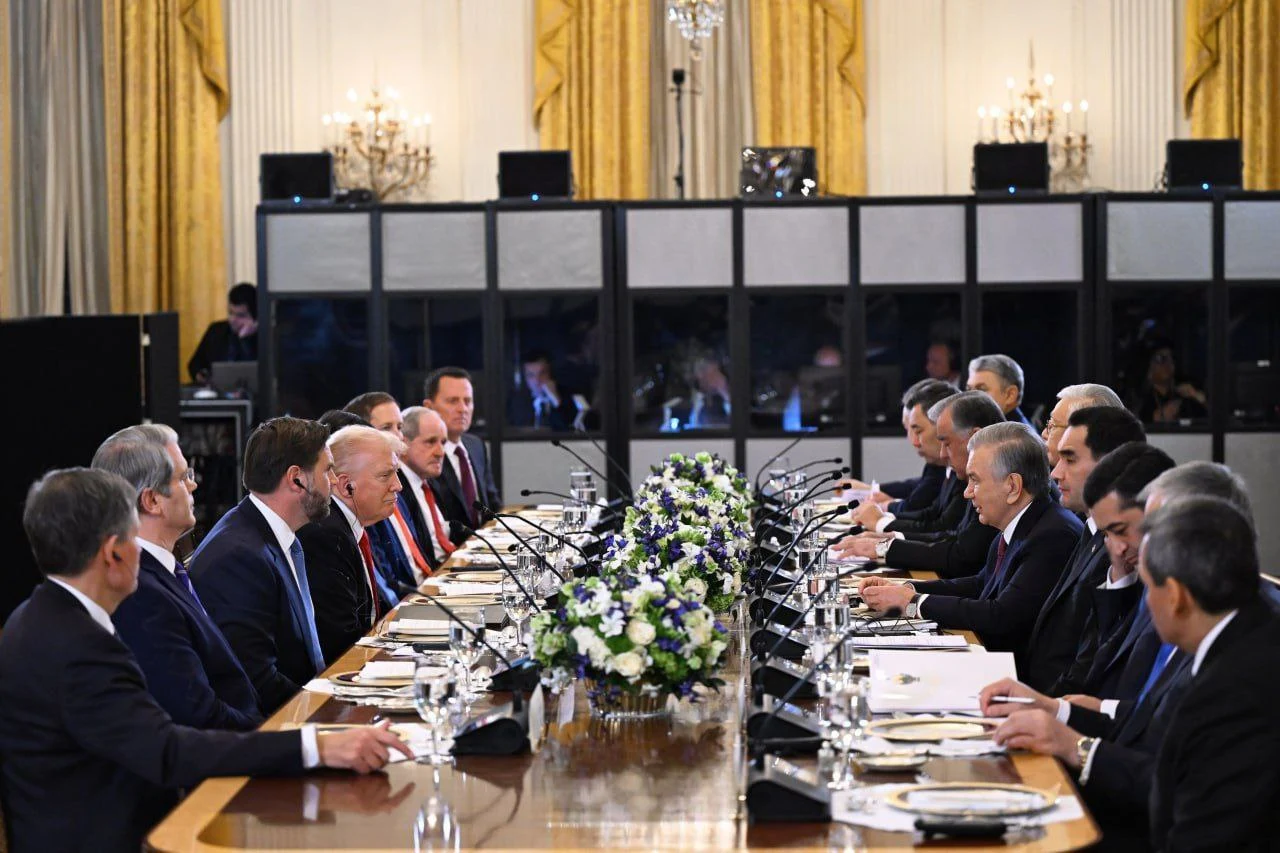
Following the dissolution of the Soviet Union in 1991, the five newly independent Central Asian states—Kazakhstan, Kyrgyzstan, Uzbekistan, Tajikistan, and Turkmenistan—have emerged as pivotal actors in international relations due to their abundant natural resources, rare earth element reserves[1], and critical geopolitical position bridging Asia and Europe[2]. The region’s strategic significance is underscored by multilateral cooperation platforms such as the C5+1 format, launched by the United States in 2015[3] and institutionalized through a declaration at the foreign ministers’ level. The C5+1 framework (comprising the five Central Asian states and the United States) emphasizes cooperation over competition, aiming to establish a new collaborative structure grounded in mutual interests. Amid competing efforts by global powers (the United States, Russia, and China) to assert influence in the region, Central Asia has transitioned from being a passive observer in great-power politics to a prominent player within the Eurasian landscape.
This article analyzes, from a diplomatic and academic perspective, the European Union’s (EU) strategic orientation toward Central Asia—a region increasingly at the center of international attention—and the significance of the Turkic republics as they seek to expand their economic maneuverability along with Türkiye’s role in this context.
The European Union’s Growing Interest in Central Asia
Central Asia holds substantial importance for global political and economic trajectories. Commentors have highlighted that the region is a vital economic and trade partner not only for China but also for the EU. Indeed, in recent years, the EU has intensified high-level engagement with Central Asian states, which is exemplified by the inaugural EU–Central Asia Summit held in Samarkand, Uzbekistan, in 2025.
The EU’s approach to Central Asia has gained strategic salience in light of the contemporary geopolitical landscape, particularly the Russia-Ukraine war and developments in Afghanistan. In 2019, the EU adopted a new strategy for Central Asia that highlights the region’s growing strategic importance for EU interests. The underlying strategic and economic objectives of the EU’s engagement with the region can be summarized as follows:
- Economic and Trade Partnership: As the region’s second-largest trading partner and the source of over 40% of its foreign direct investment[4], the EU is the leading investor in Central Asia. The EU is adapting its foreign policy to prioritize trade and economic opportunities in the region.
- Enhanced Partnership and Cooperation Agreements (EPCAs): The EU has signed or is negotiating EPCAs with Kazakhstan (2020), Tajikistan (agreed upon in July), and Uzbekistan (signed on 24 October). These agreements aim to expand trade relations, streamline customs procedures, and improve the investment climate to attract European companies[5].
- Critical Minerals and Energy Diversification: The EU has demonstrated clear interest in accessing Central Asia’s critical minerals and diversifying supply chains to reduce China’s dominance in this sector. Additionally, the EU is targeting the Caspian Basin as an alternative energy source and promoting cooperation in green energy.
- Infrastructure and Connectivity: During the Samarkand Summit, the EU committed approximately 12 billion Euros to regional infrastructure development under the Global Gateway framework. This initiative supports Central Asian states’ multi-vector foreign policies aimed at mitigating excessive reliance on Russia and China.
Nevertheless, the EU’s heightened interest in Central Asia is widely regarded as a belated initiative. Türkiye, recognizing the geopolitical vacuum created by the collapse of the Soviet Union, has—despite not receiving the support from the EU that it had anticipated—developed extensive diplomatic, economic, and cultural engagements with the region since 1991[6].
The Strategic Importance of the Turkic Republics and Türkiye in Eurasian Geopolitics
The Central Asian republics are striving to establish a cooperative framework that mutually serves national interests while maintaining multi-vector foreign policies that avoid exclusive alignment with any single power. The region is no longer the “backyard” of any great power or a mere stage for a new “great game” of political rivalry.
Within this dynamic context, the institutional and geoeconomic ties between Türkiye and the Central Asian republics provide critical support for Western (US/EU) efforts to enhance their influence in the region:
- Historical and Cultural Ties: Türkiye has forged strong cultural, traditional, and linguistic bonds with Central Asian states, which has fostered close relations.
- The Organization of Turkic States (OTS): With the transformation of the Turkic Council (established in 2009) into the OTS in 2021, Türkiye has emerged as a leading actor through deep institutional, diplomatic, and economic linkages with the region. The OTS targets cooperation in economy, security, and culture[7].
- The Central Role of the Middle Corridor: At the heart of Central Asia’s economic strategy lies the Middle Corridor; a trade route that bypasses Russia and extends from China to Europe through Central Asia, the Caspian region, the South Caucasus, and Türkiye. This corridor serves as the region’s gateway to global markets. Realizing the Middle Corridor’s potential requires long-term commitments. The Baku-Tbilisi-Ceyhan Pipeline, a significant portion of which traverses Türkiye, further strengthens the country’s international standing[8].
- Contribution to Regional Integration: Central Asian states have convened in Tashkent to bolster regional cooperation and formally accepted Azerbaijan as a member. Azerbaijan’s inclusion accelerates the region’s momentum for broader economic development. Kazakhstan and Azerbaijan, both pivotal along the Middle Corridor, play central roles in the functioning of the corridor.
- Geostrategic Bridge Role: Being Europe’s eastern frontier and having indispensable position in Eurasia, Türkiye is a vital conduit that neither the West nor Asia can afford to exclude. Through agreements aimed at facilitating the -albeit limited- flow of Turkmen gas from the Caspian Basin to Europe, Türkiye is enhancing its role as an energy hub bridging East and West.
Trade and logistics—central to US and EU interest in Central Asia—render Türkiye’s position indispensable. Today, the Middle Corridor, originating in China and traversing Central Asia, the Caspian, the South Caucasus, and Türkiye en route to Europe, stands at the core of the region’s economic strategy[9]. This route definitively shapes a critical trade corridor bypassing Russia, with Türkiye positioned as the primary gateway for this emerging trade to access global markets[10].
Conclusion
The transformation of C5+1 into C6+1, alongside the EU’s Central Asia strategy, signals an intensifying multipolar geopolitical competition in the region. Central Asian states are pursuing deeper cooperation with the West to achieve economic diversification and preserve their sovereignty.
Türkiye plays an indispensable role in this strategic equation. As a natural partner, Türkiye is pivotal to Western efforts to expand influence in Central Asia. However, the EU’s preference for negotiating EPCAs directly with Central Asian states—excluding Türkiye—has impeded full-fledged cooperation.
Collaboration with Türkiye is essential for the EU to secure tangible and enduring gains in Central Asia. The West’s (US/EU) ability to establish lasting and effective influence in the region, counterbalance Russian and Chinese influence, and develop the Middle Corridor—the region’s primary connectivity route—hinges on Türkiye’s pivotal role. Türkiye’s entrenched position within the OTS and along the Middle Corridor positions it as a strategic bridge in the Eurasian geography, offering the reliable and established partnership potential necessary for the EU to achieve its economic objectives.
*Picture: https://yep.uz/en/2025/11/c5-1-washington-trump-central-asia-analysis/
[1] “The Future of US–Central Asia Relations,” Hudson Institute, Hudson.org, 10 November 2025, https://www.hudson.org/events/future-us-central-asia-relations.
[2] “The Future of US–Central Asia Relations,” Hudson Institute.
[3] Hazel Çağan Elbir, “ABD Dışişleri Bakanı John Kerry’nin Beş Orta Asya Ülkesine Ziyareti,” [“U.S. Secretary of State John Kerry’s Visit to the Five Central Asian Countries”] AVİM, avim.org.tr, 10 November 2015, https://www.avim.org.tr/public/index.php/tr/Yorum/ABD-DISISLERI-BAKANI-JOHN-KERRY-NIN-BES-ORTA-ASYA-ULKESINE-ZIYARETI.
[4] Hazel Çağan Elbir, “AB’nin İlk Orta Asya Girişimi,” [“The EU’s First Central Asia Initiative”], AVİM, avim.org.tr, 27 March 2025, https://avim.org.tr/tr/Analiz/AB-NIN-ILK-CIDDI-ORTA-ASYA-GIRISIMI.
[5] Çağan Elbir, “AB’nin İlk Orta Asya Girişimi,” [“The EU’s First Central Asia Initiative”].
[6] Çağan Elbir, “AB’nin İlk Orta Asya Girişimi,” [“The EU’s First Central Asia Initiative”].
[7] Çağan Elbir, “AB’nin İlk Orta Asya Girişimi,” [“The EU’s First Central Asia Initiative”].
[8] Hazel Çağan Elbir, “ABD Dışişleri Bakanı John Kerry’nin Beş Orta Asya Ülkesine Ziyareti,” [“U.S. Secretary of State John Kerry’s Visit to the Five Central Asian Countries”], AVİM, avim.org.tr, 10 November 2015, https://www.avim.org.tr/public/index.php/tr/Yorum/ABD-DISISLERI-BAKANI-JOHN-KERRY-NIN-BES-ORTA-ASYA-ULKESINE-ZIYARETI.
[9] Bekir Caner Şafak, “ABD’nin Orta Asya Stratejisi Bağlamında Vaşington C5+1 Zirvesi,” AVİM, avim.org.tr, 18 November 2025, https://avimbulten.org/tr/Analiz/ABD-NIN-ORTA-ASYA-STRATEJISI-BAGLAMINDA-VASINGTON-C5-1-ZIRVESI.
[10] Şafak, “ABD’nin Orta Asya Stratejisi Bağlamında Vaşington C5+1 Zirvesi,” [“The Washington C5+1 Summit in the Context of the U.S. Central Asia Strategy”].
© 2009-2025 Center for Eurasian Studies (AVİM) All Rights Reserved
No comments yet.
-
 THE EU’S WORRIES ON THE US’ MILITARY EXISTENCE/ABSENCE
Hazel ÇAĞAN ELBİR 11.01.2021 -
 THE EU’S FIRST SERIOUS CENTRAL ASIA INITIATIVE
Hazel ÇAĞAN ELBİR 15.04.2025 -
 AN ATTEMPT TO REVIVE ARMENIAN ULTRA-NATIONALIST TERRORISM: THE CONTENT OF THE FBI REPORT
Hazel ÇAĞAN ELBİR 10.10.2024 -
 APRIL 24 AND THE IGNORED FIRST WORLD WAR
Hazel ÇAĞAN ELBİR 30.04.2024 -
 REFLECTIONS ON THE EU – CENTRAL ASIA SUMMIT
Hazel ÇAĞAN ELBİR 14.04.2025
-
 THE DEEP WOUND OF THE BOSNIAK NATION, BALKANS, AND EUROPE: THE SREBRENICA GENOCIDE
Teoman Ertuğrul TULUN 16.07.2019 -
 ADMISSION BY KATI PIRI: “ALLOWING CYPRUS IN (EU) WITHOUT A SOLUTION TO CYPRUS PROBLEM… IS A BIG MISTAKE”
Teoman Ertuğrul TULUN 01.04.2019 -
 ARMENIANS NEED TO STUDY THEIR HISTORY BETTER
Yiğit ALPOGAN 19.01.2023 -
 EXTREME RIGHT IS GAINING STRENGTH IN GERMANY
Hazel ÇAĞAN ELBİR 21.02.2020 -
 ALEXANDER LAPSHIN’S EXTRADITION TO AZERBAIJAN: A NEW EPISODE IN KARABAKH DISPUTE
Turgut Kerem TUNCEL 21.02.2017
-
25.01.2016
THE ARMENIAN QUESTION - BASIC KNOWLEDGE AND DOCUMENTATION -
12.06.2024
THE TRUTH WILL OUT -
27.03.2023
RADİKAL ERMENİ UNSURLARCA GERÇEKLEŞTİRİLEN MEZALİMLER VE VANDALİZM -
17.03.2023
PATRIOTISM PERVERTED -
23.02.2023
MEN ARE LIKE THAT -
03.02.2023
BAKÜ-TİFLİS-CEYHAN BORU HATTININ YAŞANAN TARİHİ -
16.12.2022
INTERNATIONAL SCHOLARS ON THE EVENTS OF 1915 -
07.12.2022
FAKE PHOTOS AND THE ARMENIAN PROPAGANDA -
07.12.2022
ERMENİ PROPAGANDASI VE SAHTE RESİMLER -
01.01.2022
A Letter From Japan - Strategically Mum: The Silence of the Armenians -
01.01.2022
Japonya'dan Bir Mektup - Stratejik Suskunluk: Ermenilerin Sessizliği -
03.06.2020
Anastas Mikoyan: Confessions of an Armenian Bolshevik -
08.04.2020
Sovyet Sonrası Ukrayna’da Devlet, Toplum ve Siyaset - Değişen Dinamikler, Dönüşen Kimlikler -
12.06.2018
Ermeni Sorunuyla İlgili İngiliz Belgeleri (1912-1923) - British Documents on Armenian Question (1912-1923) -
02.12.2016
Turkish-Russian Academics: A Historical Study on the Caucasus -
01.07.2016
Gürcistan'daki Müslüman Topluluklar: Azınlık Hakları, Kimlik, Siyaset -
10.03.2016
Armenian Diaspora: Diaspora, State and the Imagination of the Republic of Armenia -
24.01.2016
ERMENİ SORUNU - TEMEL BİLGİ VE BELGELER (2. BASKI)
-
AVİM Conference Hall 24.01.2023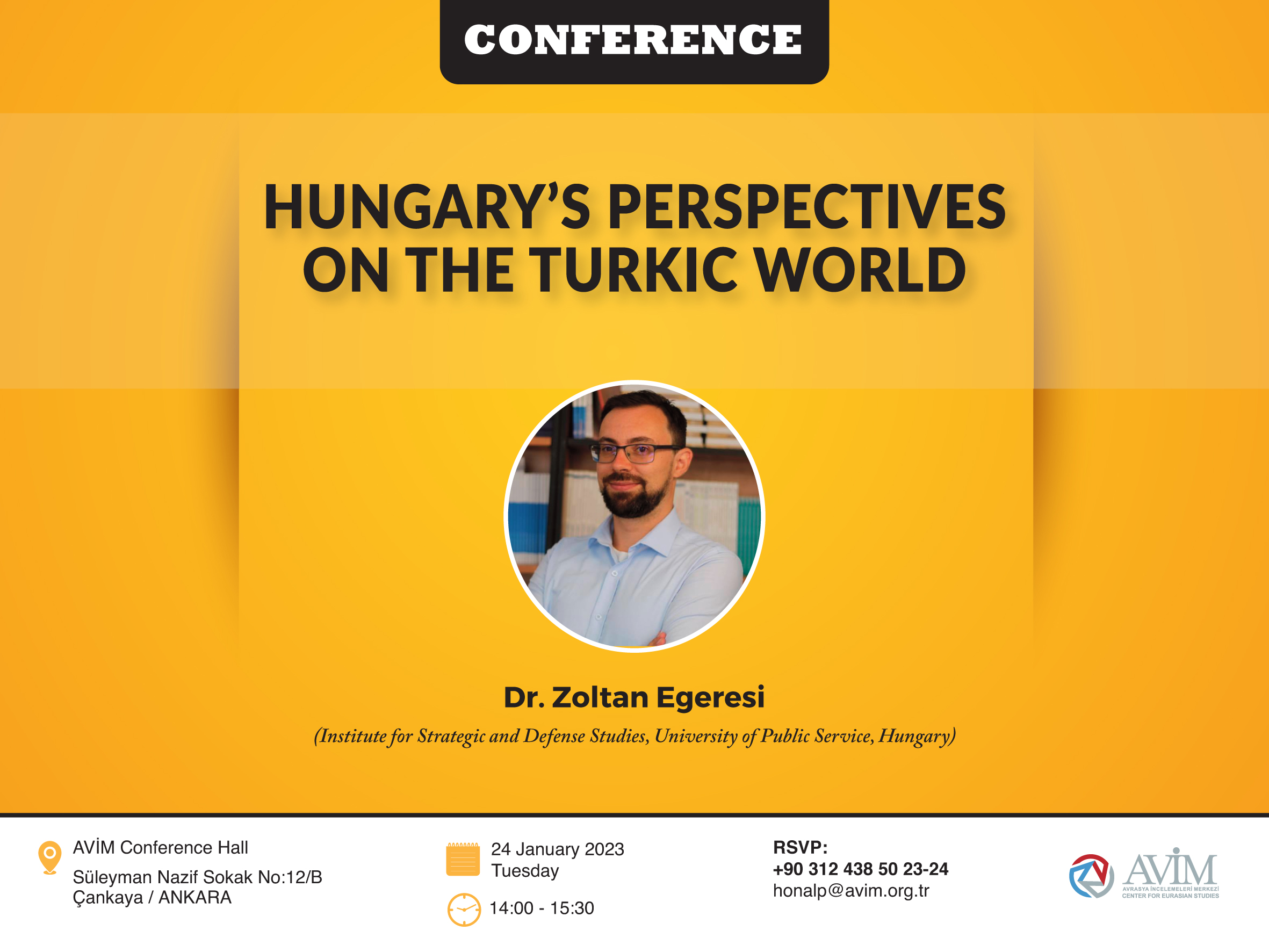
CONFERENCE TITLED “HUNGARY’S PERSPECTIVES ON THE TURKIC WORLD"