














The recent resignation of Dr. Edita Gzoyan from her position as Director of the “Armenian Genocide Museum-Institute” in Yerevan has generated criticism among certain, albeit limited, academic and advocacy circles. Much of this criticism frames the decision as an encroachment upon academic freedom and an instance of political interference in historical discourse. However, such reactions risk oversimplifying a far more complex intersection of law, institutional accountability, and the evolving imperatives of state policy—particularly in a fragile post-conflict environment such as the one present in Armenia in specific and the South Caucasus in general.
AVİM would like to advance a more restrained and legally grounded perspective. From our point of view, the Armenian government’s decision to request Gzoyan’s resignation is not only defensible but also consistent with established principles of freedom of expression, institutional governance, and conflict-sensitive diplomacy. Three interrelated points support this claim: 1) the reciprocal nature of freedom of expression under international human rights law; 2) the distinction between academic inquiry and institutional representation; and 3) the heightened responsibility of public officials and state-affiliated actors in contexts of ongoing peace processes.
Freedom of Expression as a Reciprocal and Contextual Right
A central critique raised against Nikol Pashinyan’s government in Armenia invokes the principle of academic freedom and freedom of expression. However, such critiques often rely on an absolutist conception of these rights, one that is not borne out in international legal practice. The jurisprudence of the European Court of Human Rights (ECtHR), particularly in the Perinçek v. Switzerland case, offers a more nuanced framework.
In Perinçek, ECtHR reaffirmed that freedom of expression under Article 10 of the European Convention on Human Rights (ECHR) is not limited to statements that are widely accepted or politically convenient. It extends to expressions that challenge dominant historical narratives, including those concerning the 1915 Events. While the Court’s judgment has been interpreted in various ways, one of its most salient implications is the recognition that historical discourse is inherently pluralistic and contested.
This principle operates in both directions. Just as individuals are free to assert that certain historical events constitute genocide, others retain the legal right to dispute such characterizations. ECtHR’s reasoning underscores that freedom of expression is not a mechanism for enforcing historical orthodoxy but rather a safeguard for open, if contentious, debate.
Within this framework, it follows that states are not legally obligated to endorse or institutionally support any particular historical interpretation. Indeed, states retain a margin of appreciation in determining how public institutions under their authority align with official policy positions. This is especially relevant where such institutions operate not as independent academic bodies but as entities with symbolic and diplomatic significance.
Consequently, the Armenian government’s divergence from Gzoyan’s actions—particularly if those actions are perceived as inconsistent with its diplomatic posture—does not, in itself, constitute a violation of freedom of expression. Gzoyan remains free to express her views; what is at issue is her continued role as a representative of a state-affiliated institution.
Institutional Representation and the Limits of Academic Autonomy
A second, often overlooked, dimension of the controversy concerns the nature of Gzoyan’s position. As Director of the “Armenian Genocide Museum-Institute”, she occupied a role that straddles the boundary between academia and public representation. While the Institute undoubtedly engages in scholarly activities, it also functions as a site of national memory and international engagement.
This dual character imposes constraints that do not apply to purely academic actors. Directors of such institutions are not merely researchers; they are, in effect, custodians of a state-endorsed narrative and participants in the country’s broader diplomatic ecosystem. Their actions, particularly in international settings, may carry implications that extend beyond academic discourse.
From a legal-administrative perspective, this distinction is critical. Public authorities are entitled to ensure that individuals in representative positions act in accordance with institutional mandates and governmental policy. This is not an aberration but a standard feature of public governance. Comparable expectations exist across jurisdictions, where civil servants and heads of public institutions are required to maintain a degree of alignment with official positions, especially in sensitive areas such as foreign policy.
In this light, the reported incident involving the presentation of material related to “Artsakh” (the name given by Armenians for Azerbaijan’s Karabakh region) during visit of American officials acquires a different significance. Regardless of the intrinsic merits of the material, the act may reasonably be interpreted as a form of political signaling. If such signaling contradicts the government’s current diplomatic approach, it falls within the state’s rights to address the inconsistency through administrative measures, including requesting resignation.
Importantly, this does not amount to censorship. The distinction between restricting speech and redefining institutional roles must be carefully maintained. Gzoyan’s ability to engage in academic or public discourse remains intact; what has changed is her position within a specific institutional framework.
Conflict Sensitivity and the Responsibilities of Public Actors
The third and perhaps most compelling justification for the government’s decision lies in the broader context of regional diplomacy. The South Caucasus remains a highly volatile environment, where narratives of history and identity are deeply intertwined with ongoing political negotiations. In such settings, symbolic acts can carry disproportionate weight.
Peace processes, by their nature, require a recalibration of rhetoric and behavior. This does not entail the abandonment of historical memory or the suppression of grievances. Rather, it necessitates a careful balancing of expression with the imperatives of de-escalation and mutual recognition.
International practice provides ample support for this approach. Transitional justice frameworks, for instance, often emphasize the importance of narrative moderation and the avoidance of inflammatory discourse during periods of negotiation. While these frameworks are typically discussed in post-conflict contexts, their underlying logic is equally applicable to situations of ongoing tension.
Against this backdrop, actions perceived as provocative—whether intentionally or not—can undermine fragile diplomatic efforts. The question is not whether the underlying message is valid or justified but whether its mode and context of expression contribute to or detract from the prospects of reconciliation.
From this perspective, the Armenian government’s response can be understood as an exercise in conflict-sensitive governance. By distancing itself from actions that it deems inconsistent with its peace-oriented policy, the state signals a commitment to a particular diplomatic trajectory. This is not a repudiation of historical claims but a strategic choice about how and when such claims are articulated.
Reconsidering the Role of Academic Institutions in Politicized Contexts
The controversy also invites a broader reflection on the role of both fully and semi academic institutions in highly politicized environments. Institutions dedicated to historical memory often operate at the intersection of scholarship, identity, and politics. This positioning can generate tensions between the pursuit of academic rigor and the expectations of national representation.
In such contexts, the concept of academic freedom must be applied with careful attention to institutional realities. While individual scholars should enjoy wide latitude in their research and expression, institutional leaders may be subject to additional constraints arising from their representative functions.
This is not to suggest that such constraints are always justified or benign. On the contrary, there is a legitimate concern that governments may invoke policy alignment as a pretext for suppressing dissenting perspectives. However, the mere existence of governmental intervention does not automatically imply an abuse of power. Each case must be assessed on its specific facts, including the nature of the institution, the content of the contested actions, and the broader political context.
In the present case in Armenia, the available information suggests that the government’s decision was not aimed at silencing a particular scholarly viewpoint but at addressing a perceived misalignment between institutional representation and state policy. Whether one agrees with this assessment is a separate question; what matters, from a legal standpoint, is that such decisions fall within the governmental discretion.
Conclusion: Between Principle and Pragmatism
The resignation of Edita Gzoyan has been framed by some as a troubling precedent for academic freedom. Yet a closer examination reveals a more nuanced picture, one in which legal principles, institutional roles, and diplomatic considerations intersect in complex ways.
Freedom of expression, as articulated in international human rights law, is neither absolute nor unidirectional. It protects a plurality of views, including those that challenge dominant narratives, but it does not compel states to endorse or institutionally accommodate every expression of those views. Similarly, academic autonomy, while essential, operates differently within institutions that serve both scholarly and representational functions.
Finally, the realities of ongoing conflict and negotiation impose additional responsibilities on public actors. In such contexts, the manner and timing of expression can be as consequential as its content.
Taken together, these considerations suggest that the Armenian government’s decision, while open to debate, is not inherently objectionable from a legal or institutional perspective. Rather than viewing it as a simple case of repression, it may be more accurately understood as an instance of the difficult balancing act that states must perform between principle and pragmatism in a deeply contested geopolitical landscape.
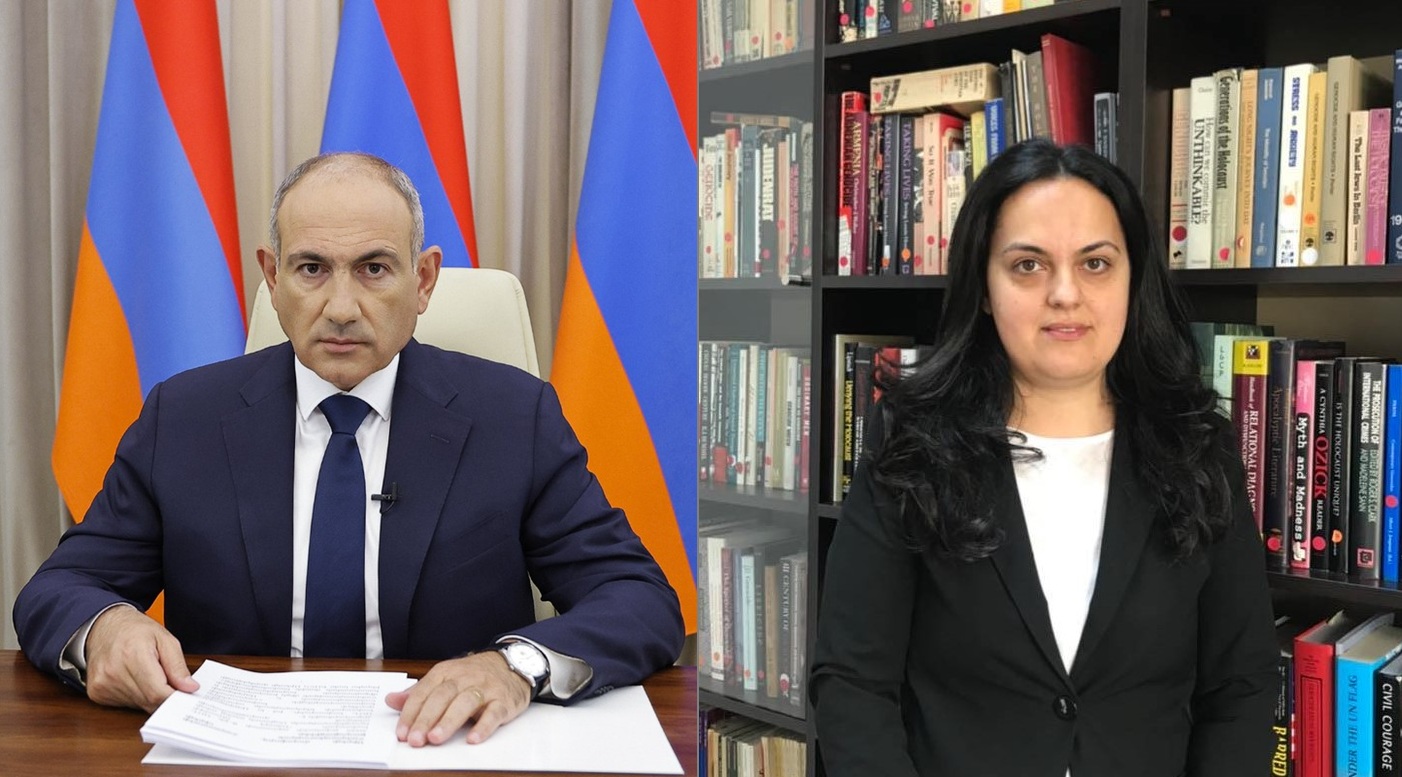
*Picture: Prime Minister of Armenia Nikol Pashinyan (left), former Director of the “Armenian Genocide Museum-Institute” Dr. Edita Gzoyan (right)
© 2009-2025 Center for Eurasian Studies (AVİM) All Rights Reserved
No comments yet.
-
 RESOLUTIONS ON 1915 CAME ONE AFTER ANOTHER FROM U.S. SENATE
AVİM 30.12.2019 -
 NAVAL EXERCISE "OPERATION NEMESIS" IN THE EASTERN MEDITERRENIAN AND ITS CONNOTATIONS
AVİM 15.10.2020 -
 MACRON MODELS HIMSELF AFTER THE FAILURES OF FORMER FRENCH PRESIDENTS
AVİM 28.03.2018 -
NUMBER 21 OF THE REVIEW OF ARMENIAN STUDIES HAS BEEN PUBLISHED
AVİM 27.07.2010 -
 DOUBLE STANDARDS IN EU HUMAN RIGHTS DIALOGUE WITH CENTRAL ASIAN COUNTRIES RELEVANT TO ARMENIA
AVİM 16.04.2019
-
 THE OUTCOMES OF VOSTOK 2018
Vuslat Nur ŞAHİN 28.09.2018 -
ARMENIAN TERROR
Alev KILIÇ 24.01.2013 -
 THIRD LEGAL VICTORY AGAINST ARMENIAN NATIONALISTS IN FRANCE
Maxime GAUIN 05.05.2014 -
ARMENIA AND THE TENSION BETWEEN RUSSIA AND TURKEY
Ali Murat TAŞKENT 28.02.2016 -
 US: RUSSIA ORCHESTRATING UKRAINE VIOLENCE
Hande Apakan 13.04.2014
-
25.01.2016
THE ARMENIAN QUESTION - BASIC KNOWLEDGE AND DOCUMENTATION -
12.06.2024
THE TRUTH WILL OUT -
27.03.2023
RADİKAL ERMENİ UNSURLARCA GERÇEKLEŞTİRİLEN MEZALİMLER VE VANDALİZM -
17.03.2023
PATRIOTISM PERVERTED -
23.02.2023
MEN ARE LIKE THAT -
03.02.2023
BAKÜ-TİFLİS-CEYHAN BORU HATTININ YAŞANAN TARİHİ -
16.12.2022
INTERNATIONAL SCHOLARS ON THE EVENTS OF 1915 -
07.12.2022
FAKE PHOTOS AND THE ARMENIAN PROPAGANDA -
07.12.2022
ERMENİ PROPAGANDASI VE SAHTE RESİMLER -
01.01.2022
A Letter From Japan - Strategically Mum: The Silence of the Armenians -
01.01.2022
Japonya'dan Bir Mektup - Stratejik Suskunluk: Ermenilerin Sessizliği -
03.06.2020
Anastas Mikoyan: Confessions of an Armenian Bolshevik -
08.04.2020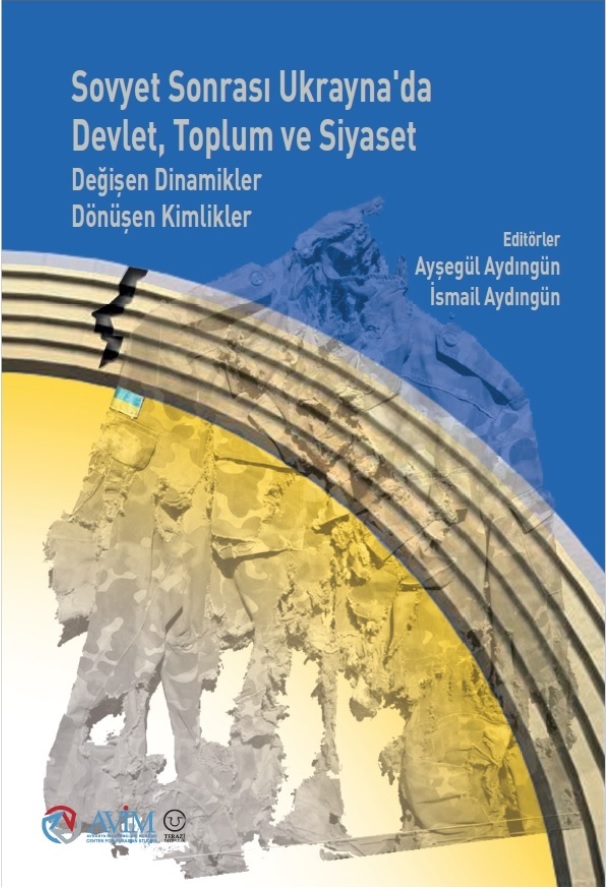
Sovyet Sonrası Ukrayna’da Devlet, Toplum ve Siyaset - Değişen Dinamikler, Dönüşen Kimlikler -
12.06.2018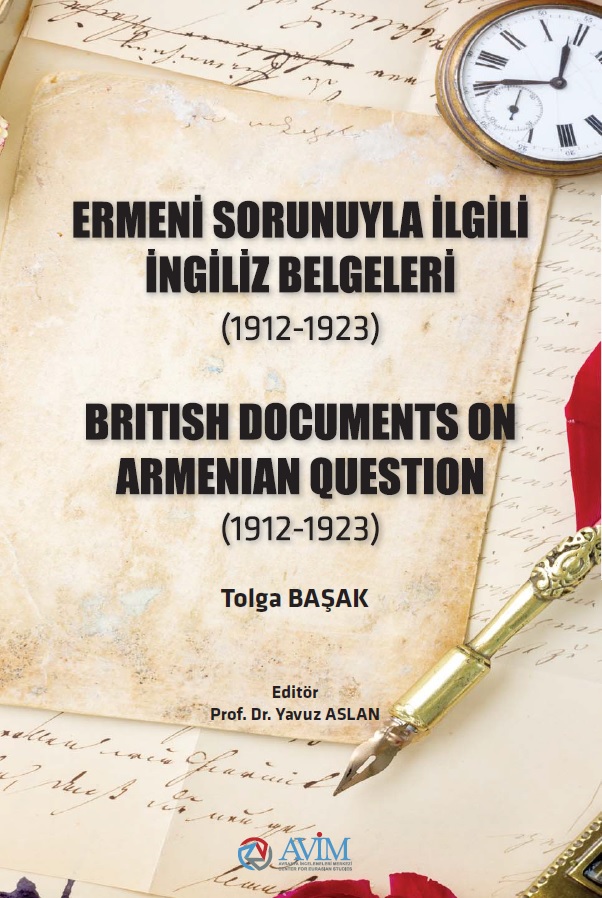
Ermeni Sorunuyla İlgili İngiliz Belgeleri (1912-1923) - British Documents on Armenian Question (1912-1923) -
02.12.2016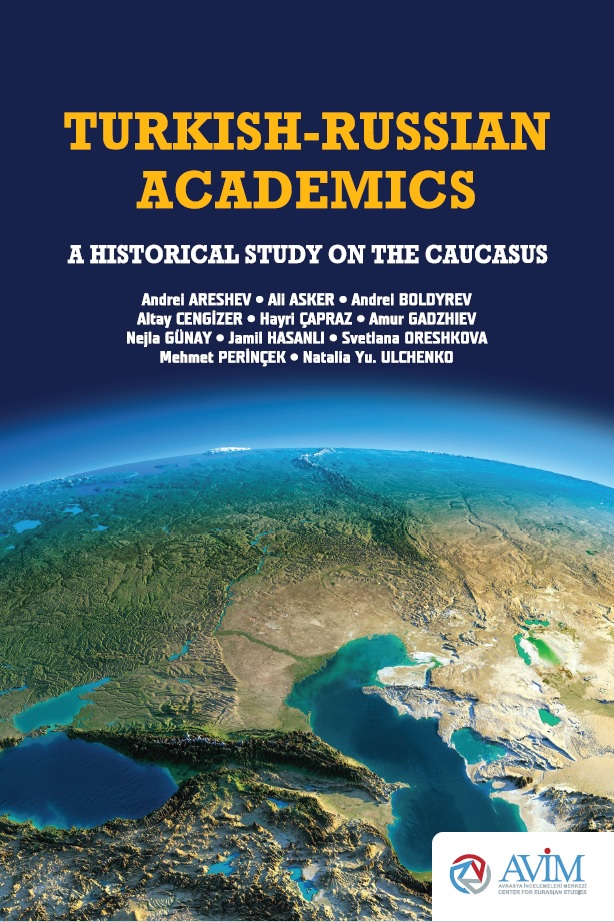
Turkish-Russian Academics: A Historical Study on the Caucasus -
01.07.2016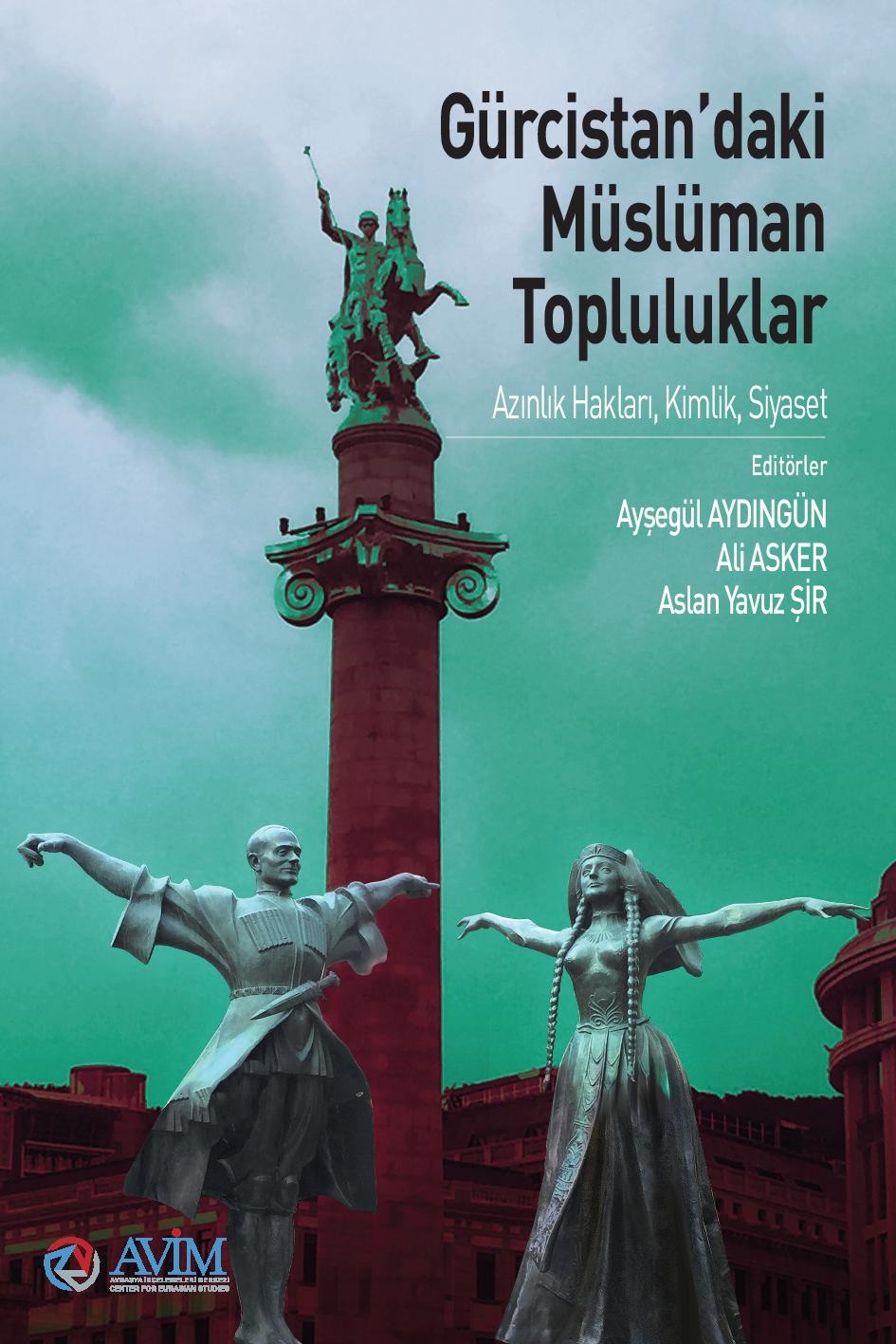
Gürcistan'daki Müslüman Topluluklar: Azınlık Hakları, Kimlik, Siyaset -
10.03.2016
Armenian Diaspora: Diaspora, State and the Imagination of the Republic of Armenia -
24.01.2016
ERMENİ SORUNU - TEMEL BİLGİ VE BELGELER (2. BASKI)
-
AVİM Conference Hall 24.01.2023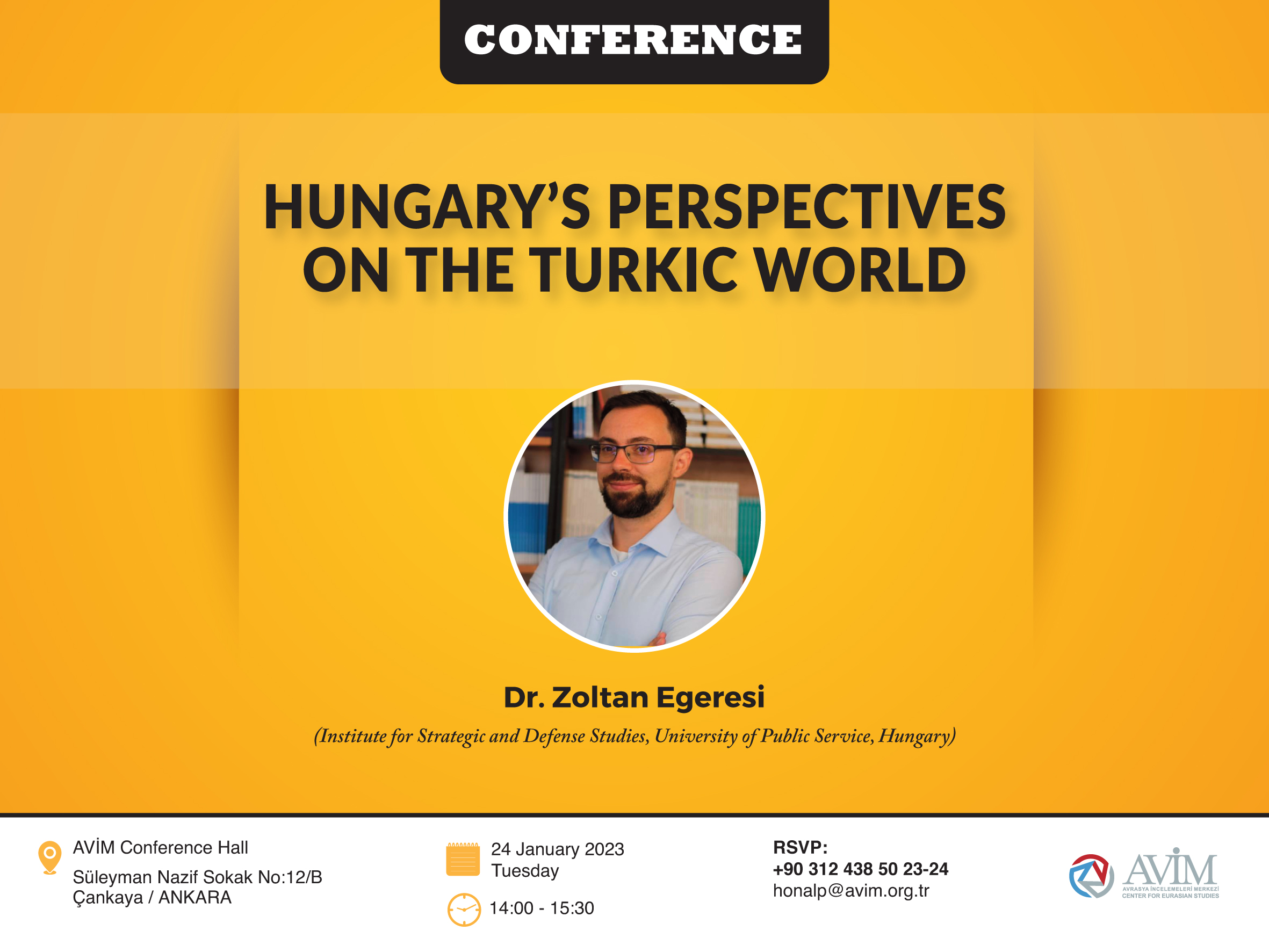
CONFERENCE TITLED “HUNGARY’S PERSPECTIVES ON THE TURKIC WORLD"