














While “ecumenism” in the context of Christianity as a whole denotes a positive development that transcends politics, the insistence on using the “ecumenic” title in the context of the Fener Greek Patriarchate denotes a negative development that represents the Patriarchate’s reckless ambition to transform itself into “the Vatican of Eastern Orthodoxy”.
The visit by Pope Leo XIV, the spiritual leader of the Roman Catholic Church and head of state of the Vatican, to Türkiye in November 2025 was carried out and concluded in a positive atmosphere, and subsequently receded from global headlines as various geopolitical developments played out around the world at the end of the year 2025 and 2026 that we have just entered. The Pope, as is customary from a head of state visiting Türkiye, first met with Turkish President Recep Tayyip Erdoğan and other high ranking Turkish officials. He subsequently met with various religious leaders of Türkiye’s Christian communities[1] within the context of the main purpose of his visit, which was to commemorate the 1700th anniversary of the First Council of Nicaea (modern day İznik district of the city of Bursa in Türkiye).[2]
The First Council of Nicaea holds a critically important place in Christianity, as 1700 years ago, Christians leaders of the time came together under the auspices of the Byzantine (Eastern Roman) Emperor Constantine I to discuss and come to an agreement on conflicting Christian teachings. The resulting “[Nicene Creed] became a foundational statement of Christian orthodoxy, shaping the theology of mainstream Christianity for centuries”.[3] It is for this reason that the First Council of Nicaea is considered an “ecumenical” event in Christian history, meaning an event that promoted solidarity and unity amongst Christians.[4]
Ecumenism has been a consistent trend in the Christian world that stretches back for decades. Pope Francis, Leo XIV’s predecessor, was a firm believer in ecumenism, and “[saw] a fractured Christianity that is unable to cope with the challenges and ills of today’s world, and thus desperately [sought] ways to bring together the Catholic, Orthodox, and Protestant Christians of the world, preferably under the moral leadership of the Roman Catholic Church.”[5] Pope Leo XIV seems intent on carrying on Francis’ legacy in this regard, as ecumenism was the central theme in all of his gatherings with Christian leaders during his visit in Türkiye. For example, during the prayer service organized in İznik near the archaeological excavation of the Basilica of St. Neophytus, where historians believe First Council of Nicaea took place, Leo XIV stated:
“This Christological confession of faith is of fundamental importance in the journey that Christians are making towards full communion. […] in the ecumenical context we can also say that, ‘although we Christians are many, in the one Christ we are one’. Consequently, with an awareness that we are already linked by such a profound bond, we can continue our journey of ever deeper adherence to the Word of God revealed in Jesus Christ, under the guidance of the Holy Spirit, in mutual love and dialogue. In this way, we are all invited to overcome the scandal of the divisions that unfortunately still exist and to nurture the desire for unity for which the Lord Jesus prayed and gave his life […]”
"Today, the whole of humanity afflicted by violence and conflict is crying out for reconciliation. The desire for full communion among all believers in Jesus Christ is always accompanied by the search for fraternity among all human beings. In the Nicene Creed, we profess our faith ‘in one God, the Father.’ […]”[6]
It is perfectly normally and indeed commendable for Christians around the world to spend the effort to reconcile their denominational differences. The problem arises when the quest for ecumenism intersects with politics and results in the violation of the sovereign rights of a state. This is clearly evidenced in the Joint Declaration signed by Pope Leo XIV and Patriarch Bartholomew, head of the Fener Greek Patriarchate of Istanbul, on 29 November 2025 during Leo XIV’s visit to Türkiye. Although the Joint Declaration is primarily religious in content, it explicitly refers to Patriarch Bartholomew as the “Ecumenical Patriarch” and his church as the “Ecumenical Patriarchate”, a categorization that both Turkish officials and scholars have firmly rejected on countless occasions on the grounds that it violates the letter and spirit of the 1923 Lausanne Peacy Treaty, the founding document of the Republic of Türkiye. According to the said treaty, the Fener Greek Patriarchate “is tasked with serving the religious needs of the Orthodox Greek (Rum in Turkish) citizens of Türkiye and is required to abstain from all political activities both at home and abroad”.[7]
While “ecumenism” in the context of Christianity as a whole denotes a positive development that transcends politics, the insistence on using the “ecumenic” title in the context of the Fener Greek Patriarchate denotes a negative development that represents the Patriarchate’s reckless ambition to transform itself into “the Vatican of Eastern Orthodoxy”, which entails a state within a state in Türkiye, and which would consequently violate the Lausanne Treaty and Türkiye’s state sovereignty. Since the Patriarchate is steeped in a belligerent form of Greek nationalism and has served as a conduit for attempts at foreign meddling in the past, the Turkish state tolerates the presence of the Patriarchate purely out of respect for its the Orthodox Greek citizens and out of international political considerations.[8] With each passing year, Patriarch Bartholomew unfortunately insists on further alienating himself and his church from the Turkish state and public, all for the sake of gaining recognition for the ecumenic claim.
It is inconceivable that Pope Leo XIV, head of state of the Vatican known for carrying out carefully considered foreign policies, would not have known about Türkiye’s sensitivities on this issue. Therefore, Pope Leo XIV knew about Turkish sensitivities, but chose to disregard them for the sake of pleasing Patriarch Bartholomew and pulling the Fener Greek Patriarchate closer to the Roman Catholic Church.
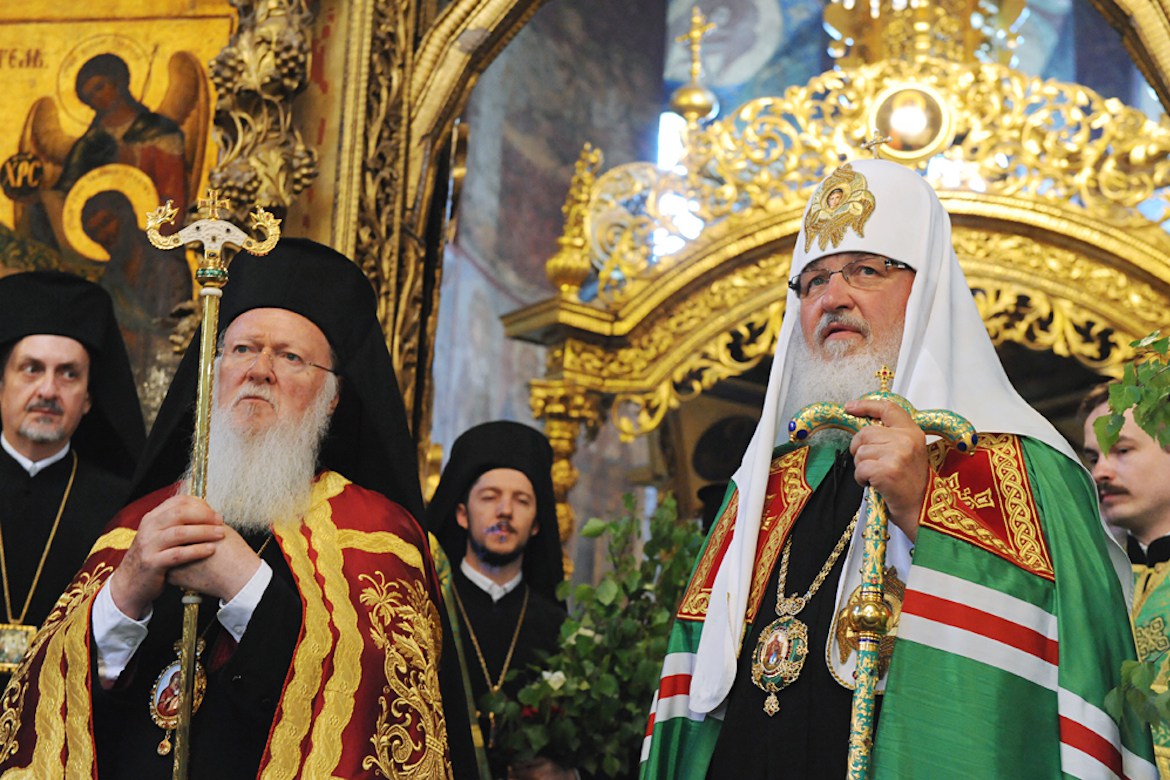
*Picture: Pope Leo XIV (in red/white clothing) standing alongside other Christian religious leaders during a ceremony held near the archaeological excavation of the Basilica of St. Neophytus in İznik (Bursa/Türkiye) to commemorate 1700th anniversary of the First Council of Nicaea
[1] Elias Turk, “Pope Leo XIV, at Mass in Turkey, calls for Catholic, ecumenical, and interreligious unity”, Catholic News Agency, November 29, 2025, https://www.catholicnewsagency.com/news/268151/pope-leo-xiv-at-mass-in-turkey-calls-for-catholic-ecumenical-and-interreligious-unity
[2] “Ecumenical prayer in Iznik to commemorate the First council of Nicaea”, Dicastery for Promoting Christian Unity (Vatican City), December 1, 2025, https://www.christianunity.va/content/unitacristiani/en/news/2025/2025-12-01-preghiera-ecumenica-a-iznik-per-commemorare-il-primo-.html
[3] “Ecumenical pilgrimage in Turkey marks the 1700 Anniversary of the First Council of Nicaea”, Anglican Communion News Service (ACNS), November 27, 2025, https://www.anglicannews.org/news/2025/11/ecumenical-pilgrimage-in-turkey-marks-the-1700-anniversary-of-the-first-council-of-nicaea.aspx
[4] Mehmet Oğuzhan Tulun, “Pope Francis’ Push for Ecumenism”, Center for Eurasian Studies (AVİM), Commentary No: 2016/38, June 28, 2016, https://avim.org.tr/en/Yorum/POPE-FRANCIS-PUSH-FOR-ECUMENISM
[5] Tulun, “Pope Francis’ Push for Ecumenism”.
[6] “Apostolic Journey of His Holiness Pope Leo XIV to Türkiye and Lebanon with a Pilgrimage to Iznik (Türkiye) on the Occasion of the 1700th Anniversary of the First Ecumenical Council of Nicaea (27 November - 2 December 2025) - Ecumenical Prayer Service Near the Archaeological Excavations of the Ancient Basilica of Saint Neophytos Address of the Holy Father – İznik, Friday, 28 November 2025”, Dicastery for Promoting Christian Unity (Vatican City), accessed January 8, 2026, https://www.christianunity.va/content/unitacristiani/en/pope-leo-xiv/2025/Viaggio-apostolico/viaggio-apostolico-di-sua-santita-leone-xiv-in-tuerkiye-e-in-lib/Incontro-ecumenico-preghiera-Iznik.html ; Also see: “Pope Leo calls for Christian unity at Turkish site where Nicaean Creed originated”, France 24, November 28, 2025, https://www.france24.com/en/middle-east/20251128-pope-leo-to-mark-unity-at-historic-site-in-turkey-where-nicaean-creed-originated ; Turk, “Pope Leo XIV, at Mass in Turkey, calls for Catholic, ecumenical, and interreligious unity”.
[7] Mehmet Oğuzhan Tulun, “The Harmful Effects of the Politicization of the Fener Greek Patriarchate”, Center for Eurasian Studies (AVİM), Analysis No: 2025/21, September 3, 2025, https://avim.org.tr/en/Analiz/THE-HARMFUL-EFFECTS-OF-THE-POLITICIZATION-OF-THE-FENER-GREEK-PATRIARCHATE
[8] Tulun, “The Harmful Effects of the Politicization of the Fener Greek Patriarchate”.
© 2009-2025 Center for Eurasian Studies (AVİM) All Rights Reserved
No comments yet.
-
 THE DISPUTE OVER THE ELECTION OF THE ARMENIAN PATRIARCH OF ISTANBUL CONTINUES
Mehmet Oğuzhan TULUN 27.02.2017 -
 GENOCIDE ACCUSATION AS A FORM OF PUNISHMENT - II
Mehmet Oğuzhan TULUN 04.11.2019 -
 IS ECUMENISM BEING DISRUPTED IN THE CHRISTIAN WORLD?
Mehmet Oğuzhan TULUN 24.09.2018 -
 THE BATTLE TO CONTROL THE NARRATIVE OVER KARABAKH: ARMENIAN CIVILIAN SAFETY VS. AZERBAIJANI STATE SOVEREIGNTY
Mehmet Oğuzhan TULUN 06.10.2023 -
 GENOCIDE AND GERMANY – II
Mehmet Oğuzhan TULUN 18.10.2017
-
 GUARDIANSHIP IN PRACTICE: LEADERSHIP, ADAPTATION, AND SECURITY CHALLENGES IN THE BLACK SEA
Teoman Ertuğrul TULUN 16.10.2025 -
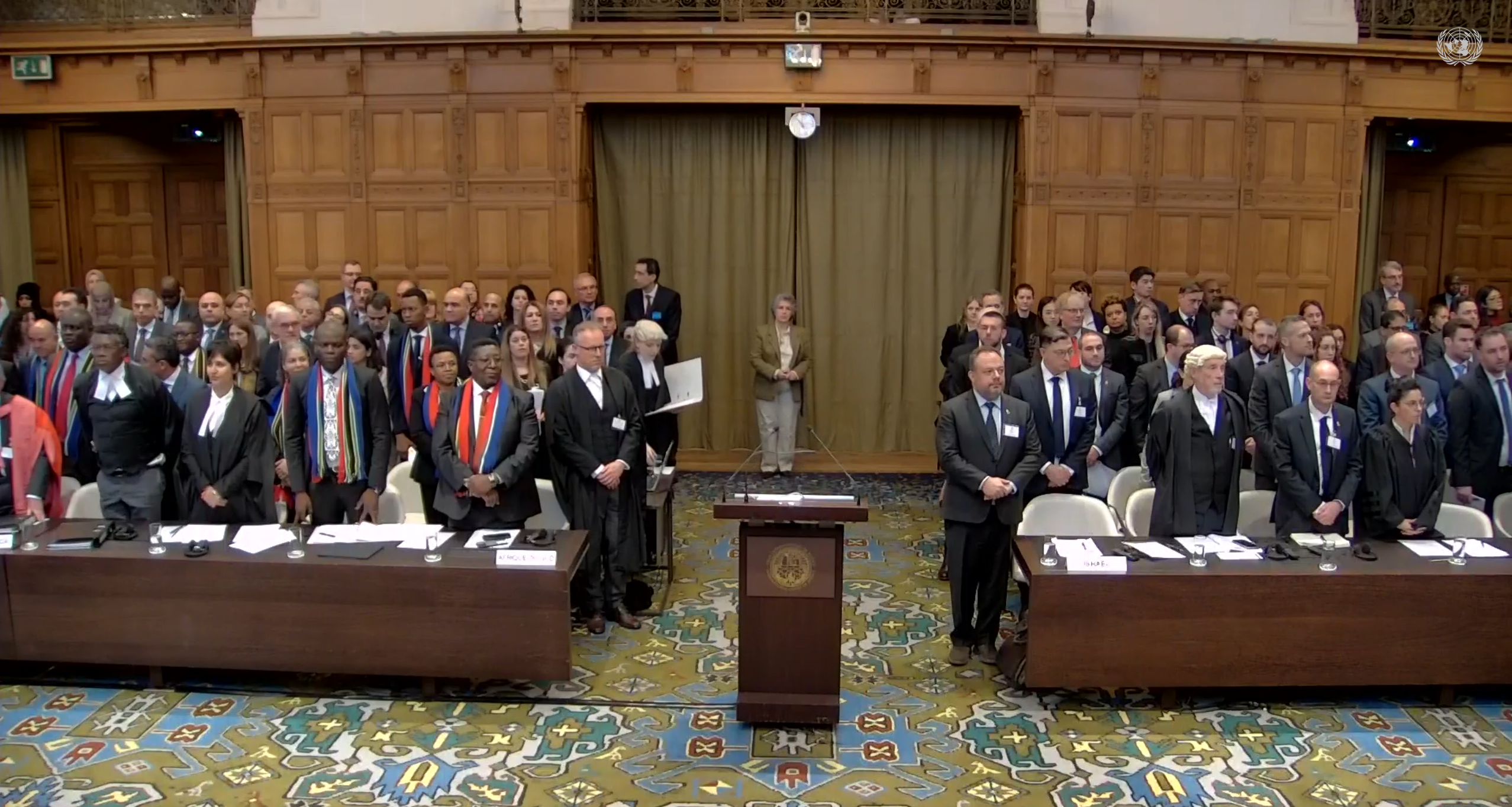 ISRAEL: HAS THE VICTIM OF GENOCIDE BECOME THE PERPETRATOR OF THE SAME CRIME?
Mehmet Oğuzhan TULUN 31.01.2024 -
 ROBERT FISK, BETWEEN FRANCOPHOBIA AND TURKOPHOBIA
Maxime GAUIN 19.11.2015 -
 PASHINYAN'S GERMANY VISIT
Turgut Kerem TUNCEL 09.03.2023 -
 “QUIET DIPLOMACY” IN NAGORNO KARABAKH CONFLICT AND ARMENIAN ELECTIONS
AVİM 24.04.2018
-
25.01.2016
THE ARMENIAN QUESTION - BASIC KNOWLEDGE AND DOCUMENTATION -
12.06.2024
THE TRUTH WILL OUT -
27.03.2023
RADİKAL ERMENİ UNSURLARCA GERÇEKLEŞTİRİLEN MEZALİMLER VE VANDALİZM -
17.03.2023
PATRIOTISM PERVERTED -
23.02.2023
MEN ARE LIKE THAT -
03.02.2023
BAKÜ-TİFLİS-CEYHAN BORU HATTININ YAŞANAN TARİHİ -
16.12.2022
INTERNATIONAL SCHOLARS ON THE EVENTS OF 1915 -
07.12.2022
FAKE PHOTOS AND THE ARMENIAN PROPAGANDA -
07.12.2022
ERMENİ PROPAGANDASI VE SAHTE RESİMLER -
01.01.2022
A Letter From Japan - Strategically Mum: The Silence of the Armenians -
01.01.2022
Japonya'dan Bir Mektup - Stratejik Suskunluk: Ermenilerin Sessizliği -
03.06.2020
Anastas Mikoyan: Confessions of an Armenian Bolshevik -
08.04.2020
Sovyet Sonrası Ukrayna’da Devlet, Toplum ve Siyaset - Değişen Dinamikler, Dönüşen Kimlikler -
12.06.2018
Ermeni Sorunuyla İlgili İngiliz Belgeleri (1912-1923) - British Documents on Armenian Question (1912-1923) -
02.12.2016
Turkish-Russian Academics: A Historical Study on the Caucasus -
01.07.2016
Gürcistan'daki Müslüman Topluluklar: Azınlık Hakları, Kimlik, Siyaset -
10.03.2016
Armenian Diaspora: Diaspora, State and the Imagination of the Republic of Armenia -
24.01.2016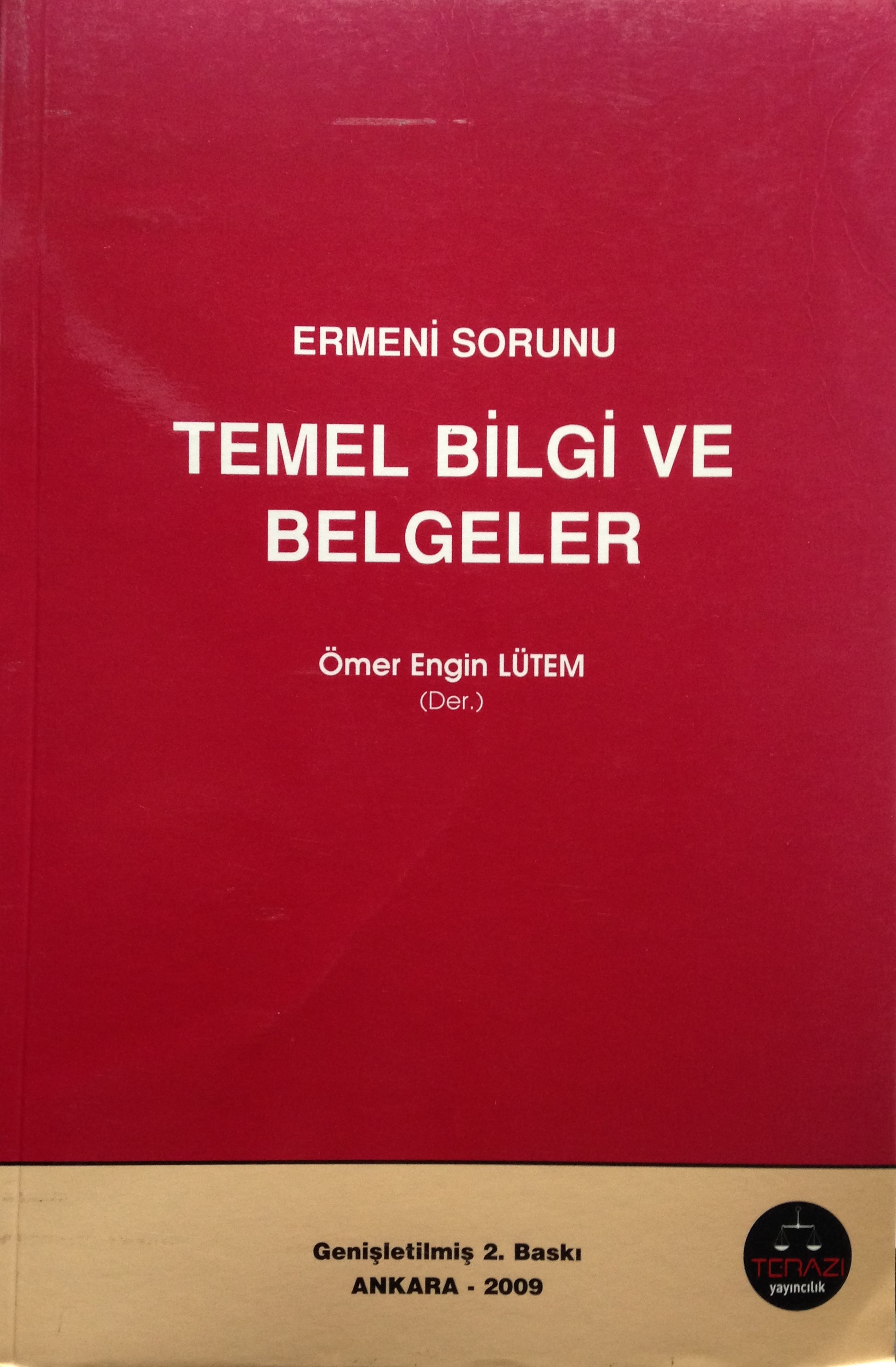
ERMENİ SORUNU - TEMEL BİLGİ VE BELGELER (2. BASKI)
-
AVİM Conference Hall 24.01.2023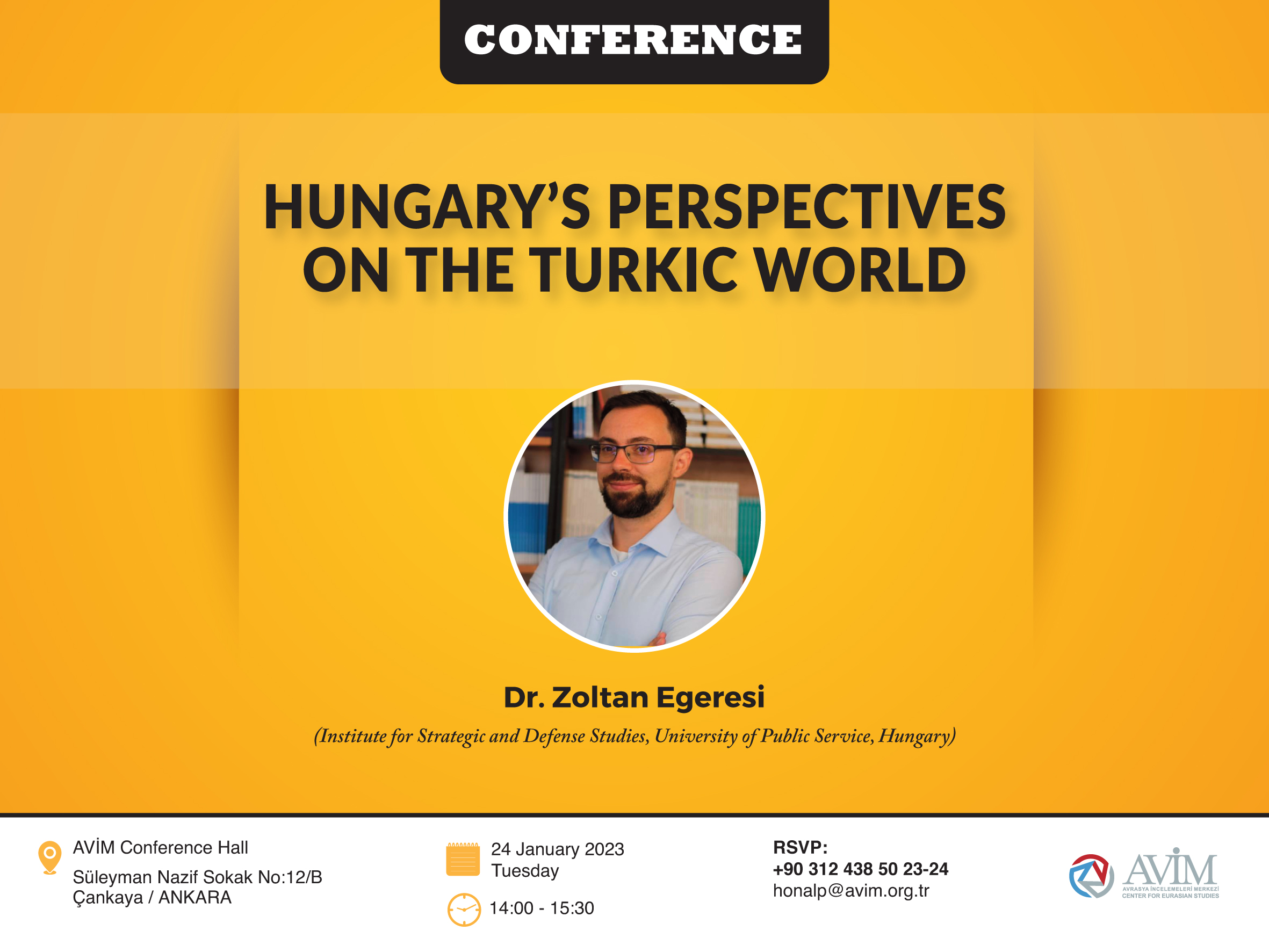
CONFERENCE TITLED “HUNGARY’S PERSPECTIVES ON THE TURKIC WORLD"